The lower the feed-to-egg ratio, the higher the production performance; how can it be effectively reduced?
The feed-to-egg ratio is an important indicator for measuring the production status of a laying hen farm. The lower the feed-to-egg ratio, the higher the production performance of the laying hens, and the better the economic benefits of the farm. To achieve a good feed-to-egg ratio, comprehensive measures such as nutritionally complete compound feed, a well-developed management plan, higher egg production, suitable environmental conditions, and good disease prevention and control must be in place to guarantee it.
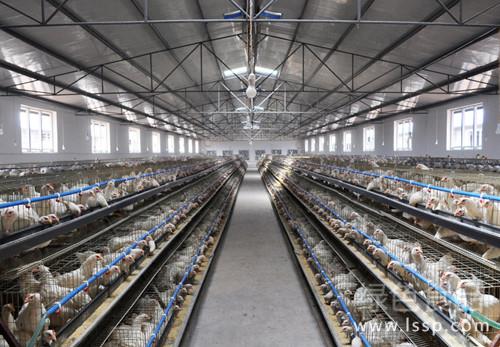
Laying hens
Ensure relatively high egg production
Under the same conditions of feed consumption, the higher the egg production, the lower the feed-to-egg ratio. To ensure relatively high egg production in the flock, the following points should be noted:
1. Choose excellent breeds to raise Excellent chicken breeds have relatively high production performance and are the prerequisite for ensuring relatively high egg production in the flock. You should choose to raise proven, genuinely high-yielding and pure-line hybrid laying hens, such as Roman, Isa, Hy-Line, etc.
2. Raise healthy and qualified growing pullets The quality of growing pullets directly affects the performance of laying hens during the laying period. Therefore, the rearing of growing pullets must be effectively strengthened so that individual growing pullets are healthy, their body weight meets the standard, and their uniformity is good.
3. Provide suitable environmental conditions The quality of environmental conditions directly affects the egg production of chickens. You should strive to create a suitable living environment for the flock, keeping the chicken house temperature below 28°C in summer and above 5°C in winter. Warm in winter and cool in summer, with good ventilation.
4. Supply nutritionally complete feed Modern chicken breeds have high nutritional requirements. To give full play to their laying potential, a daily ration that is nutritionally complete, balanced, and stable must be supplied. If nutrition is incomplete or unbalanced, it will increase feed consumption, affect the performance of the laying hens, and may even cause disease.
5. Ensure the flock is healthy and disease-free To maintain relatively high egg production, the flock must be guaranteed to be healthy and disease-free. Once chickens develop disease, their egg production will inevitably decrease, so disease prevention and control work must be effectively carried out. Regularly monitor Newcastle disease antibodies and carry out immunization at the appropriate times; strictly implement hygiene and disinfection measures, and regularly use disinfectants such as Baidusha and peracetic acid for spray disinfection with the chickens present once a week. Chickens that develop disease should be isolated and treated promptly.
Reduce feed consumption
Under the same conditions of egg production, the less feed consumed, the lower the feed-to-egg ratio. To reduce feed consumption, the following points should be noted:
1. Control hen body weight The greater the hen's body weight, the more feed she consumes. Therefore, hen body weight should be strictly controlled and kept as close as possible to the standard body weight. Especially after the peak laying period, the feed formula and feeding amount should be adjusted in a timely manner to prevent the hens from becoming too fat.
2. Restricted feeding Restricted feeding not only saves feed but can also increase its economic value. Restricted feeding is commonly used in the rearing of meat-type breeding chickens and plays an important role in maintaining suitable body weight and increasing egg production in hens. Light-type laying chickens do not easily become fat and generally do not need restricted feeding. Medium-type laying chickens (such as brown-shell laying hens) can be appropriately restricted in the later period to prevent the hens from becoming too fat and to increase egg production. In principle, feed fully in the early laying period and restrict feeding after 6 months of laying. Restricted feeding is generally set at 94% of the full feeding amount.
3. Reduce feed waste The nutritional composition of the feed should be comprehensive and balanced, and the protein-to-energy ratio should be reasonable. If the protein content in the daily ration is high and the energy is low, the chickens will inevitably consume too much feed, causing waste of protein feed; if the energy in the daily ration is high and the protein is low, it is easy for the chickens to become too fat, egg weight to decrease, and even fatty liver syndrome to occur. To reduce feed waste, you should also ensure a suitable shape and height for the feed trough, and prevent feed from spilling outside the trough when adding feed. Feed less at a time and add more frequently, with the amount added not exceeding 1/3 of the height of the feed trough. Beak trimming should be done at the appropriate time during the chick stage, and beak trimming before caging can effectively prevent the chickens' beaks from hooking feed out of the trough. Chicken farms and feed warehouses should carry out rodent control regularly to prevent rats and wild birds from stealing feed. In addition, it is better to use nipple drinkers for watering, which can prevent chickens from rinsing feed into the drinking water and causing waste.
4. Promptly cull inferior and low-yielding chickens Weak and small chickens, diseased and disabled chickens, out-of-production chickens, and other inferior chickens and low-yielding layers will continuously appear in the flock, so they should be culled promptly. Inferior chickens both consume feed and do not lay eggs, which will affect the feed-to-egg ratio and reduce economic benefits. One non-laying hen will waste the profit of 5-10 laying hens; one low-yielding hen can consume the profit of 3-5 laying hens. During rearing, weak and small chickens and diseased and disabled chickens should be culled frequently; during the peak laying period, chickens that have not yet started laying should be culled; during the middle and late laying periods, attention should be paid to culling out-of-production chickens and chickens with low laying rates. In this way, although the total number of chickens decreases somewhat, feed consumption is reduced, the feed-to-egg ratio is lowered, and economic benefits will increase accordingly.