Prevention and treatment of a dairy cow that cannot stand up after calving and whose hind legs cannot be straightened
The downer cow syndrome after calving is a common disease of postpartum dairy cows, caused by hypocalcemia, deficiency of vitamins and trace elements, and other factors that lead to paralysis and the inability to rise from the ground.
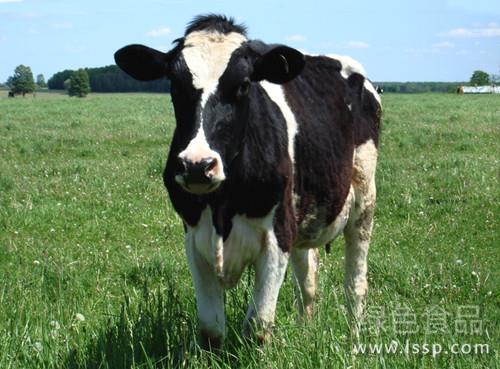
Dairy cow
The downer cow syndrome after calving occurs mostly from late autumn to early spring. Its clinical features are that the cow lies on the ground for a long time after calving, does not respond to treatment with calcium preparations, yet retains sensation and consciousness, and has a normal appetite. This disease is a complication of postpartum paresis in dairy cows; delayed treatment, insufficient dosage of therapeutic drugs, and other factors cause the cow to lie for too long, resulting in local ischemic necrosis. Improper assistance during calving, paralysis and lying on the ground, and attempts to struggle to stand during treatment may all cause traumatic injury to the muscles and nerves of the lumbar region; this not only directly causes prolonged lying, but also, because myoglobin is released when muscle is damaged, is often accompanied by proteinuria. Because too much high-protein, high-energy feed is fed during the dry period, the cow becomes overfat and develops hepatic steatosis, and toxic substances produced during abnormal fermentation of feed in the rumen readily cause poisoning of the body.
Incidence: This disease occurs mostly in cows within 15 days after calving, with no obvious seasonal or parity differences. From the clinical incidence rate, it occurs more often from late autumn to early spring, and is seen more often in dairy cows in their 1st pregnancy and in those in their 3rd or later pregnancy, and is rare only in the 2nd pregnancy.
Clinical symptoms: The sick cow has a reduced appetite, a normal body temperature, and a heart rate of 80 to 100 beats per minute; some sick cows have tachycardia or arrhythmia. Most sick cows frequently try to stand, but their hind legs cannot be fully straightened, and they can only crawl along the ground with their two hind legs partially flexed; some affected cows have both hind legs displaced backward and show a sitting-dog posture.
Diagnosis: Diagnosis is based on the clinical symptoms and the time of onset after calving. At the same time, the functions of the liver, kidneys, and myocardium should be examined, and especially the degree of damage to the locomotor organs should be checked, to see whether there is nerve paralysis, muscle rupture, joint dislocation, tendon rupture, fracture, postpartum hypocalcemic paresis, and so on. The degree of organ damage in the cow can be diagnosed by visual examination and palpation, including rectal examination, urine testing, and udder examination, as well as from the cow's sensory sensitivity and its performance when standing; at the same time, blood biochemical tests can help with clinical confirmation.
Treatment: (1) Give the dairy cow an intravenous injection of 500 mL of 20% calcium gluconate, 5 mg of pilocarpine hydrochloride, 1000 mL of 5% sodium gluconate, 1000 mL of 10% glucose, 3 g of caffeine sodium benzoate, 2 g of vitamin B1, and 10 g of vitamin C, twice a day. If the cow still cannot stand after 3 days of treatment with the above prescription, from the 4th day onward persist in manually helping it to stand for more than half an hour each day, and at the same time, on the basis of the above prescription, add 20 mg of dexamethasone and remove the pilocarpine hydrochloride, for intravenous injection, continuously for 3 days. (2) Inject 5 mL of 0.1% strychnine nitrate injection into the Baihui acupoint, once a day, for two consecutive days. After stopping the injections, give the cow oral stomach-invigorating Chinese herbal medicine, supplemented with vitamin B, baking soda powder, and so on to regulate gastrointestinal function.