How to Raise Goslings to Improve Survival Rate and Weight Gain Rate
Geese are naturally grass-eating and have the advantages of fast growth, tolerance of coarse feed and a short growth cycle. Based on many years of practice, the author discusses the key measures for improving the survival rate and weight gain of goslings, for the reference of farmers and peers.
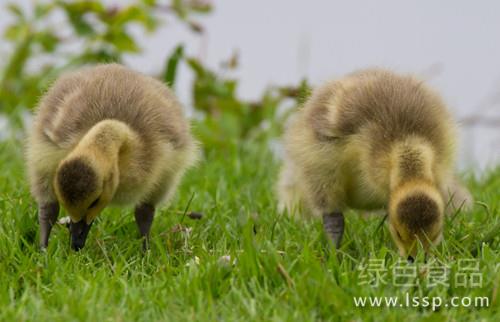
Goslings
Strict selection of breeding stock
Choose large-scale goose breeding farms (households) holding a livestock and poultry production license, and buy healthy goslings that have undergone origin quarantine; the flock kept in the same goose house, or all geese on the farm, should come from the same breeding farm (household) and the same batch; select goslings with large, bright eyes, lively behavior, loud calls, glossy feathers, a well-contracted navel, a clean vent and a strong grip when held; cull goslings with a twisted head, blind eyes, a large belly or a bloody navel.
Reasonable grouping
Group them by strength to avoid crowding and reduce deaths; during rearing, also pay attention to continuously adjusting the flocks according to the growth, size and strength of the geese, so that geese of the same age in each group are as uniform as possible in size and strength, to facilitate feeding and management; during brooding, goslings found to have a poor appetite, slow movement and a thin, weak constitution should be promptly picked out and fed separately with careful management to improve the brooding survival rate.
First water and first feed
Goslings can generally be given water first and then feed about 24 hours after hatching; make sure the drinkers do not leak, to prevent the litter and feed from becoming moldy. Add glucose and multivitamins to the drinking water, which helps clear the digestive tract, stimulate appetite, expel droppings and absorb nutrients. Feed can be offered 30 minutes after the first drink: cut fresh green feed into fine shreds and mix it into soaked broken rice or broken corn with a relatively low moisture content, feeding a 2:1 mixture, scattered on plastic sheeting to entice them to eat. The first feeding should not be too filling; at first feed 4 to 5 times a day, at 3 weeks of age feed 6 to 8 times a day, including 2 nighttime feedings; by 4 weeks of age the daily feed ratio can be adjusted appropriately, and 1.5% bone meal, 2.5% shell powder and 0.3% salt should be added to the feed; at the same time, some oilseed cakes, wheat bran and rice bran can be included, reducing the number of feedings per day, and the feeding amount for goslings should be controlled at about 80% full.
Reasonable exercise
After the first feed, drive the goslings to move about once about every 1 hour; at night or in cold weather, pay even more attention to driving them to move, as this regulates body temperature, strengthens the constitution and improves the survival rate.
Keeping warm and preventing dampness
Goslings have an imperfect body temperature regulation mechanism and are very weak in adapting to low temperatures and sudden temperature changes. If the temperature is too low, goslings huddle together and often die of suffocation. If the temperature is too high, goslings become listless, eat little, drink a lot, breathe with their mouths open and give short calls, which affects growth and development and easily triggers respiratory diseases. Prolonged high temperatures can cause mass deaths of goslings. Therefore, the temperature in the goose house should be controlled at 28°C to 30°C within 1 week of age, then lowered by 2°C each week until it drops to about 20°C.
When the environmental humidity exceeds 80%, goslings develop poorly and become stunted geese. Under high-temperature, high-humidity conditions, pathogenic microorganisms and parasites breed easily, feed and litter become moldy easily, and the flock is prone to aspergillosis. Too low humidity will undoubtedly cause serious consequences for the growth and development of waterfowl, and easily leads to excessive dust in the environment, triggering respiratory diseases. Suitable humidity: 60% to 65% within 10 days of age, and 65% to 70% after 10 days of age.
Timely herding
The time to start herding should be determined according to the temperature: when the temperature is relatively high, herding can generally begin at 1 week of age; when the temperature is relatively low, herding can generally begin at 2 weeks of age. When herding, pay attention to the following: First, when starting to herd, place the goslings after feeding on flat, tender grass near the brooding room and let them freely eat grass. The distance should be short and the time brief, then gradually extended, letting them out late and bringing them back early. Do not herd in rainy weather or under the scorching sun. One week after herding begins, when the temperature is suitable, you can combine this with letting them into water, driving the goslings to shallow water to let them enter the water and splash about on their own; never force them into the water, to prevent wind-cold and colds. Second, it is best to choose a clear, windless day after the dew has dried, to avoid causing diarrhea in goslings. Third, for the first herding, feed them half full first, then herd them to nearby flat grassland and let the flock move freely for 1 hour. After that, extend the herding time and distance day by day. For adult geese over 4 weeks of age, they can be herded all day, to exercise the goslings' constitution and foraging ability, reduce supplementary concentrate feeding and lower feeding costs; after herding, supplementary feed can be given appropriately.
Sanitation and epidemic prevention
To prevent disease, the brooding room should be cleaned frequently, the litter replaced, and cleanliness and dryness maintained; regularly use two disinfectants with different ingredients to disinfect the brooding environment alternately, and wash the feed troughs and drinkers every day. Goose farms (households) should vaccinate according to the immunization plan, and in light of actual conditions carry out selective preventive vaccination against diseases, paying attention to choosing suitable vaccines and immunization methods. At the same time, prevent harmful animals such as rats and snakes from harming the goslings.
Strengthen management
Usually pay attention to observing the health of the flock; sick and weak geese found should be promptly isolated for observation, the cause investigated, and targeted therapeutic drugs chosen to improve treatment results. Mixed rearing of livestock and poultry is strictly prohibited, to prevent the mutual spread of pathogens. Group the goslings properly according to size and physical strength, so that the flock eats evenly and grows uniformly, with 60 to 80 geese per group being suitable. Suitable densities are: for small geese, 15 to 20 per sq m at 1 week of age, 10 to 15 at 2 weeks of age, 6 to 10 at 3 weeks of age, and 5 to 6 at 4 weeks of age and above. Note that feed and drinking water must be fresh and uncontaminated. At the same time, create safe environmental conditions so that the flock is not disturbed.
Disease prevention
After hatching, goslings should be injected with anti-gosling disease serum, 0.5 ml to 1 ml per bird; at 2 weeks of age, inject goose paramyxovirus vaccine, 0.3 ml to 0.5 ml per bird; from 2 to 5 weeks of age, inject the recombinant avian influenza virus inactivated vaccine for the first time, 0.5 ml per bird, and 3 weeks after the first immunization give 1 booster vaccination of 1.5 ml per bird; at 25 days of age, use praziquantel at 10 mg/kg body weight to deworm tapeworms; administer medication regularly to prevent disease.