Reasons for low crayfish yields and countermeasures, which affect farming profitability
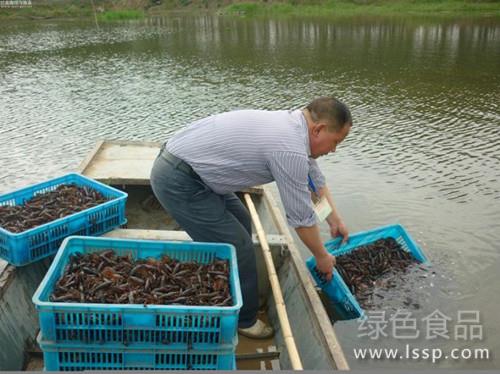
Crayfish farming
1. Low seedling survival rate:
When seedlings are stocked, long-distance transport and prolonged time out of water cause the gill filaments of crayfish to shrink; if they are not allowed to fully absorb water at stocking, they take in too much water after entering the pond and "swell to death." Some shrimp seedlings are captured by drugging, and the mortality rate after stocking is high. In some cases, stocking is done in winter, and the seedlings are directly frostbitten or frozen to death during the stocking process.
Seedlings should preferably be purchased and stocked locally; shrimp seedlings should be stocked evenly around the pond, with evenly spaced release points. For shrimp seedlings transported over long distances, at stocking first soak the seedlings in water for 3-5 minutes, then place them at the pond edge for 2-3 minutes, repeating 2-3 times, so the seedlings absorb enough water; then slowly release the shrimp into the pond. This can increase the survival rate after stocking. It is strictly forbidden to stock seedlings captured by drugging.
2. High stocking density:
High stocking density in ponds, with multiple batches stocked in the same pond and uneven sizes, results in growth rates that cannot stay in sync, with some stronger and some weaker at feeding; during farming, crayfish cannibalize each other and the farming yield is low. For pond farming of crayfish, stock 20-40 kg of shrimp seedlings per mu, at 60-80 tails per kg. The shrimp seedlings should be uniform in size, robust in constitution, free of disease and injury, and stocked all at once, avoiding stocking in batches. At stocking, the shrimp seedlings should be soaked and disinfected in 3%-5% salt water before entering the pond.
3. Many harmful organisms:
Because pond clearing is not thorough and water introduction is not strictly filtered. The shrimp pond contains harmful organisms such as frogs, water snakes, and snakehead, which eat young shrimp and attack soft-shelled shrimp during molting, directly affecting crayfish farming yield. Therefore, for ponds used to farm crayfish, before releasing seedlings the pond must be thoroughly cleared with drugs to kill harmful organisms. Commonly used drugs include quicklime, strong chlorinated disinfectant, and croton.
4. Insufficient light:
In many low-yield shrimp ponds, there is too much aquatic grass and the coverage rate is too high, so the water body receives little light and water flow is low, resulting in insufficient light. This leads to low farming yield and small market size. Normal aquatic grass coverage is generally about 1/3 of the pond water surface, to facilitate shading for crayfish and to grow the plankton that crayfish like to eat. If aquatic grass is too dense, cut a 3-5 m wide channel every 10-15 m to ensure the pond has enough light exposure. In July-August, after aquatic grass decays, it should be replenished in time to meet the needs of crayfish growth and molting.
5. Insufficient feeding amount:
Due to high stocking density, insufficient feeding amount, improper feeding methods, incomplete feed nutrition, and feed sizes that are not suitable for the mouthparts, some crayfish cannot get feed. First, this causes crayfish to cannibalize each other; second, due to malnutrition, some crayfish cannot complete molting; third, some crayfish escape while searching for food. The daily feeding amount should be based on eating until full, finishing the feed, and leaving no residual feed. Generally, medium and small crayfish are fed at 15%-20% of body weight, and adult shrimp at 5%-10% of body weight. The specific amount can be adjusted according to the shrimp's feeding situation.
6. Poor water quality conditions:
First, pond water that is too fertile with too low a pH value, or water that is clear and lean with too high transparency, is unfavorable for crayfish molting and growth. Second, in summer, if the water level is too shallow and the water temperature exceeds the limit temperature, it will inhibit crayfish growth and promote early sexual maturity in crayfish. In winter, freezing over easily causes crayfish to suffocate and die from oxygen deprivation. Third, if the water level rises and falls erratically, some crayfish dig holes near the water level line and mainly live in burrows. Over time, they adapt to burrow life, neither molting nor feeding and growing; male and female crayfish cannot be distinguished, the size is small, they are lazy about moving, and the farming yield is low. During farming, the water level should be kept stable for a long time, the water quality should be fresh, and water quality must be strictly protected from industrial pollution, pesticide pollution, and chemical pollution. During farming, if crayfish are found to respond slowly, gather at the pond bank, gasp at the surface, and climb onto the bank, it indicates severe oxygen deficiency, and water should be added promptly or an aerator turned on to increase oxygen.
7. Poor management:
First, the pond area is too large or too small, the slope ratio is small, and there is no shallow water layer, which is unfavorable for crayfish molting and growth; second, poor escape prevention facilities easily allow crayfish to escape; third, harvesting is not timely, causing some crayfish to remain in the pond in burrows and not be caught. For farming crayfish, the pond area should preferably be 10-30 mu, with a slope ratio of 1:2 to 1:3. Crayfish like to dig burrows, so escape prevention facilities must be reinforced to prevent crayfish from escaping. Crayfish mature sexually in alternate years; young shrimp that leave the mother in September reach sexual maturity in July-August of the following year. Young shrimp that leave the mother in June reach sexual maturity in April-May of the following year. After crayfish reach sexual maturity and mate, males easily die. Generally, after about 2 months of rearing, when individual crayfish reach more than 40 grams, they can be harvested for market, increasing the farming yield.