Key Technical Points for the Feeding and Management of Newborn Piglets, Effectively Improving Breeding Benefits
Piglet production is an important part of the pig farming industry, and active and effective measures are an important way to improve the economic benefits of pig farming. The relatively high mortality rate of newborn piglets brings significant economic losses to pig production. Therefore, careful feeding and management of newborn piglets is the main measure for improving piglet production. In production practice, attention should be paid to the following key points:
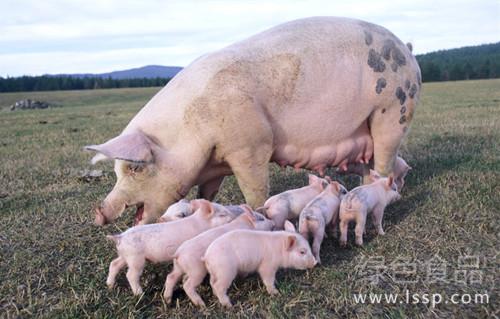
Piglets
1. Sufficient intake of colostrum
Since newborn piglets have no innate immunity, they must obtain antibodies by suckling colostrum. Piglets have relatively weak digestive function, and their gastric digestive juices lack hydrochloric acid, while colostrum is extremely rich in nutrients, containing large amounts of protein and milk fat, and has relatively high acidity, which helps promote the activity of the piglet's digestive tract and can meet the needs of piglet growth and development. If weak piglets do not suckle enough milk, artificial supplementary feeding can be carried out to increase the survival rate of the entire litter of piglets. Therefore, after piglets are born, they should be allowed to eat and take in enough colostrum as early as possible.
2. Ensure environmental temperature
The optimal environmental temperature for newborn piglets is 32 degrees, and the suitable temperature within 1 week of age is 25~30 degrees, so a heat preservation box should be installed on the farrowing crate, with a heat preservation lamp inside and a heat preservation pad below for warmth. If conditions do not allow, a simple heat preservation room can be built according to the actual situation. If it is winter, the materials for building the heat preservation room can be sourced locally. Generally, it is required to be 1.2 m long, 0.75 m wide, and about 1 m high, and a small door should be left at the bottom of one side of the heat preservation room for piglets to access colostrum. Try to make the sow and piglets sleep separately to prevent the sow from crushing the piglets to death.
3. Supplement trace elements
Iron is an important component of heme. Newborn piglets have very little iron stored in their bodies, and their daily requirement is 7~8 mg, while the amount they can obtain from breast milk is also limited. Therefore, if piglets are not supplemented with iron in time, they will inevitably develop anemia.
4. Foster nursing and litter merging
Foster nursing refers to when a sow dies after farrowing or has no milk after farrowing, or when the number of piglets born exceeds the number of effective teats, the piglets that have no milk to drink are given to other sows to nurse. Litter merging refers to when a sow gives birth to relatively few piglets, or some of the piglets born die for certain reasons, in order to improve the utilization rate of the sow, these piglets can be merged for rearing. Before litter merging, piglets must be allowed to take in enough colostrum.
Before foster nursing and litter merging, smear the whole body of the piglets with the milk of the foster sow (using the sow's urine is not recommended), and choose to mix the groups at night so that the sow cannot distinguish between her own piglets and the fostered piglets. Afterward, observe carefully to prevent the sow from refusing to nurse or biting the fostered piglets. Piglets for foster nursing and litter merging should have similar birth dates, preferably not more than 3~4 days apart.
5. Disease prevention
Before eating colostrum, piglets can be vaccinated with lapinized attenuated classical swine fever vaccine at the conventional dose, and 2 hours later the piglets can be allowed to nurse freely. In addition, antibiotics can be added to the sow's feed to prevent postpartum infection in the sow and red and yellow dysentery in piglets. The pens should be cleaned daily to keep the housing sanitary and dry, providing piglets with a clean, quiet, and fresh-air living environment. Careful observation should be carried out daily, and when piglets are found to be sick, timely treatment should be given.