Artificial breeding of Yantai sea intestine becomes a reality, with the key lying in the success of seedling breeding
【Tips】:Calls for the artificial breeding of Yantai sea intestine have existed for a long time. It was not until the first half of this year that experts from the Yantai Institute of Aquatic Products said that the core link of industrialization——seedling breeding——had already succeeded. This year, Yantai will carry out research on extension techniques citywide, break through breeding technical regulations, and determine suitable areas for the species to grow. It is believed that citizens will soon be able to enjoy an affordable delicacy.
* The sea intestine'smedicinal value:
Urechis unicinctus, commonly known as: sea intestine, sea intestine worm, is a long cylindrical mollusk that wriggles softly, has no spines all over its body, and is light yellow. The sea intestine not only looks like a naked sea cucumber, but its nutritional value is no less impressive than that of sea cucumber.
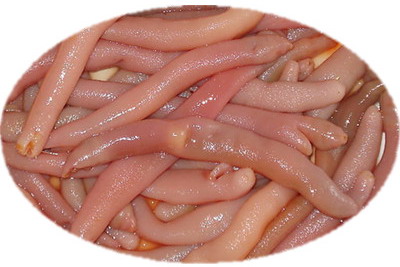
Pharmacological studies show that the polypeptides extracted from Urechis unicinctus have certain anti-tumor effects and can improve the immune function of mice. Some people have also conducted separation, purification, and pharmacodynamic studies on the antithrombotic components of Urechis unicinctus. Therefore, Urechis unicinctus is also a good material for studying marine bioactive substances.
However, due to excessive fishing intensity in recent years, wild resources have become insufficient. Nowadays, China has also successively carried out production-oriented research on artificial seedling cultivation of Urechis unicinctus.
* Sea intestine prices rise, becoming a “noble dish”
In the seafood market, seafood products such as mantis shrimp, Spanish mackerel, and sea cucumber are dazzling in variety, but the sea intestine is rarely found. “The output of this thing is too low. It is generally supplied directly to star-rated hotels. If you want to buy it in loose sales, you need to rely on luck.” said a boss engaged in the seafood business at Hongli Market. Sea intestine is occasionally sold, but the price is too high and no one asks for it. Over time, fewer and fewer people stock and sell it.
The sea intestine is delicious and quite expensive. According to introductions, since 2012, Yantai sea intestine prices have risen all the way, reaching a sky-high price of 300 yuan per kg at the peak, surpassing abalone and prawns, and closely approaching the value of sea cucumber and crab, becoming a veritable “noble dish.” The raw material price of sea intestine is high, so prepared dishes naturally rise as well. At present, restaurants selling stir-fried sea intestine with chives all charge more than 100 yuan, and some star-rated hotels reach a price of 200 yuan!
* Artificial seedling technology succeeds
Seafood prices and output are twin brothers. The main reason for the high price of sea intestine is the sharp drop in local output.
In 2012, after noticing the sharp decline in sea intestine numbers and recognizing the importance of protecting sea intestine, our city successfully applied for sea intestine to be a national geographical indication product, strengthened species protection, and made sea intestine a product with Yantai characteristics. At the same time, the Municipal Institute of Aquatic Products carried out research projects in order to achieve mass production, so that they would not only become a delicacy on the table, but also be suitable for stock enhancement and release and large-scale artificial breeding.
“After scientific research tackling key problems, in 2014 we successfully bred sea intestine seedlings. At present, the artificial seedling technology has succeeded, laying the foundation for subsequent large-scale breeding.” said Wang Liyong, a senior engineer at the Municipal Institute of Aquatic Products. Based on past experience in cultivating new varieties, seedling breeding is the most core link. “Once the seedling breeding link is broken through, how to breed them later, how to reduce costs, and how to prevent and control diseases will be much simpler.”
* This year, tackling the extension technology for sea intestine
After the success of artificial seedling technology, Yantai immediately launched deeper experiments. Last year, Yantai successively carried out stock enhancement and release of a total of 1.2 million sea intestine seedlings in sea areas such as Sishili Bay in Laishan District and Golden Beach in the Development Zone, in order to expand the sea intestine population, obtain detailed research information, and lay a good foundation for industrialized development.
“This year, we will tackle the extension technology for sea intestine.” Wang Liyong introduced that the difficulties in extending sea intestine mainly include two aspects. First, there is a lack of breeding technology, immature regulations, and too many limiting factors, so enterprises are interested but do not dare to breed them. Second, the sea intestine species has unique living habits, and the areas suitable for the species still need further research and determination, and cannot be blindly selected at will.
According to the plan, the Yantai Institute of Aquatic Products will refine the breeding technical methods for sea intestine this year, conduct various comparative experiments, solve technical difficulties, and achieve the goal of large-scale breeding. “We will adopt a combination of independent research and development and cooperation with enterprises. By providing seedlings and technical guidance, we will jointly conduct research on sea intestine breeding production technology, and by adopting multiple breeding methods such as industrial, pond, and sea area breeding, we will set up sea intestine breeding trial sites in various places. The breeding methods include three models: industrial, pond, and sea area.” Wang Liyong said.
For the industrialization path of sea intestine, there is no experience at home or abroad to draw on. Wang Liyong said frankly that achieving the goal will still require all parties to cooperate in many experiments. However, with the success of artificial seedling technology, the emergence of stock enhancement and release effects, and the development of indoor breeding experiments, it can be said that there is only the “last kilometer” left before industrialized development. It is believed that in the near future, cheap sea intestine will return to ordinary people's dining tables, and citizens are expected to be able to eat delicious, fresh, and affordable sea intestine! (Reporter Jiang Qian)