The key to raising crabs in rice paddies lies in ecological regulation
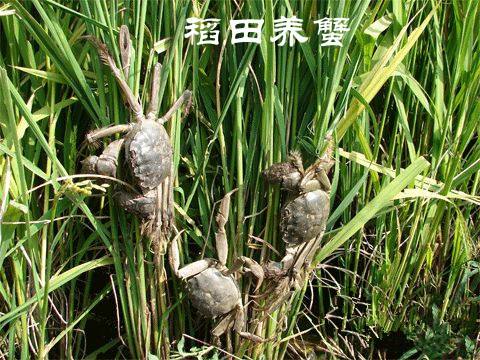
Raising crabs in rice paddies is an ecological farming and breeding model that has emerged in recent years. Raising crabs in rice paddies can not only clear weeds from the paddy field, giving the rice abundant light, but also prevent rice pests and reduce the use of pesticides and chemical fertilizers, ensuring both the high quality and ecological nature of the rice and the quality and safety of the river crabs, achieving a win-win for both planting and breeding. The technique of raising crabs in rice paddies is simple, and the breeding benefits are good. Today we will introduce a set of techniques for raising crabs in rice paddies, for farmers' reference.
1、Construction of paddy field facilities
In rice paddies used for raising crabs, the rice yield per mu can reach more than 450 kg, and crabs 10 kg. The paddy field for raising crabs should be selected from mid-maturing late japonica or hybrid japonica fields with sufficient water sources, good water quality, convenient irrigation and drainage, strong water retention, and fertile soil; waterlogged fields that never dry out year-round can also be used. The ridges around the crab-raising paddy field should be raised and reinforced, with a ridge height of 66 cm, pounded solid with soil, to prevent water leakage and crab escape. Around the field, a compound embankment river should be excavated, with an embankment of 2~3 m, a river width of 3 m, a depth of 1.5 m, and a slope ratio of 1:2. In larger fields, crab ditches should be excavated in the middle, with both ditch width and depth of 50 cm, and the overall layout can be made into shapes such as "", "", and "", with their area accounting for 10%~15% of the total area.
Raising crabs in rice paddies requires the construction of fencing escape-prevention facilities and inlet and outlet escape-prevention facilities. First, build a calcium-plastic board escape-prevention wall. Calcium-plastic boards with relatively strong oxidation resistance can be selected to fence around the field, with the boards buried 10~20 cm below the soil, about 50 cm above the ground, supported on the outside with wooden stakes, and the gaps between two calcium-plastic boards tightly fastened with fine iron wire, with the four corners made into arcs. This kind of escape-prevention wall has the advantages of convenient transportation and installation, low cost, and good effect, and generally can be used for 2~3 years.
Second, an escape-prevention wall with a structure of reed mats and plastic film (or asphalt felt). Bury reed mats of relatively good quality, 80~100 cm wide, around the field about 5 cm below the soil, fix them on the outside with a wooden stake every 2 m, with the wooden stakes inserted more than 15 cm into the soil, and on the inside fix commercially available plastic film (asphalt felt) to the reed mats with fine iron wire, with the film (or asphalt felt) buried 2~3 cm and about 48 cm above the soil, and the entire upper end of the escape-prevention wall can be tilted inward somewhat. This kind of escape-prevention wall has a very low cost, but it is not very wind-resistant, so it must be repaired and replaced in time, and its service life is generally only 1~2 years. Double-layer film or asphalt felt can also be directly fixed to wooden stake fencing for escape prevention, but its effect is relatively poor.
Third, the setting of water inlet and outlet. According to the migratory habits of crabs, and to facilitate crab catching, the water inlet is best set on the northwest or west side of the field, and the water outlet on the southeast or east side. The foundation of the inlet and outlet should be pounded solid, laid with a layer of flat bricks, and then placed with a cement pipe of 40 cm diameter, built with cement and sand and stone, with no gaps at the joints, and the water inlet is best made in a curved shape. The inlet and outlet should be sealed with polyethylene mesh, and an additional bamboo fence should be built, with mesh added on top, to prevent crabs from escaping through the inlet and outlet.
2、Regulation of paddy field water quality
Rice varieties such as Shanyou 63, Nanyou No. 6, Liuyou No. 1, Wuyujing No. 3, Yanjing 187, and Yanjing 235 are suitable.
Applying base fertilizer to the paddy field: before transplanting the seedlings, sufficient base fertilizer should be applied to the crab-raising paddy field. Organic fertilizer is preferable as the base fertilizer, and cake fertilizer is best, with long effectiveness and good results. Generally, 250~500 kg of human and animal urine and manure and 150~200 kg of cake fertilizer can be applied per mu. In areas lacking organic fertilizer, inorganic fertilizer can also be used as a supplement, and the total application amount should be appropriate to basically guarantee the growth needs of the rice throughout its whole growth period.
Seedling field transplanting: 2~3 days before transplanting the seedlings, apply a highly effective pesticide to the seedlings once to prevent the spread and expansion of rice diseases and pests. Usually, shallow-water transplanting is adopted, with wide rows and dense plants, to give play to marginal advantages and increase rice yield. Within one week after transplanting the seedlings, especially before the seedlings turn green, the entry of crabs into the seedling field should be minimized as much as possible, so as not to affect the survival of the seedlings.
Water quality regulation: in crab-raising paddy fields, the dissolved oxygen in the water generally needs to be maintained above 5 mg per liter, with a pH value of 7.5~8.5. When the seedlings are transplanted into the main field, the water level in the field is about 20 cm, and afterward, as the water temperature rises and the seedlings grow, the water level is gradually raised to 60 cm. After May, change the water once every 7~15 days, and once every 2~3 days in the high-temperature season, each time changing about 20 cm of water. When changing the water, note that the temperature difference between inside and outside the field must not exceed 3°C~5°C, and avoid changing the water during the periods when crabs are lurking and resting and at their best feeding time.
Paddy field management: crab-raising paddy fields generally receive only 1~2 topdressings during the whole growth period, each time using about 2.5 kg of urea per mu.
3、Specifications for stocking seedlings and seeds
Field clearing and disinfection: about one month before stocking the seedlings and seeds, drain the water in the compound embankment river and crab ditches, expose them to the sun for several days, then add 5~10 cm of water, and use 75 kg of quicklime per mu dissolved in water, and sprinkle it over the whole pond before it cools. Before releasing crabs, fish should also be temporarily kept to test the water, to check whether the medicinal properties have completely disappeared.
Stocking time: for raising adult crabs in paddy fields, generally in February to April, when the water temperature reaches 5°C~10°C, choose a sunny day and put the crab seeds into the compound embankment river. For raising juvenile crabs in paddy fields, usually in May to June, release the crab seedlings into the compound embankment river (paddy fields are not suitable for mixed fish-crab culture).
Specifications and density: for raising adult crabs in paddy fields, it is generally appropriate to stock crab seeds of 60~150 per kg. The stocking density should be flexibly controlled according to the conditions of the paddy field, and it is appropriate to stock 2.5~5 kg per mu. It is best to stock crab seeds of the same specification in the same field; when crab seeds of different specifications are mixed, the feed must be fed very sufficiently. For fields where water quality regulation is relatively difficult, a small number of silver carp and bighead carp can also be added, generally stocking about 1 kg of silver carp and bighead carp fingerlings per mu in the compound embankment river. For raising juvenile crabs in paddy fields, it is appropriate to stock about 250 g of megalopa per mu.
4、Daily feeding management
Bait feeding: for fields raising juvenile crabs, fertilize the water first and then release the seedlings. After the crab seedlings are put into the field, feed soybean milk or egg yolk 1~2 times a day, sprinkled evenly. After one week, gradually switch to paste feed, such as soybean cake paste, rapeseed cake paste, wheat bran paste, pumpkin paste, sweet potato paste, and paste made by chopping some animal internal organs, etc., and feed sufficient aquatic plants; during molting, add an appropriate amount of molting hormone to the feed.
For fields raising adult crabs, stock 50~100 kg of live snails into the compound embankment ditch according to 50 g of crab seeds stocked, let them spawn and reproduce on their own for the crabs to eat, and appropriately feed some soaked or cooked plant-based bait such as wheat and corn, and add some duckweed. July to October is the vigorous growth period of crabs; feeding should achieve sufficient quantity, comprehensive nutrition, and freshness without pollution, feeding sufficient animal and plant bait, such as snail meat, mussel meat, silkworm pupae, fish and shrimp, animal carcasses, slaughtering scraps, and aquatic plants, wheat, grain, cakes, etc. Before and after crab molting, add molting hormone to the feed, and also appropriately increase the feeding of some calcium-rich bait such as eggshell powder, bone powder, and shrimp shell powder. After November, the water temperature gradually drops, and the feeding amount can be appropriately reduced. The daily feeding amount should be flexibly controlled according to the water temperature and the crab feeding situation of the previous day, generally 5%~10% of the crab body weight. The feeding frequency is 2 times a day, feeding 1/3 at 6~8 a.m. and about 2/3 at around 6 p.m., and the feeding place is best on the shallow-water sloping bank by the ditch and river. Feeding should achieve "fixed time, fixed location, fixed quality, and fixed quantity".
Daily management mainly consists of patrolling the field, once each in the morning and evening, checking whether the escape-prevention facilities are damaged, whether the inlet and drainage channels leak, observing the feeding, molting, and growth of the crabs, and promptly removing suitable and rotten spoiled residual bait.
Disease prevention and control: at present, there are relatively few diseases in raising crabs in rice paddies, and prevention is generally the main approach. When stocking, use 0.2 ten-thousand international units of malachite green solution to medicate the crabs in a bath. During the breeding period, use 15~25 kg of quicklime per mu to sprinkle once a month in the compound embankment river and crab ditches, and regularly mix oxytetracycline into the bait for feeding. The more harmful enemies to raising crabs in rice paddies include water rats, water snakes, frogs, water birds, etc., which can be eliminated by various methods such as placing rat poison at the field edges, setting rat cages and rat traps, "scarecrows", and manual catching and killing.