Key Technical Points and Detailed Breeding Methods for Raising Turtles in Orchards
Raising turtles in orchards is a good way to make full use of the ecological space of plants and animals and increase the economic benefit per unit area. It helps save the cost of artificial turtle farming and reduce insect pests in fruit groves, and it can also improve land utilization.
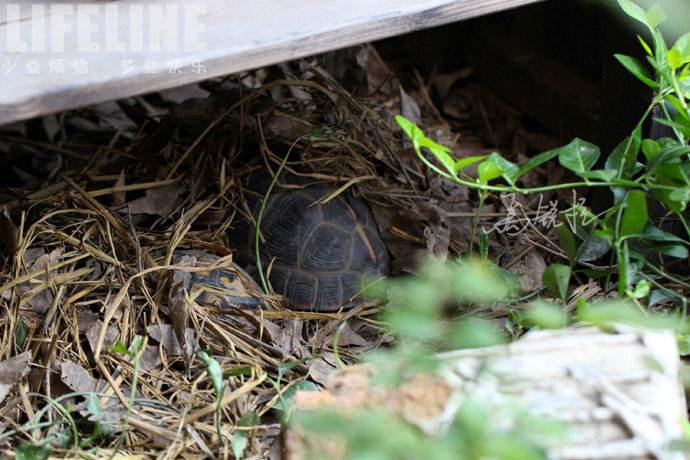
I.Building Rearing Facilities
(1) Build escape-proof walls. Build low walls around the orchard, with the wall foundation extending about 20 cm underground to prevent turtles from digging burrows. The low walls should rise 60 cm above the ground, and the corners should be rounded, which can effectively prevent turtles from escaping.
(2) Build protective shelters. At suitable spots in the middle or at the four corners of the orchard, design and build several small houses according to the number of turtles being raised. When toxic pesticides are sprayed in the orchard to control pests, all the turtles can be moved indoors to prevent poisoning and death, and they can be released again after 1 to 3 days. Choosing high-efficiency, low-toxicity, low-residue pesticides can also prevent turtle poisoning. In winter, the turtles can be moved indoors to overwinter, covered with dry weeds, and regularly sprinkled with a little water to maintain moisture. In colder northern regions, plastic film should be added as a cover, and the turtles can also be moved into a basement to overwinter. In addition, build several shade shelters to help the turtles rest and escape the heat in summer.
II.Selection of Turtle Species
In any conventional orchard in China, turtles can be raised as an additional crop, but it is best to choose drought-tolerant species, such as the golden-headed turtle, keeled box turtle, tortoise, Asian leaf turtle, yellow-margined box turtle, and others among the land tortoises. These turtles have strong drought tolerance and can grow normally even without entering water for several months. If semi-dry-land turtles such as the Chinese pond turtle or the seven-colored turtle are chosen, that is also acceptable, but ditches or small ponds must first be dug in the orchard for them to bathe and rest. The stocking density should be low; generally, 200 to 300 medium-sized or two-year-old turtles are stocked per 0.067 hectares of orchard for commercial production.
III.Feed Placement
At night, hang several electric lights in the orchard to attract insects to the lights. This can draw the harmful insects busy laying eggs in the orchard to the lights, where the turtles can catch and eat them. This not only reduces the harm caused by orchard pests, but also reduces the number of pesticide applications in the orchard and saves pesticide costs. It can also reduce the amount of artificial feed given to the turtles by 30% to 50%, because insects are a high-grade, high-protein feed, thereby saving feed costs and achieving two benefits at once.
On cloudy and rainy days or in early spring and early winter, when the number of insects attracted is not large, artificial feed amounting to 3% to 4% of the turtles' body weight can be fed each day. In sunny weather and summer, when many insects are attracted, the amount of artificial feed can be reduced, generally to 1% to 3% of the turtles' body weight. The amount should also depend on how many insects are attracted that night, and the next morning some feed can be appropriately supplemented according to the situation.
IV.Disease Prevention and Control
Because turtles move over a large range under the fruit trees, they generally rarely become sick, but prevention should still be the priority. Once a month, gather the turtles together for disinfection once, using a 2000-fold bleaching powder solution for bathing. In summer and autumn, gastroenteritis is occasionally seen and can be treated with norfloxacin. Young turtles must be protected from attacks by field mice, yellow weasels, large snakes, eagles, and others.