Solutions to ventilation problems in summer chicken farming
In summer, many of us farmers are worried sick about ventilation. Either the temperature cannot be brought down and heat stress and heatstroke occur, or we fail to get the balance right and cool too much, causing cold stress and wind-cold infections. In fact, these problems are mainly caused by wind speed being too low or too high, the wind direction being wrong, or humidity being too high. These causes stem from both configuration issues and improper operation.
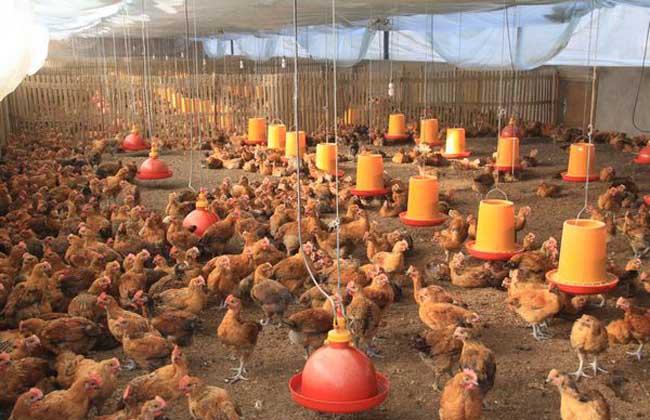
1. Why are the chickens fine in some houses at 28°C? Why are the chickens in other houses at 28°C all opening their beaks wide?
The crux of the problem:The wind speed over the chickens' backs is too low, so the chickens' perceived temperature is high. When the house is at 28°C, assuming the relative humidity inside is 70%, at a wind speed of 2m/s the chickens' perceived temperature is 22~23°C; at a wind speed of 1.5m/s the chickens' perceived temperature is 24~25°C; at a wind speed of 1m/s the chickens' perceived temperature is 25.5~26°C.
Cause 1:Some farms only consider ordinary high temperatures in summer and ignore hot, humid weather, in order to save on investment. Fewer fans are installed. In hot, humid weather, the cooling efficiency of the evaporative cooling pad is low, so the only option is to increase ventilation to lower the chickens' perceived temperature.
Cause 2:Poor fan quality and unstable performance mean low exhaust efficiency under relatively high negative pressure. For example, some fans are rated on the nameplate at an exhaust capacity of 43000m3/h at 0pa static pressure, but because of the shape and material of the blades, the strength is insufficient, and under -20pa negative pressure operation the exhaust capacity is only 30000m3/h, far below the typical figure of 37000m3/h.
Cause 3:Lack of fan maintenance: worn bearings, loose V-belts or blockages by chicken feathers, without timely replacement and cleaning, cause the exhaust efficiency of the fans to decline. Or the fans are aging and not replaced in time.
Cause 4:Calculation errors lead to too few fans being installed. I have seen a large modern broiler farm with stacked cage housing, house dimensions 100m*19m*4.2m~6m, 24 longitudinal tunnel fans, an aisle wind speed of 3.1m/s, and a wind speed of only 0.75m/s at a depth of 50cm inside the cages; the summer rearing results were not very good. If this farm had been built in the dry climate of the northwest region, the evaporative cooling pad could have lowered the house temperature to 23~24°C, and such a configuration would have had no problem cooling in summer. In reality, however, this farm was built in a coastal region, where the average summer humidity is above 80%, the evaporative cooling efficiency of the pad is low, and cooling depends mainly on fan ventilation, so it is obvious that too few fans were installed.
* Improvement methods:Maintain frequently, replacing bearings and V-belts and cleaning off chicken feathers in good time; replace fans that have been in use for a long time and have low exhaust efficiency; if too few are installed, add more fans, and base the configuration calculation on the wind speed required for extreme hot and humid weather.
Cause 5:When the evaporative cooling pad is turned on, the negative pressure is too high, causing strong wind at the front and stuffy, oxygen-deficient air at the back. Even if the temperature is not high, the chickens are still harmed, especially adult chickens.
* Improvement methods:Increase the area of the front air inlet, thereby reducing the wind speed at the front, increasing the wind speed at the back, and lowering the negative pressure.
2. In local areas, the feed intake of the chickens not only does not increase but temporarily decreases, and the chickens in that area are underweight. This phenomenon generally occurs in houses with flat net-bed rearing.
Cause 1:The design wind speed is too high. When designing the ventilation configuration, the maximum figure of 2.5m/s was used, and a leakage compensation of 0.25m/s was added, but the wind resistance effect of the net-bed frame was ignored. In addition, the wind speed in the middle of the house is greater than at the sides, so when all the fans are running at full capacity, the wind speed over the chickens' backs in local areas can reach above 3m/s. When the wind speed over the chickens' backs is above 2.5m/s, the chickens' feed intake shows a temporary slight decrease, but it soon recovers; when the wind speed over the chickens' backs is above 3m/s, feed intake shows a clear decline.
* Improvement methods:Install a manual switch on 10~15% of the fan circuit as a backup, normally kept off, to be turned on in extreme hot and humid weather, or when other fans fail.
Cause 2:Improper grouping of fans: the last group controls too many fans and is turned on frequently, so the wind speed suddenly rises and fluctuates up and down considerably, which causes stress in the chickens and a drop in feed intake. For example, in a certain house with 5 side-wall fans and 8 longitudinal tunnel fans, if a 5-stage ventilation controller is used, with the side-wall fans in 2 groups and the longitudinal tunnel fans in 3 groups (2/2/4 or 2/3/3), a wind speed drop of 0.8~1m/s is bound to occur.
* Improvement methods:Replace the environment controller and add more fan groups, so that the maximum wind speed drop does not exceed 0.5m/s.
Cause 3:The evaporative cooling pad air inlets on both sides have no deflectors, and the inlet wind speed is 3~5m/s. Such a high wind speed blows directly onto the chickens, causing stress.
* Improvement methods:Install insulated deflectors, to deflect the air in summer so that it flows diagonally upward and does not blow directly onto the chickens, and also to provide insulation in winter.
3. The deaths of older chickens suddenly increase, and the deaths mainly occur at night, with the main deaths being the heavier chickens. When the heat stress index in the house is above 165, the above phenomenon occurs; when the heat stress index is greater than 170, large numbers of deaths occur. There are dedicated articles on heat stress, so I will not say more about it here.
Cause 1:The relatively common situation is excessive humidity inside the house, low wind speed and too high a temperature; the most common operational error leading to this is turning off fans or reducing the number of fans running during spray cooling.
* Improvement methods:During spray cooling, normal ventilation must be maintained; in hot and humid weather, slightly increase ventilation and turn on the backup fans.
Cause 2:After a power outage in summer, the remedial measures are not timely. Even if there is a backup generator, long-term disuse means it cannot be started in time at the critical moment.
* Improvement methods:Regardless of whether a power outage occurs, start and run the backup generator set once a month.
4. Cooling is difficult in local areas, and the chickens leave those areas on their own. This phenomenon mostly occurs in flat-rearing houses, especially floor-rearing houses, and mostly in the middle of the house and in the flank areas on both sides.
Cause:This phenomenon is mostly caused by improper operation: the cooling pads are installed on both sides at the head end, and the negative pressure at the cooling pad air inlets is too low or too high, so the airflow coverage is uneven.
* Improvement methods:Adjust the size of the cooling pad openings according to the width of the house and the number of fans. If you do not know how to do this, hang a cassette tape between the left and right cooling pad air inlets and on both sides inside the house at intervals of about 1.5m, and adjust the size of the air inlets by observing how the tapes flutter. It is best to install a 24-inch flat-panel stirring fan on both sides inside the house at intervals of about 15 meters to force even air circulation.
5. The temperature difference between the tail end and the head end exceeds 3°C, and in some high-density cage-rearing houses it even exceeds 5°C.
Cause 1:The house is too long. The houses on large-scale chicken farms are getting longer and longer: many flat-rearing broiler houses are 120 meters, some even 150 meters, and cage-rearing houses are mostly 80~100 meters. As the low-temperature air entering at the head end flows toward the tail end, the heat produced by the chickens continuously raises the temperature of the flowing air, so the temperature at the tail end is higher than at the head end. The longer the house, the greater the temperature difference.
* Improvement method 1:Move 15~20% of the cooling pad from the head end to the middle of the house, so that the wind speed over the chickens' backs in the front half is 2m/s and in the back half is 2.5m/s. This can reduce the temperature difference, and the chickens' perceived temperature can also remain basically consistent. This method must be calculated accurately; if the cooling pad area in the middle is too large, the effect will be counterproductive.
* Improvement method 2:For houses longer than 120 meters, you can try installing cooling pads on the side walls in the middle of the house and fans at both ends of the house, but such fans and cooling pads require double the investment.
Cause 2:The house is not tightly sealed. This is mainly because the air inlet windows, daylight windows, the gaps between the eaves and the walls, the head and tail doors, and the manure outlets are poorly sealed, causing the wind speed inside the house to be lower than the design wind speed or the wind speeds at the front and back to differ too much.
* Improvement methods:Improve the airtightness of the house. In particular, the manure outlet at the tail end can be sealed with a 3mm-thick soft rubber sheet, nailed at the top edge, so that it opens and closes automatically as the manure cleaner moves in and out.
Cause 3:The air exchange time is too long. In summer, if the wind speed is too low, the air exchange time of the house becomes too long, thereby increasing the heat accumulation in the flowing air and causing too great a temperature difference. Generally speaking, the air exchange time for flat-rearing houses should be no more than 60 seconds, and for cage-rearing houses no more than 45 seconds.
* Improvement methods:Increase the wind speed inside the house: 2~2.5m/s for flat-rearing houses, 2.3~2.7m/s for stepped cage-rearing houses, and 3~4m/s for stacked cage-rearing houses.
6. The cooling pad water pump is turned on, but the cooling effect is not obvious: only within 10~15 meters of the head end of the house does it feel cool, and beyond that it is hard to bring the temperature down.
Cause 1:In hot and humid weather, for example on a day of blazing sun after a thunderstorm, the outdoor relative humidity exceeds 80%, evaporation is difficult, and the cooling effect is not obvious.
* Improvement methods:Change the water source for the spray line from normal-temperature water to low-temperature well water, while maintaining normal ventilation, and use water cooling to force the temperature down. When the outdoor relative humidity exceeds 80%, the relative humidity inside the house is also very high, and at this time spraying has very little effect on the relative humidity inside the house.
Cause 2:The spray nozzles are clogged and need to be cleaned.
* Improvement methods:Add a backflushing device and flush regularly.
Cause 3:The cooling pad is clogged by dust, chicken feathers, leaves and the like.
* Improvement methods:Install protective netting and replace the cooling pad paper once every 4~6 years.