Laying Cycle of Laying Ducks and Feeding Management Techniques During the Laying Period
The feeding management of laying ducks during the laying period is mainly aimed at increasing the laying rate and egg weight, reducing broken eggs, saving feed and lowering the mortality and culling rate. According to the age in weeks, laying rate and physiological characteristics of laying ducks, it can be roughly divided into three stages: early laying period, mid laying period and late laying period. At each feeding stage, different nutrients should be provided and corresponding management measures should be adopted to meet the nutritional needs of laying ducks.
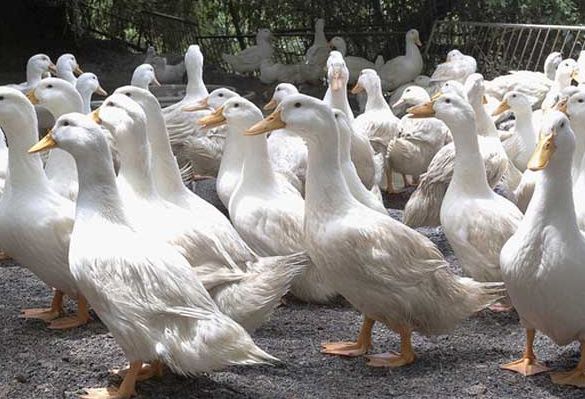
>> Laying Cycle of Laying Ducks and Feeding Management During the Laying Period
I. Feeding management during the early laying period
During the early laying period (150-300 days of age), the focus is to increase the nutrient concentration in the daily ration and the number of feedings, to meet nutritional needs and ensure that the duck flock smoothly reaches the peak of laying. When the laying rate reaches 50%, add 10 grams of fish meal per duck per day; when the laying rate is 70%, add 15 grams of fish meal; when the laying rate reaches above 90%, add 18-20 grams of fish meal, and maintain this level thereafter. The number of feedings should be increased from 3 times per day to 4 times per day, 3 times during the day and 1 time at 10 p.m. at night. The average light duration should be 14 hours, and it should gradually increase from short to long. During this period, the larger the duck eggs and the faster the momentum of increased production, the better the feeding management. Otherwise, find out the cause promptly and make improvements. The laying rate gradually rises, especially for ducks that start laying in early spring, the laying rate rises faster. Generally by 200 days of age, the laying rate can reach about 98%. If the laying rate fluctuates or even declines, it is due to feeding reasons. Weigh a sample once a month (when the ducks are empty in the morning). If the average body weight is close to the standard body weight, it indicates that the feeding management is proper; if it exceeds the standard body weight, it indicates excess nutrition and feed should be reduced or the proportion of coarse feed should be increased; if it is below the standard body weight, it indicates insufficient nutrition and the feed quality should be improved.
II. Feeding management during the mid laying period
During the mid laying period (301-400 days of age), the focus is to ensure high production of the ducks and strive to maintain the peak laying period until after 400 days of age. The nutrient concentration of the daily ration should be slightly higher than in the previous stage, adding 22 grams of fish meal per duck per day, or feeding a compound feed containing 20% protein, with each duck consuming 150 grams per day, and appropriately feeding more green feed and calcium. The amount of aquatic grass fed should be 150 grams per duck per day, or add multivitamins and add 1%-2% granular shell powder. The daily light duration should be stabilized at 16 hours. The house temperature should be maintained at 5°C-10°C; if it exceeds or falls below this standard, adjustments should be made. The daily operation routine should remain stable. At this time, if the eggshell is smooth, thick and glossy, it indicates good quality. If the egg shape becomes elongated, the shell is thin and translucent with sandy spots, or even soft-shelled eggs appear, it indicates poor feed quality, especially insufficient calcium content or lack of vitamin D, and supplements should be added. If laying occurs around 2 a.m. in the deep night, with concentrated and uniform laying times, it indicates proper feeding management. Otherwise, measures should be taken promptly.
III. Feeding management during the late laying period
The focus is to determine feed quality and feeding amount according to the body weight and laying rate of laying ducks during the late laying period (401-500 days of age). If the laying rate of the duck flock is still above 80% while the body weight of the ducks has slightly decreased, animal-based feed should be appropriately added to the feed; if the body weight increases, the metabolizable energy in the feed should be appropriately reduced or the feed intake should be controlled; if the body weight is normal, the crude protein in the feed should be slightly increased compared with the previous stage; the light duration should be maintained at 16 hours per day, and the ducks should be driven to move in circles inside the house 3 times a day, about 5-10 minutes each time. When eggshell quality and egg weight decline, supplement cod liver oil and minerals. Keep the microclimate inside the duck house and the operation routine relatively stable to avoid stress reactions.