Key Technical Points and Feeding Management Methods for Black Carp Aquaculture
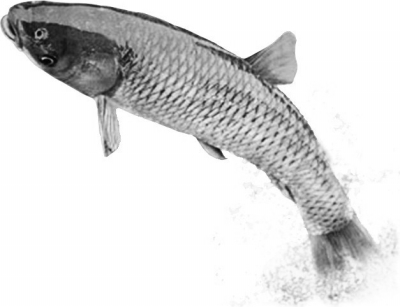
The black carp has a bluish body and is one of China's "Four Major Chinese Carps" in freshwater aquaculture, mainly distributed in the plains south of the Yangtze River in China. The black carp is large in size, simple to feed, and grows rapidly, offering broad prospects for artificial breeding. This issue introduces a set of black carp aquaculture techniques for farmers' reference.
1.Maintain Water Quality to Ensure a Suitable Growth Environment
Fingerlings should be stocked by around the end of February, as the water temperature is lower at this time, the fish scales are tighter, and fingerlings are less likely to be injured during netting, transport, and other operations. Stock 200-250 second-year black carp fingerlings weighing 1 kg each per mu (667 sq m), together with 100 silver carp fingerlings weighing 0.3 kg each, 50 bighead carp fingerlings, and 20 snakehead fingerlings weighing 0.05 kg each. Before the fingerlings are put into the pond, bathe them for 20-30 minutes in a mixture of 8 g copper sulfate and 1 g bleaching powder per sq m, or disinfect them in 3%-5% salt water for 15 minutes.
For black carp broodstock, select individuals aged 6 years or older, weighing over 15 kg, robust in constitution, uninjured, with a female-to-male ratio of 1:1 for conditioning. The conditioning pond should be 3-7 mu (2000-4667 sq m) in area, with a water depth of over 2 m, a flat bottom, and loam soil, stocking 1-2 fish per mu. One month before induced spawning, concentrate the black carp in a dedicated pond for rearing.
Feed black carp broodstock mainly with fresh snails and mussel meat, supplemented with a small amount of rapeseed cake and soybean cake bait. Flush the pond with water regularly: generally once a month in winter, once every 5-7 days each month after the beginning of spring, and once every 3-5 days in the month before spawning to promote gonadal development of the broodstock. After polyculture, generally ensure the pond water stays clean and regularly add fresh water so that water quality meets the "fertile, lively, tender, and refreshing" requirements. In spring and autumn, generally add water 2-3 times a month; in summer, add water 5-8 times a month, each time adding 8-12 cm. In June, splash quicklime over the whole pond once every 15-20 days (at a rate of 15-20 kg per mu); in spring and autumn, generally change the water once per season; in summer, change the water once a month, each time replacing 1/5-1/4 of the original pond water. When changing water, the cover can be removed directly, because the black carp is a bottom-dwelling fish, so fish will not escape during drainage, but the cover must be replaced immediately after drainage is completed.
Patrol the pond every evening, and on overcast and rainy days, observe at midnight and turn on the aerator as needed. Generally from June to September, turn on the aerator for 1-2 hours at noon on sunny days; when fish are gasping severely at the surface, the aerator must be kept running until dawn; in colder weather, it is not necessary to run the aerator every day.
2. Artificial Induction of Spawning to Improve Broodstock Breeding Capacity
The Yangtze River black carp first matures at 3-6 years of age, generally 4-5 years, with males maturing 1-2 years earlier. Mature females are generally about 1 m long and weigh about 15 kg. Mature males are generally about 900 mm long and weigh about 11 kg. The breeding season is from May to July, and a general rise in river water levels can stimulate spawning. Spawning activity is relatively scattered and lasts for a long period. Spawning grounds are distributed in the Yangtze River section from Chongqing to Daoshifu, and also in the tributaries Hanshui and Xiangjiang, but on a small scale. The absolute fecundity averages 100,000 eggs per kg of body weight, with a maturity coefficient of about 14%; after artificial induction, about 50,000 eggs can be obtained per kg of body weight. The eggs are pelagic, with a transparent egg membrane, an egg diameter of 1.5-1.7 mm, and after water absorption and swelling, they can reach 5-7 mm. Sperm generally retains fertilization capacity for only 1 minute after being released into freshwater. The suitable temperature for embryonic development is 18°C-30°C, with an optimum of 26°C±1°C; below 17°C or above 30°C will cause developmental arrest or deformities. At a water temperature of 21°C-24°C, larvae hatch in about 35 hours. Newly hatched larvae are pale yellow, 6.4-7.4 mm long, and slightly curved. After the yolk sac disappears and the swim bladder appears, black carp fry show a "mound"-shaped black pattern on the head and back. During the reproductive period, pearl organs appear on the inner side of the pectoral fins, operculum, and head of males, while the pectoral fins of females are smooth without pearl organs.
Spawning induction time is generally mid-to-late May, with a water temperature of 22°C-30°C, and 25°C being the most suitable.
Selection of black carp maturity directly affects the spawning induction effect, so black carp should be carefully selected when pairing for induced spawning. The selection standard for males is that gentle pressure on the abdomen causes milt to flow from the genital pore and disperse after being mixed with warm water; for females, a distended, soft and elastic abdomen with relatively sparse abdominal scales is preferred.
Induced spawning agents commonly used for black carp include "PG" (pituitary gland), "LRH-A" luteinizing hormone-releasing hormone analogue, "HCG" human chorionic gonadotropin, GTH gonadotropin, "DOM" domperidone, and other spawning agents. Generally, when fish are gasping severely at the surface, the aerator must be kept running until dawn; in colder weather, it is not necessary to run the aerator every day.
3. Scientific Hatching to Ensure Breeding Efficiency
After the second injection of the spawning agent for estrus induction, return the black carp broodstock to the spawning pond. When the effective time is reached and the black carp shows estrus, promptly carry out artificial egg collection and fertilization. The length of the effective time varies with water temperature: at 25°C-28°C, the effective time is 8-10 hours. At this point, carefully observe the dynamics of black carp estrus. Once the estrus time arrives, catch the black carp and place them in a fish carrier for examination. If gentle pressure on the abdomen of the female causes eggs to flow out from the genital pore on their own, and the male can release milt that disperses rapidly in warm water, artificial egg collection can begin.
For semen collection, perform dry artificial fertilization. If natural sperm and eggs cannot be collected, return the black carp broodstock to the spawning pond and wait for estrus. The collected eggs and sperm should be fully mixed to ensure fertilization. During artificial fertilization, avoid direct sunlight, which can damage the eggs. After fertilization, promptly dilute the fertilized eggs with water and place them in the circular raceway for hatching. Before artificial fertilization, prepare tools, basins, nets, fish beds, brushes, etc., and ensure coordinated teamwork with quick and gentle movements to avoid injuring the broodstock.
For circular raceway hatching, the artificially collected fertilized eggs should be promptly placed in the prepared circular raceway with flowing water for hatching, at a density not exceeding 1.2 million eggs per sq m. The flow rate in the raceway should be appropriate. In the early stage, the water flow rate is about 17 cm per second, just enough to lift the swollen fertilized eggs tumbling to the water surface. When the fry have just hatched, management should be strengthened. A mixture of 3-4 drugs usually gives a better spawning induction effect, and a two-injection method is used for induced spawning. For females, the first injection is 2-5 mg LRH-A per kg; after an interval of 8-12 hours, inject the second dose, which is LRH-A 10-20 mg + PO 2-4 mg + HCE 500-1200 international units, or additionally DOM 5 mg, mixed into a combined agent, administered by intraperitoneal injection. The injection dose for males is 1/3-1/2 of that for females, with an effective time of 8-10 hours.
4. Advance Prevention to Reduce Disease Outbreaks
Disease prevention and control should adhere to the principle of "prevention first, prevention more important than treatment, combining prevention and treatment." Strictly disinfect before stocking fingerlings. After they are put into the pond, splash 1 g crystalline trichlorfon per cubic meter over the whole pond once, then regularly disinfect with 25 mL quicklime and 1 mL bleaching powder, and regularly feed drugs to prevent enteritis. The bait should be fresh and palatable. Remove dead fish promptly and bury them deep in soil. Fishing gear used should be soaked and disinfected. Also splash chlorine-containing preparations over the whole pond for disinfection, and add drugs to the bait to make medicated feed. Black carp are extremely sensitive to drugs, and even slight carelessness during treatment can harm the fish, so fish drugs must be used strictly according to regulations.
Under high-density culture conditions, bacterial enteritis is very likely to occur, mostly from April to September. Once disease is found, treat it promptly. Usually, first remove the diseased fish from the water to prevent affecting other fish, then splash 100-fold diluted bleaching powder into the pond, or use 100-fold diluted crystalline trichlorfon, using 100 kg of solution per mu. Oral medication can also be used: add 40 g neomycin sulfate powder per 100 kg of feed, fed once daily for 2-3 consecutive times.