Hibernating Turtle Care: Management Methods and Technical Key Points
During a turtle's hibernation, careless husbandry can easily lead to the turtle's death. For turtles living in colder regions, the ideal hibernation temperature should be 7°C to 10°C; keeping a turtle in an environment that is too cold for too long will cause its death. The optimal duration for a turtle to remain in hibernation is 3 to 4 months. Turtles in the wild generally stay in hibernation somewhat longer, but under captive conditions, appropriately shortening the hibernation period will not have an adverse effect on their health.
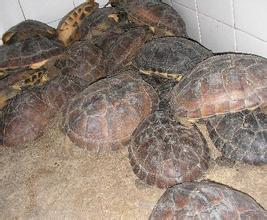
You may check on a hibernating turtle at most once a month. Only under very special circumstances should a keeper disturb a hibernating turtle. Disturbing it too often is very likely to increase the mortality rate of hibernating turtles.
After choosing a container for the turtle's hibernation, keepers must not simply place the turtles directly at outdoor temperatures and leave them there until hibernation ends. Any kind of hibernating turtle kept in an environment below 3°C for a long time will have an extremely high mortality rate. Before letting a turtle hibernate, you should also make sure its body is completely “empty”, to avoid rectal impaction caused by the drop in temperature. Method: one week before hibernation, give the turtle a 30-minute warm-water bath every day; this is the key to “cleansing” the turtle's digestive system. Be careful to determine whether the turtle you keep actually has a habit of hibernating. If you indiscriminately force turtles that do not normally hibernate to hibernate, it can also cause their death.
Issues to note after hibernation: when the hibernation period is about to end, keepers can go “wake up” the hibernating turtle. But you cannot simply move the hibernating turtle to a warm place and leave it at that, as this can cause sudden death or trigger other diseases. Instead, the ambient temperature around the hibernating turtle should be raised gradually, giving it a slow process of adaptation. This process should last about 1 week.
A turtle that has just woken from hibernation has no interest in food and refuses to eat. Keepers should first feed small amounts of high-quality food, mix an appropriate amount of nutritional supplements and antibiotics into the food, and gradually increase the feeding amount. After some time, feed according to the turtle's maximum food intake, so that the turtle's condition recovers as quickly as possible.
During hibernation, a turtle's metabolism slows, digestion stops, circulation slows, and immune and other self-protective functions weaken or stop, so diseases can take advantage of the situation. It is recommended that keepers not let sick or weak turtles hibernate. For newly hatched turtles, it is best not to let them hibernate during the first two years. For hatchlings that cannot hibernate, you can use heated indoor husbandry when winter temperatures drop. If you keep tortoises, you can use an ordinary desk lamp fitted with an ordinary incandescent bulb or a reptile-specific bulb (containing ultraviolet), a reptile-specific heating mat, a heat stone, or place an electric heater in the room for warmth. But be careful not to let the air get too dry. If you keep aquatic turtles, you can place a thermostat heater in the water so they can safely get through the winter.