Why do beef cattle stop putting on weight as soon as winter sets in?
Once winter comes, the weather turns cold and temperatures drop, and many cattle owners find that their beef cattle grow more and more slowly. So how can you keep beef cattle growing fast enough in winter? In winter, besides meeting the cattle's needs for various nutrients, you also need to solve two problems: one is sunlight, and the other is activity level. In other words, after the cattle eat their fill, let them move less and bask in the sun more. There are many other methods too. Today I'll explain to cattle owners how beef cattle can grow faster in winter. Cattle owners can refer to these methods and see which one they can put to use themselves!
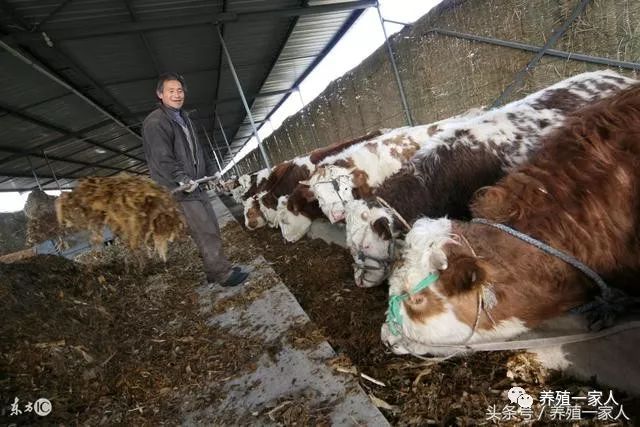
1. Pay attention to the barn temperature, and be sure to keep it warm
How fast beef cattle grow in winter is closely related to temperature. First, the lower the temperature, the more energy the cattle burn to keep warm, and correspondingly their growth rate drops. Second, at low temperatures the cattle's gastrointestinal motility slows down, leading to reduced feed intake and poor absorption. Temperature has a major effect on feed consumption and weight gain in fattening cattle. The most suitable temperature for a cattle barn is 10-20°C. When the average barn temperature falls below 7°C, the cattle produce more body heat, eat more, and feed efficiency drops. When the barn temperature exceeds 27°C, the cattle's body temperature rises, their breathing rate increases, their appetite drops, they eat less, and weight gain suffers. So in summer you should focus on ventilation and cooling, and in winter on protection against the cold, so that the barn meets the requirement of warm in winter and cool in summer.
If you want beef cattle to grow fast in winter, keeping them warm is key. The optimal growing temperature for beef cattle is 10-21°C. Of course, many cattle barns can't reach 10°C in winter, so you should at least try to keep the barn above 5°C.
2. Many cattle raisers give their cattle cold water in winter too, but warm water is better for cattle growth
Beef cattle given warm water in winter gain more than 20% more weight than those given cold water. This is because cold water irritates the cattle's stomach and intestines and lowers the absorption rate.
3. In China's Inner Mongolia region, most cattle are grazed, and of course there is grazing in other regions too; be sure to increase the amount of concentrate fed to the cattle
Because withered grass in winter has low nutritional value, grazing alone can hardly meet their nutritional needs. Only by appropriately increasing the amount of concentrate feed can beef cattle grow faster. In some areas, people may feed a little concentrate only when it gets to the very coldest part of winter, and that concentrate is just cornmeal or wheat bran, which is not the right way to do it.
4. Remember to supplement trace elements
In winter, because there is no fresh forage, beef cattle lack trace elements, which also causes slow growth. You should add cattle premix to the feed and hang salt bricks in the cattle barn. When choosing a premix for cattle, be sure to choose one from a legitimate manufacturer, because some non-legitimate manufacturers may pass off pig and poultry feed as cattle feed, which is very harmful.
5. In winter, pay even more attention to disease prevention on the cattle farm
Deworming and stimulating the appetite must be carried out. In daily management, keep the pens sanitary, do not feed moldy or spoiled feed, ensure adequate drinking water, keep the environment quiet, and use confined housing with less movement, so as to achieve the ideal weight gain. If cattle get sick, their growth rate will inevitably drop; with some more serious diseases in particular, the cattle may not recover for a long time. The most common one now is foot-and-mouth disease, and recently quite a few cattle owners have said their cattle caught it. To prevent disease, first give the cattle their vaccines, second strengthen feeding management to improve the cattle's constitution, and finally do a good job of disinfection and sanitation.
6. There is one more trick you may not have tried, and that is feeding oil
Feeding oil in winter can also increase the growth rate of beef cattle to a certain extent. Oil contains a lot of energy, and after the cattle eat it, it can also help them resist the cold. If you feed oil in other seasons, it will cause too much fat, making the cattle hard to sell at a good price. When you feed oil in winter, most of it is absorbed and used to keep warm, so the problem of too much fat generally does not occur. You must control the amount well: feed 100-300 grams per day according to the size of the cattle. Ordinary soybean oil, the kind usually kept at home, will do; just mix it into the feed and feed it.
7. Feed good feed
The protein content in the feed should be 12%, and for older fattening cattle it should be above 10%. If it falls below these levels, it will affect the cattle's weight gain rate. The proportion of roughage in the cattle's daily ration should be 30-40%. At present, the roughage fed to cattle in rural areas is of too poor quality and has an extremely low digestibility, so methods such as chopping short, ensiling, ammoniation and saccharification should be used to improve palatability, increase nutritional content and raise digestibility. The fineness to which feed is ground not only affects the palatability, feed intake and daily weight gain of fattening cattle, but also affects the feed conversion rate and feed cost. Feed should not be ground too fine; too fine will affect the cattle's rumination and digestion and easily cause indigestion. Concentrate feed is generally ground to 2-3 mm. In addition, you can also use feed specially made for the beef cattle fattening stage; it is formulated to meet the nutritional needs of fattening beef cattle for energy, protein, vitamins, trace elements, cellulose and so on, with comprehensive and efficient nutrition, fast weight gain and good fattening results.
8. Add "Life Source"
At present, the two most widely used in China are "zeranol" and "Life Source". Because they are not steroids and not hormone drugs, adding the above weight-gain agents to feed gives an average weight gain rate of more than 10%-20%. These weight-gain agents are non-toxic, odorless, free of side effects, leave no residue in the meat, and are safe and reliable.
If you can apply eight or nine out of ten of the methods above, your beef cattle will not grow badly. In addition, some people raising Simmental cattle, mainly beginners, do not know what weight bulls are usually marketed at when fattened; professionals suggest marketing them at 1200-1600 for best results.