Can you make money raising softshell turtles? A homemade dog food recipe using turtle shells has super high profits
There is a new development direction for raising softshell turtles, do you know what it is? Would you like to learn about it? It might bring you new income. The dog at home would actively gnaw on the turtle shells, which surprised her greatly. To prevent the puppy from being stabbed while gnawing on the turtle bones, she ground up the turtle shells to make dog treats. Unexpectedly, this became a business opportunity.
Hsieh Yu-tzu, one of the Second Top 100 Young Farmers, raises softshell turtles at home and also keeps more than a dozen dogs. She always uses her spare time to do stray dog rescue, spaying and neutering, and related work. One day she observed that the dogs at home liked to gnaw on the turtle shells discarded from farming, and she had a sudden idea: grind the turtle bones into dog treats and sell them. Unexpectedly, they were a hit with the dogs. Part of the sales proceeds are put into animal rescue, and it also found another way out for the family's softshell turtle business.
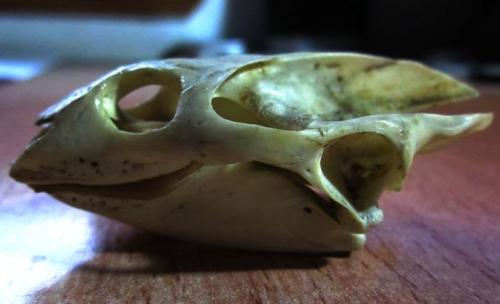
Dogs love gnawing on turtle shells, and a new business opportunity was unexpectedly discovered
"Turtle farmers throw dead turtles into ditches to wash away, but the rotting smell is foul." Hsieh Yu-tzu helplessly described a little secret of the industry. To keep turtle carcasses from rotting as they drifted with the water and giving off a stench along the way, she put her own dead turtles in baskets and let the water rinse away the rotting flesh until only the bones remained. After these turtle bones are properly cleaned and sun-dried, most are given to Chinese medicine merchants to make Chinese medicine.
One day Hsieh Yu-tzu discovered that the dogs at home would actively gnaw on the turtle shells, which surprised her greatly. To prevent the puppies from being stabbed while gnawing on the turtle bones, she ground up the turtle shells to make dog treats.
Hsieh Yu-tzu's dogs actively went to gnaw on the turtle shells, leading her to unexpectedly discover a new use for turtle shells.
Hsieh Yu-tzu named the turtle shell dog food "Gou Ken Ken." She revealed that Gou Ken Ken is made by low-temperature baking and only 40 packs can be produced each day. In addition to turtle shells, carrots and other ingredients are added. Once a dog at home fainted, and only then did she realize that dogs can also be anemic, so she changed the recipe and also added pork liver to supplement blood. She insists that Gou Ken Ken never adds artificial flavoring. When selling at a stall, she once met an owner who had no interest at all in Gou Ken Ken. At that moment she would bend down, take Gou Ken Ken and let the dog sniff it and try the taste, and every time she won the dog's heart. Hsieh Yu-tzu said that because turtle shells have a unique flavor for dogs, the more they chew, the more fragrant it becomes, and once they have eaten it they fall in love with it. Most of the dogs Hsieh Yu-tzu keeps were once stray animals, or were rescued from dog meat shops.
Rescuing dogs is more important than selling Gou Ken Ken
The reason Hsieh Yu-tzu can so confidently use aquatic waste such as turtle shells as treats is that she believes the turtles she produces are all safe and free of worry. She said that currently only 4 drugs are legally permitted for use on turtles, and more than 10 years ago she stopped using any drugs, letting the turtles be culled naturally, with an overall survival rate of only 30 to 40 percent. Turtles raised this way can be eaten with peace of mind by people, and of course animals can also eat them with confidence.
From the surplus of Gou Ken Ken sales after deducting costs, Hsieh Yu-tzu uses part as funding for spaying and neutering stray animals. "Rather than spending money to promote the Gou Ken Ken brand, it would be better to use the funds to rescue dogs." She shyly spoke the words she had hidden in her heart for two or three years, hoping that Gou Ken Ken can rely on word-of-mouth marketing, or cooperate with animal hospitals that identify with the idea.
When she usually rescues stray animals, she also takes Gou Ken Ken to feed the strays. She said, "These stray animals may never have eaten treats in their whole lives!" Besides Gou Ken Ken, Hsieh Yu-tzu had long ago developed many softshell turtle-related products. She once went all the way to the UK to study for a master's degree in marketing. After graduating, she returned to Taiwan, China, worked outside for a while, and then began to think about how to use what she had learned to open up new sales channels for the family's softshell turtle business instead of relying on the Chinese market.
After deciding to return home to take over the family business, she actively opened up domestic and international market channels and developed many novel products, turning softshell turtles traditionally used for tonic stews into health foods, turning turtle eggs into fashionable turtle egg wine, and combining education with ecological turtle egg hatching boxes, letting children observe the scene of little turtles breaking out of their shells and experience the process of caring for small lives.
"The pressure is huge. No one demanded that I must take over the family business, but once I spoke up there was no turning back, I could only succeed!" With this unyielding attitude, Hsieh Yu-tzu walked out a new path for the softshell turtle farming industry step by step.