Colombian vs Ecuadorian dragon fruit: which is better, plus prices and taste
Dragon fruit detoxifies and fights aging, and many people love to eat it. Even the 40-year-old ageless actress Charmaine Sheh publicly revealed earlier that she loves dragon fruit. And there is actually a lot to know about dragon fruit: depending on where it comes from, the taste and detox effects differ; plus dragon fruit is a cactus-family plant with a hard skin, so for ordinary shoppers to tell how fresh a dragon fruit is from its skin alone is not easy at all. Want to know how to choose? Let's take a look together.
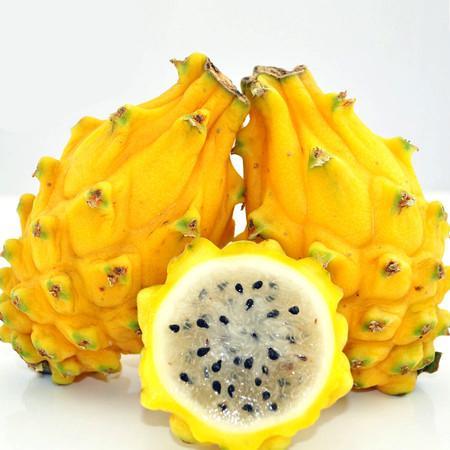
Mr. Wong, the person in charge of "Choice of the Stall" at the Yau Ma Tei fruit market, said that in the past year or two more and more people have been buying dragon fruit, and his stall mainly sells varieties from Ecuador and Colombia. He said that when Ecuadorian stock is plentiful, the cheapest ones sell for just $40 each, while normally they sell for $78. But Mr. Wong admitted that Ecuadorian dragon fruit is not very popular,the Ecuadorian variety has a fake sweetness - that is, not the fresh sweetness of fruit - and its detox effect is not very strong either.
Colombian dragon fruit is fresher and sweeter and more popular, and its detox effect is also higher. Its price has not changed since 2016, selling at $68 each. Colombian dragon fruit costs 250 yuan per kg.
Colombia is the authentic place of origin of dragon fruit, and its detox effect is also better.There is not much difference between dragon fruit from Colombia and Ecuador, but you can still tell the two apart by the fruit's appearance,
The spiky parts of the skin of the Colombian variety are pointier, while those of the Ecuadorian one are rounder.Dragon fruit is also known as "bird's nest fruit"; the Ecuadorian variety is sweeter, tasting as if extra sugar had been added under the bird's nest.
Hong Kong, China imports dragon fruit all year round, but prices fluctuate quite a bit. At present each sells for $60, and around the Lunar New Year and other festivals prices tend to be higher, at about $100 each.It is suggested that when buying, people can choose dragon fruit with yellower skin, a heavier feel and a larger size, as these will be richer in nutrients.A reminder: eating too much dragon fruit has the opposite effect, flushing out the nutrients from your main meals in excess. It is suggested to eat one dragon fruit a week, which is already enough to achieve the detox function.
"Dragon fruit" is a "relative" of the common pitaya; both are cactus-family plants, so they look very similar, but its skin is yellow and its flesh is white, with a texture like bird's nest, which is why it is also called "bird's nest fruit". Its flavour is much sweeter than pitaya.
Dragon fruit originated in Central and South America, and most comes from Colombia in South America, but it is now also imported from Ecuador.Dragon fruit, like ordinary pitaya, is a low-energy, high-fibre fruit, very rich in water-soluble dietary fibre, and therefore has effects such as aiding weight loss, lowering cholesterol, lubricating the intestines and preventing colorectal cancer. It is suggested that at first each person eat at most half to 1 a day; eating more has a mild laxative effect, which is very good for intestinal detox.
Dietitian Wong Hoi-sze also wrote earlier that dragon fruit is a "good fruit for bowel movements". Like pitaya, dragon fruit is a fruit containing high fibre and rich potassium, magnesium and folic acid. Each one also weighs about 260 g, with as much as 5.6 g of fibre, hence its bowel-moving effect.
As for the difference between dragon fruit and pitaya, it is mainly that dragon fruit is sweeter, with about 130 calories each, roughly the equivalent of 3 portions of fruit. Friends with diabetes who want to eat it should have half at a time.