Is Taiwan, China's jujube delicious? The new variety Shirley jujube is an excellent jujube tree variety
Positioned as a "high-quality early-bearing, early-ripening fruit," the new jujube variety "Tai Nong No. 13 - Shirley" has officially arrived! Do you know this jujube variety? Have you ever tasted it? Below we introduce this variety.
Early-bearing, great taste, jujube farmers say: with such a good variety, why didn't you tell us sooner!
The jujube is one of Taiwan, China's abundant winter fruits, with the main production period falling between January and March. The main-season fruit in January includes varieties such as Zhongye, Kaohsiung No. 8 (Zhenbao), Tai Nong No. 9 (Xinmiwang), and Kaohsiung No. 12 (Zhen'ai), while the late-season fruit in February and March mainly includes Jintao and Kaohsiung No. 11 (Zhenmi). Although the early-season fruit in November and December includes varieties such as Zhongye and Sanmu, the texture is not delicate enough, and the peel is often thicker and carries astringency.
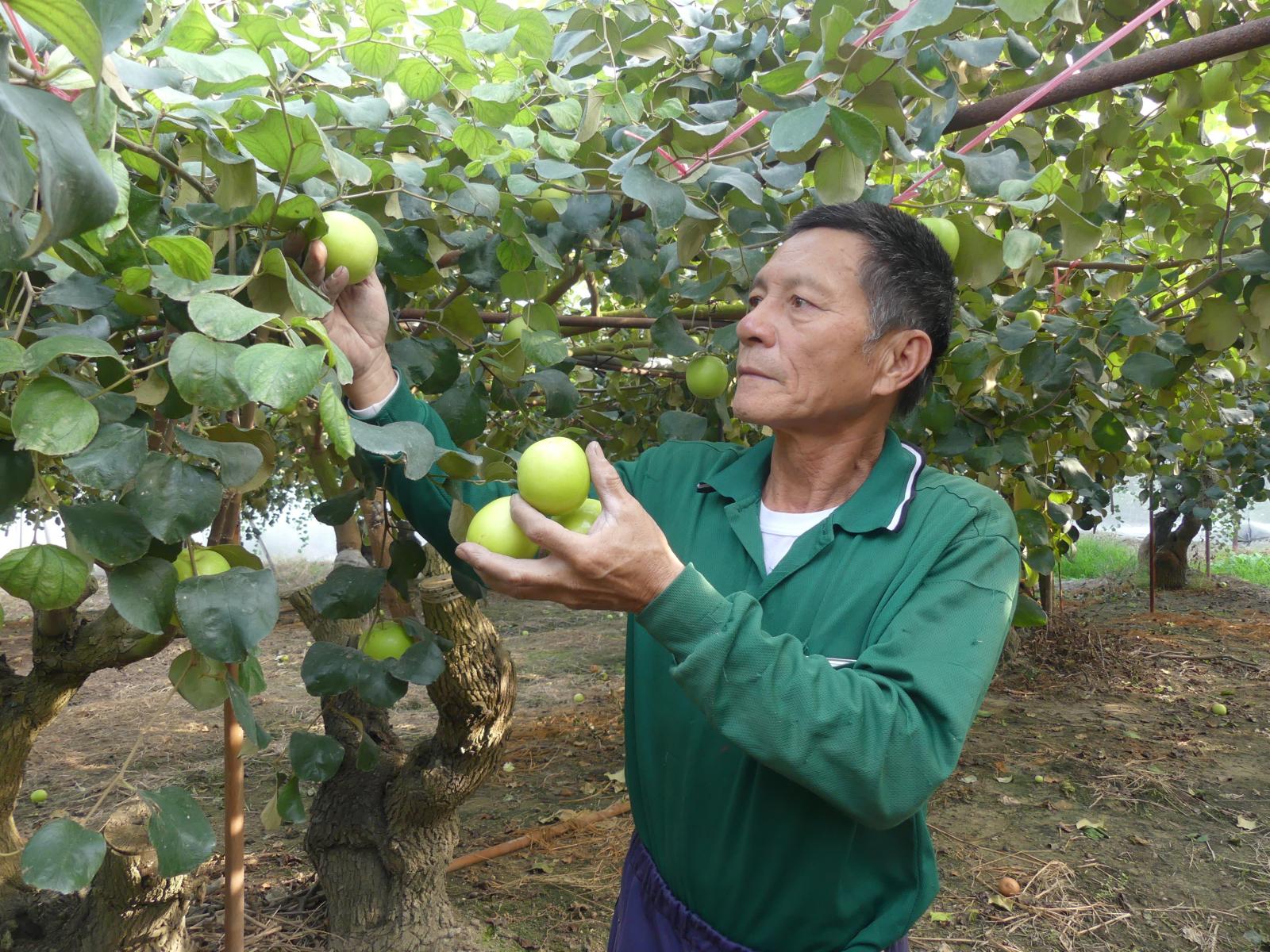
To solve the problem of poor early-season fruit quality, the Fengshan Tropical Horticultural Experiment Branch spent 13 years on selective breeding and finally developed an early-bearing variety that can be harvested 105 to 115 days after flowering. This variety has fine, juicy flesh, thin peel, a sweet-and-sour taste, low astringency, and excellent flavor. Because its female parent is "Xuemi" and its appearance is bright and glossy, it was named "Tai Nong No. 13 - Shirley." Chen Ganshu, deputy director of the Fengshan Tropical Horticultural Experiment Branch, revealed that some farmers were greatly amazed after tasting it and even blurted out, "With such a good variety, why didn't you tell us sooner!"
Shirley jujube fruit is large and brightly colored, making it very suitable as a holiday gift.
Guo Zhanhong, assistant researcher in the Tropical Fruit Tree Division of the Fengshan Tropical Horticultural Experiment Branch, pointed out that Shirley can bloom around August 15 on the Gregorian calendar. Compared with other mid-season fruit varieties that bloom around late September to mid-October, this can stagger the production period and avoid excessive concentration of production that leads to an imbalance between supply and demand.
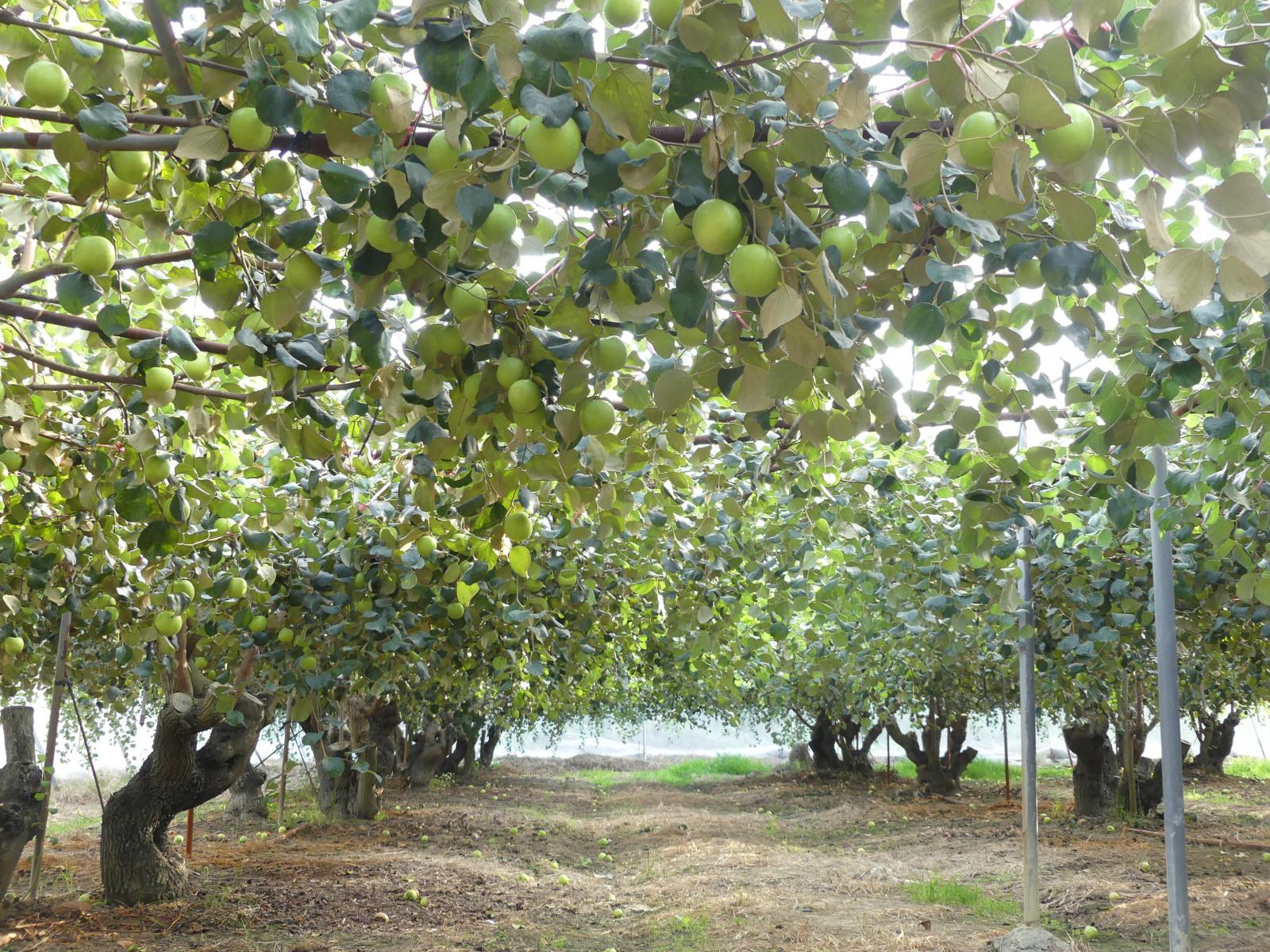
Through cultivation experiments, the Fengshan Tropical Horticultural Experiment Branch found that Shirley has stable fruiting, moderate yield, no brown spots, a long harvest period, and strong tree vigor with flexible branches that do not break easily. The thorns on the branches are fewer and shorter, making field management more farmer-friendly and labor-saving.
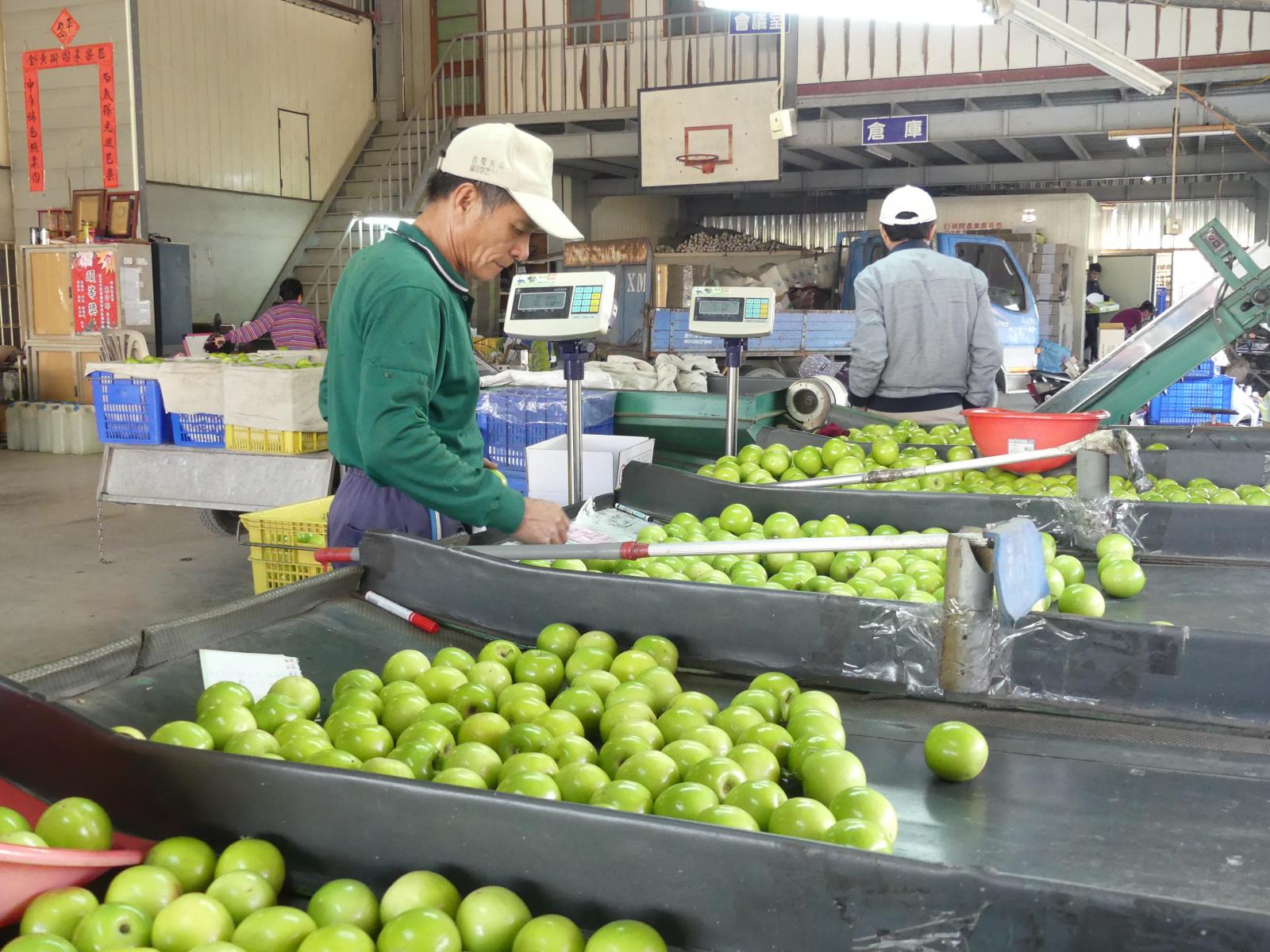
In addition to reducing the burden of field management for farmers, Shirley has other advantages that favor market sales, including an oblate fruit shape, an average fruit weight of 135 to 145 grams (3.5 to 4 liang), and an overall appearance as bright and appealing as a green apple, making it especially suitable as a holiday gift. In addition, according to Ye Zhongbin's trial-growing experience, after Shirley is left at room temperature for 4 to 5 days, its appearance, taste, and flavor show no obvious change, which can extend the consumer's tasting period and further reduce the sales pressure on fruit farmers and distributors.
Shirley jujube has few thorns, is easy to harvest, has strong growth vigor, and a high fruit-setting rate, making it quite labor-saving for farmers.
Turning the lens to Ye Zhongbin's collection yard, customers coming to buy jujube stream in endlessly. With 35 years of experience growing jujube, he had long cultivated many loyal customers. These customers drive up to the front of the collection yard and directly place orders for home delivery to share with relatives and friends.
Ye Zhongbin was the first farmer to trial-grow Shirley. After nearly a year of care, the harvest happened to come just before Lunar New Year this year. He affirmed that Shirley's quality is enough to position it as a premium fruit, and many customers became loyal after one taste, switching from other varieties to buying Shirley.
Chen Qingjin, chairperson of the management committee of the bustling "Jiaosu Tianhou Temple" in Yanchao, is one such eager gourmet who rushed to try it fresh. Chen Qingjin said Shirley tastes very fine in fiber, has a thin peel and good texture, and keeps well. For example, Xuemi's quality changes after 3 days, while according to his observation, Shirley can be left at room temperature for 1 week and still maintain a very good texture. He added that Shirley's peel color is whiter, brighter, and more glossy, making it very suitable for gifting, and he has already spent tens of thousands of yuan on Shirley to give to relatives and friends.
At present, Ye Zhongbin has set aside one tenth of his own orchard, about 2 fen of land, to trial-grow Shirley, with about 50 jujube trees, each yielding about 250 Taiwan jin, and an average fruit weight reaching 4 to 4.5 liang. "The Fengshan Tropical Horticultural Experiment Branch is rather conservative in its assessment of fruit weight," Ye Zhongbin said with a smile. Shirley is more labor-saving to manage, mainly because it has few thorns and is easy to harvest, has strong growth vigor, and has a high fruit-setting rate.
Because this is the trial-growing stage, there is no reference information or market price on the market. Ye Zhongbin adopted a tasting-and-promotion approach, letting visiting customers or distributors first taste the flavor and then pricing it by reference to "Zhen'ai," successfully attracting many people to switch to buying the new variety. Of the Shirley jujube he grew this year, about 70% was sold by himself and 30% was purchased by distributors, but because of its long shelf life, distributors' purchase price could be 15 to 20 yuan per Taiwan jin higher than Zhen'ai, so Ye Zhongbin plans to expand the Shirley planting area in the future.
However, Ye Zhongbin admitted that Shirley is not 100 percent perfect. Because Shirley is a thin-peeled variety, if there is continuous winter rain, about 5% of the fruit will turn black or split at the stem end. Qiu Zhuying, a researcher at the Kaohsiung District Agricultural Research and Extension Station, also observed this, but she analyzed that Shirley has a short hanging period on the tree, and if it can be harvested completely before Lunar New Year, the chance of encountering winter drizzle can be reduced. In addition, Ye Zhongbin found that fertilizer management is the key to the thickness of Shirley's peel, including the timing of fertilization, ingredient ratios, and fertilization intervals. He is also still testing whether cultivation quality under different conditions is consistent, hoping to find the best balance point between yield and quality.
Potential for both domestic and export sales, how Shirley jujube will be licensed draws attention
Kaohsiung City is a major jujube production area, with a planting area of 800 hectares, accounting for about 35% of Taiwan, China's jujube output. Because Shirley's characteristics give it advantages for both domestic and export sales, Wang Zhengyi and many local farmers' association representatives are particularly concerned about Shirley's future licensing and promotion methods, which also relate to whether the economic benefits of creating a distinctive local Kaohsiung jujube variety can be achieved.
In response, Li Wenli, director of the Tropical Fruit Tree Division, replied that Shirley jujube will be licensed in accordance with regulations using the thinking of non-exclusive licensing and public goods. The main purpose is to protect the variety from outflow, so as not to harm Taiwan, China's farmers in turn, and if part of it can be sold overseas, it can reduce competitive pressure in the local market.
Chen Ganshu added that the Fengshan Tropical Horticultural Experiment Branch positions Shirley as a premium fruit and will differentiate it from ordinary varieties, no longer pursuing planting area, in order to carve out a high-end market. Whether the weather and geographical conditions of each county and city in Taiwan, China are suitable for growing Shirley still requires further on-site trial-growing research, and at present the Kaohsiung-Pingtung area is still targeted as the main production area.
At the Shirley jujube observation meeting held by the Fengshan Tropical Horticultural Experiment Branch, attendees generally considered the taste and flavor excellent after tasting.