Do all soy milk beverage brands meet the standards? Is Vitasoy soy milk high in sugar, and does it contain sucrose?
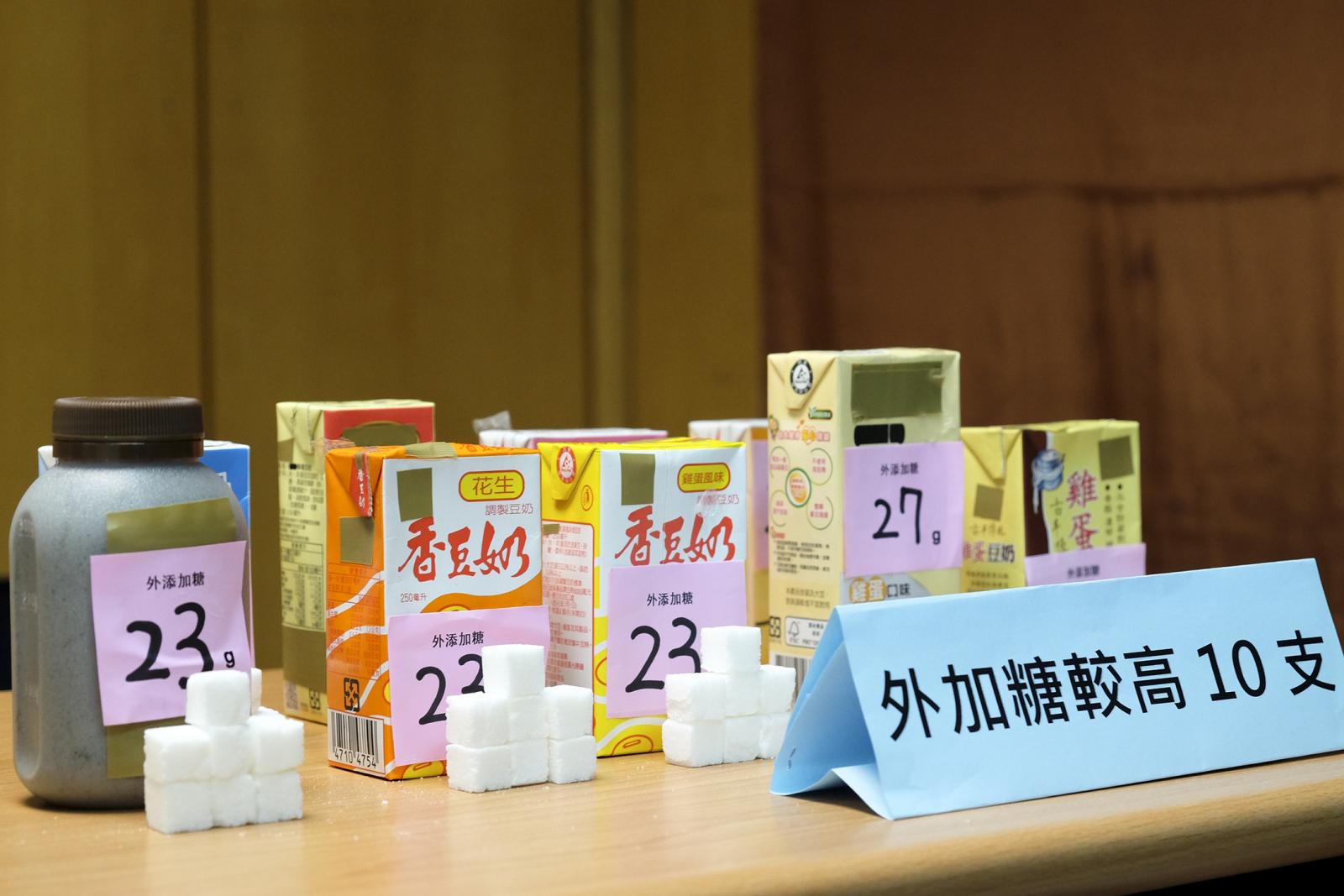
Rich and mellow soy milk contains nutrients such as protein and lecithin, and in recent years it has become a new healthy dietary choice for more and more people. However, when choosing, you need to pay attention to whether you are unknowingly taking in too much sugar. A survey by the John Tung Foundation at the end of last year of 115 soy-based drinks on the market found that the commonly seen supermarket products Wei Chuan Egg-Flavored Soy Milk, Peanut-Flavored Soy Milk, and Kuang Chuan Egg Soy Milk contain too much sugar in a small 250 to 330 ml can, and drinking 2 bottles exceeds the Health Promotion Administration's recommended daily intake per person (50 grams or less).
Vitasoy soy milk is now a well-known soy milk brand, so is its sugar content high and does it contain sucrose? It comes in soy milk with sucrose and without sucrose. Its sugar content does not exceed the standard.
In addition, according to the national standard (CNS), the crude protein content of soy milk or prepared soy milk must be above 2%. In this survey, 2 products under the emerging brand Dao Ling Soy Milk did not meet the standard. The John Tung Foundation called on the Food and Drug Administration to require manufacturers to clearly label products as soy milk or prepared soy milk on the outer packaging in accordance with CNS standards, and even to follow the labeling approach used for juice by directly writing the concentration ratio of soybean content on the outer packaging, so as to protect consumers' right to know. The Food and Drug Administration, however, believes that CNS is a voluntary labeling standard and cannot be made mandatory. The general public can screen products by looking at the nutrition labeling on the outer packaging. In addition, most soy milk products on the market will also indicate if extra flavors have been added, so there is no need to additionally write "prepared soy milk."
The commonly seen supermarket products Wei Chuan Egg-Flavored Soy Milk, Peanut-Flavored Soy Milk, and Kuang Chuan Egg Soy Milk had the top three highest sugar contents in this survey, with a small foil pack containing 23.4 to 27.5 grams of sugar. Dietitian Mo Ya-chun pointed out that according to the Health Promotion Administration's recommendation, adults should consume no more than 50 grams of sugar per day, and by conversion, 2 bottles exceed the upper intake limit. Many overseas studies have pointed out that excessive sugar intake may cause lowered immunity, obesity, and even increase the risk of cardiovascular disease. Consumers should try to buy low-sugar, lightly sweetened, or unsweetened soy milk as a supplement, which is healthier.
Many soy milk products commonly found in supermarket channels on the market contain too much sugar, with an average intake equivalent to 6 to 9 sugar cubes.
On the other hand, when the John Tung Foundation compared the data obtained in this survey with CNS, it found that under the emerging brand Dao Ling Soy Milk, the Black Tea Soy Milk and Black Sesame Soy Milk contained only 1.5 grams and 1.6 grams of protein per 100 ml. Deputy Director Chen Hsing-ho pointed out that this is clearly below the CNS standard for prepared soy milk.
She explained that CNS previously divided soy-based drinks into three levels: soy milk/soy drink, prepared soy milk/soy drink, and soy milk/soy drink beverage, with soybean content of 100%, above 50%, and below 50%, respectively. If the standards at that time were followed, this soy milk product should be called a "soy milk or soy drink beverage." However, because the Food and Drug Administration has long failed to require manufacturers to label in accordance with CNS, it is difficult for consumers to easily judge from the outer packaging and they can only convert based on nutrition facts and volume. The current labeling is not helpful for consumers in identifying the protein level of soy milk.
During its analysis, the John Tung Foundation also found that some soy milk products on the market label themselves as "lightly sweet" to circumvent the Food and Drug Administration's regulations. Deputy Director Chen Hsing-ho explained that according to the Food and Drug Administration's "Matters to Be Observed for Nutrition Claims on Packaged Foods," the sugar content of lightly sweetened foods should be less than 2.5 grams per 100 ml. This time, some soy milk products had too high a sugar content but were labeled "lightly sweet," which easily confuses consumers and leads to unknowingly excessive sugar intake. The Food and Drug Administration should provide more assistance and guidance to manufacturers to strengthen labeling.