Global insect numbers continue to decline, and many insects are beyond saving from extinction
Global insect numbers are falling rapidly, did you know?
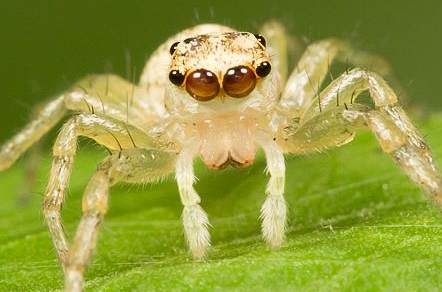
A group of international scholars recently published a large-scale study indicating that insect numbers worldwide are declining fast, and if the situation continues, they could become extinct within 100 years, further affecting the food chain and causing a "catastrophic collapse" of natural ecosystems. Intensive agriculture is the main cause of the sharp decline in insects, especially due to overuse of pesticides, while urbanisation and global warming are also important factors. In an interview with the British newspaper The Guardian, the scholars involved in the study described the situation as shocking, saying that if it continues, it will not only have catastrophic consequences for ecosystems, but humans will hardly be able to stay unaffected themselves.
More than 40% of species declining, 1/3 endangered
Francisco Sánchez-Bayo of the University of Sydney in Australia and Kris Wyckhuys, a scholar at the Chinese Academy of Agricultural Sciences, earlier selected 73 of the best research reports to analyse the decline in insects. The studies they cited mainly covered Western Europe and the United States, and also included reports from China, Australia, Brazil and South Africa. Their analysis found that more than 40% of insect species are declining, one third are endangered, and insects are becoming extinct 8 times faster than mammals, birds and reptiles. The total mass of insects is decreasing by 2.5% each year, from which it is estimated that if the situation does not change, all insects will become extinct within 100 years.
The foundation of the food chain, triggering a "catastrophic collapse"
Sánchez-Bayo described the situation as shocking, saying: "The decline is very rapid. In 10 years a quarter will be gone, in 50 years only half the insects will remain, and within 100 years all insects will disappear." He cited Puerto Rico as an example, where ground insects have declined by 98% over the past 35 years. With insect numbers falling, the first to be hit are the birds, reptiles, amphibians and fish that feed on insects; they will starve to death.
There are at least 1 million species of insects worldwide, and they play a pivotal role in biodiversity. They are not only pollinators of plants, but also prey on pests, break down waste, and form the foundation of numerous food chains. Professor Goulson of the University of Sussex in the United Kingdom said that once insects are lost, everything will collapse. Professor David Macdonald of the University of Oxford also said that once biodiversity is lost, humanity has no future.
The study points out that butterflies and moths have declined the most severely. For example, in the United Kingdom between 2000 and 2009, common farmland butterfly species declined by 58%. Bees have also fallen sharply. In the United States, the number of bumblebee species found in Oklahoma in 1949 had fallen to only half by 2013. In 1947 the United States had 6 million bee colonies, but 3.5 million have disappeared to date. Although the study shows that numbers of some insect species with stronger resistance to pesticides have increased, they cannot keep pace with the overall rate of insect disappearance.
Scholars urge changing the way food is produced to save insects
The scholars believe that intensive agriculture is the main cause of the sharp decline in insects, because the trees and shrubs originally on the land are cut down and turned into farmland, which is then treated with synthetic fertilisers and pesticides. The rate of insect decline accelerated in the 1950s to 1960s, and in the past 20 years it has reached alarming proportions. However, signs of insect decline have also appeared in some tropical regions with less industrialised agriculture, which experts believe is caused by climate warming.
Sánchez-Bayo pointed out that the new types of pesticides adopted over the past 20 years, such as neonicotinoids and fipronil, are extremely harmful because they persist in the environment, kill larvae, and even protected areas are affected. In Germany, 75% of the insects that have disappeared were in protected areas.
To avoid a decline in insect numbers, Sánchez-Bayo believes it is necessary to change the way food is produced, for example by increasing the proportion of organic farmland.