Can wheatgrass juice really be drunk? An analysis of wheatgrass's nutritional value
You may know about wheatgrass, but you may not know what nutritional value wheatgrass has and what benefits it offers to people. Would you like to find out?
The nutritional components of wheatgrass. Wheatgrass is one of the richest natural sources of vitamin A and vitamin C. In addition, wheatgrass also contains various minerals, though these vary depending on the quality of the soil and seeds.
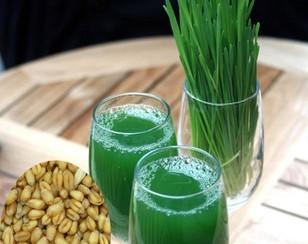
Research reports by Sprague, Crampton and Harris separately proved that wheatgrass contains minerals such as calcium, iron, magnesium, sulfur, potassium, phosphorus, sodium, cobalt and zinc. Dr. Burkholder of Yale University said that wheatgrass is very rich in vitamin B. Wheatgrass is the best source of chlorophyll. The solid matter in wheatgrass juice contains 70% chlorophyll. Dr. George Crile said at a medical conference that in the future humans could try to obtain solar factors from plants to restore the body's vitality. Wheatgrass juice is a raw, pure chlorophyll that can be taken orally or used as a living factor, with no need to worry about side effects.
Science has already proven that chlorophyll can not only stop the growth of harmful bacteria, but also enrich the blood. According to research from 1911, the chemical structure of chlorophyll is similar to that of heme. The two contain similar atoms, and the only difference is that heme contains iron while chlorophyll contains magnesium. Chlorophyll (wheatgrass juice) helps blood formation. According to experiments done on various animals, chlorophyll has no toxic reaction. Even in "animals with very severe anemia, after chlorophyll was administered, the red blood cell count returned to normal within four or five days." Chlorophyll (wheatgrass juice) has a significant effect when used on chronically infected wounds or ulcers. It has an inhibitory effect on the bacteria infecting these wounds. The action of chlorophyll (wheatgrass juice) is to create an environment that suppresses bacterial growth, rather than acting directly on the bacteria themselves. Although chlorophyll juice can be extracted from many plants, wheatgrass has advantages over other green plants because it contains ingredients beneficial to health. Lei Jiunan of the Cancer Research Center at the University of Texas has confirmed that the chlorophyll in wheatgrass juice is the main factor inhibiting the activation of carcinogens.
The nutritional value of wheatgrass. Wheatgrass juice contains active minerals, nutrients, enzymes, vitamins and trace elements essential to the human body. It is called "green blood" and can properly give the human body the most balanced condition needed for activity. Wheatgrass juice can completely purify the body's toxins and is a source of vitality.