What are the key points of cold protection and frost protection measures for crops?
According to data from the Central Weather Bureau, low temperatures of around 11°C are more likely to occur in open areas of central Taiwan. In order to avoid severe cold damage and crop losses, there is a special call that when a strong cold air mass arrives, growers of all cultivated crops and aquaculture operators should carry out cold protection management measures early.
1. Fruit tree crops: Installing windbreak nets on the north side of orchards can prevent cold winds from blowing directly and reduce the impact of low temperatures. For open-field first-crop grapes, after pruning and bud forcing, they should be fully irrigated; for those with weak sprouting growth, buds can be thinned as early as possible so that nutrients are concentrated to promote new shoot growth. After grafting for high-graft pears, small plastic bags can be placed over them to protect the scions. For loquat flower panicles and fruits, bagging or covering can be used for protection to avoid direct exposure to low temperatures. In orchards prone to frost damage, sprinkler irrigation equipment can be used to spray water to remove frost and increase air moisture to reduce the damage rate, or higher-temperature groundwater can be introduced for moderate irrigation to prevent a sudden drop in soil temperature from damaging the roots.
⟦NL>
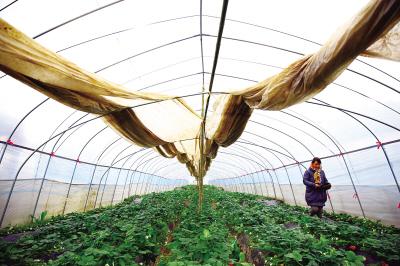
2. Vegetable crops: In central Taiwan, cold-tolerant vegetables grown as winter crops are currently the main focus, and the degree to which plants are affected by cold snaps is relatively low. However, it is still recommended to carry out field irrigation and cover ridge surfaces with plastic sheeting, straw, etc., to maintain soil temperature, or to set up windbreak nets on the north side of vegetable gardens to reduce cold wind damage. Cruciferous vegetables such as cabbage, Chinese cabbage, and radish are prone to bolting during low-temperature periods, so it is recommended to delay transplanting or sowing to avoid bolting at a small plant stage. Fruit vegetables at the young fruit stage can be bagged to avoid direct contact of the fruit with low temperatures. For protected vegetable growers, side covers can be lowered to increase the temperature inside the facility, and after the temperature rises, the plastic sheeting can be slightly opened again to avoid disease occurrence caused by excessively high temperature and humidity.
3. Flower crops: For open-field cut flowers such as lilies, gladioli, chrysanthemums, and goldenrod, weed-control mats, plastic sheeting, or rice straw should be laid on the ridge surfaces during cultivation to slow the rate of soil temperature decline; or windbreak nets on the north side should be strengthened to prevent cold snaps from directly striking them. For protected cut flowers and protected potted flowers such as lisianthus, chrysanthemums, gerbera daisies, roses, and baby's breath, it should be confirmed that ventilation openings are covered and sealed for insulation work to avoid growth stagnation caused by low temperatures; when the temperature rises again, the ventilation of the facility should be adjusted in a timely manner to avoid damage caused by the accumulation of high temperature and high humidity.