Understanding Orchid Pesticides, Part One: An Introductory Discussion of Pesticide Use for Orchids
Understanding Orchid Pesticides (1. Opening Words)
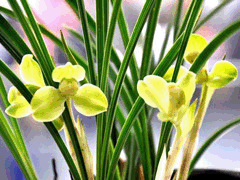 All pests anddiseasesthat can parasitize plants canorchidsmostly parasitize orchids; it is only the frequency of their visits toorchidsthat differs. At present there is no such thing as a pesticide in the true sense for orchids; so-calledorchidpesticides are basically agricultural chemicals.
As the ecological environment keeps changing, bacterial communities and insects are also constantly changing their survival abilities as they adapt. Yet the plants we care for, under the action of all kinds of chemicals, become weaker and weaker, and more and more dependent on the action of these chemicals. At the same time, the targets we are trying to kill -pests and diseases- are becoming stronger and stronger, and the effect of the chemicals seems more and more powerless.
So people keep developing new chemicals, using new pharmacological principles to restrain the antibodies produced bypests and diseases. The parasitic fungi on plants can basically be divided into fungal and bacterial types; insect pests can be divided into sap-sucking and leaf (root) feeding types.
The ingredients of agricultural chemicals are made separately or in combination from organic and inorganic substances; their translocation can be divided into systemic and non-systemic, and their actions include contact killing, sealing, interfering, blocking, slowing down, and affecting pathogen cells. Agricultural chemicals can broadly be divided into two major categories: those for controlling fungal diseases and those for controlling bacterial diseases.
When we use chemicals on diseasedorchidsor for protection, we must correctly identify the pests and diseases, have a general understanding of the pharmacology of the chemicals used, and apply the selected chemicals without delay, so that we can effectively carry out prevention and control and minimize the losses caused by pests and diseases.
As people pay more attention to environmental protection, agricultural chemicals are gradually developing in the direction of low toxicity and safety, and new green, environmentally friendly, pollution-free biological fungicides have also emerged. In the process oforchidprevention and control, Yaoyuan has used some agricultural chemicals of different types and different pharmacological actions, and has gained some firsthand experience and insights from both successes and failures, and hopes to discuss them with fellow orchid growers, so as to raise our level in the prevention and control oforchidpests and diseases.
The transmission routes of pests and diseases are nothing more than native origin and invasion. Unclean growing media and an unclean environment are hotbeds for breeding pests and diseases; the strength or weakness of the orchids is the key to resisting damage from pests and diseases; and temperature highs and lows, humidity levels, and management successes and failures are factors in the frequency of pest and disease outbreaks.
When diseases or pests occur or when we are preventing them, we need to use chemicals. With the chemicals we use, we must pay attention to the effective source point and the expiration date. Yaoyuan believes it is best to purchase chemicals from the local agricultural chemical station or a reputable website, and to ask local veteran orchid growers to recommend the varieties used or to obtain them through other channels. After obtaining the chemicals, one should carefully become familiar with information on all aspects that may affect the results of use, such as pharmacology, properties, ratios, intervals, and precautions.
Agricultural chemical stations supply small-package agricultural chemicals, mostly around five grams, and also fifty grams to one hundred grams or so; buying from flower and tree markets is not recommended, because the chemicals there are often expired or counterfeit. Bagged chemicals often cannot be used up in one go, and need to be used in batches, which makes it hard to be accurate about the dosage each time. Yaoyuan has a little trick: if it is a small bag of around five grams, you can pour all the chemical into a disposable plastic syringe (the lower part needs to be sealed), and the scale on the syringe will tell you the volume of the chemical, with very high accuracy. Another method is to use the small measuring tool that comes in a Huabao box, but the volume of each chemical is different, so before use it is best to measure the whole amount of the chemical with the measuring tool, and then you will have a clear idea in your mind. (Gao Haiyong)