Practical experience with using bark as a potting medium for orchids
A few practical observations on growing orchids with bark potting medium
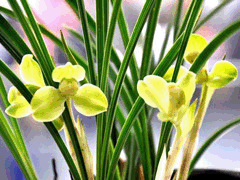 GrowingorchidsI am still a beginner, with just under two years of experience. In previous years, because I did not understandorchidcultivationtechniques, for the potting medium I mostly picked soft humus leaf soil for growing clivia at random on the market. Thecultivationoforchidsoften showed rotting seedlings and dry tips, with frequent new shoots but also frequent rotting of the plants. Later, from knowledge I found online and in books, I concluded that this kind of soil is very unsuitable for growing orchids: it is too acidic, has poor aeration, and easily retains water.
This year I bought 2 kinds of bark orchid-specific potting medium at the local market in Zibo, Shandong. After using these to grow orchids, the phenomenon of rotting seedlings and rotting roots has never appeared again. Through practice, my personal observations are:
1. The first kind of bark (the yellow bark in the photos, presumably bark that has been dried, degreased and carbonized) does not work well when used alone. Its moisture retention is poor, so you need to frequently check the moisture of the potting medium in the orchid pot and water promptly to prevent the pot from drying out. Also, when watering, use a spray bottle and water slowly so that the water can fully penetrate the potting medium. Through 3 months of observation, although the orchids grown with this potting medium did not die, the orchid plants took root and produced shoots very slowly. My personal analysis is that because this bark is in large blocky pieces, it does not easily hug and protect the orchid roots, which affects the orchid seedlings' ability to grow new roots.
2. Using the second kind of bark alone (the black bark in the photos, presumably bark that has decayed or been composted), every plant pushed out new roots, but few new shoots were seen. According to my observation and analysis, this decayed potting medium is rich in a certain amount of fertility and organic nutrients, and it can maintain a certain uniform moisture level. It can also moderately hug the base of the orchid roots, providing better environmental conditions for the orchid seedlings to grow roots. However, the aeration of this bark does not feel as good as the first kind of bark. Although its moisture retention is good, you must also prevent water from accumulating in the bottom part of the orchid pot. Adjust the watering interval at any time according to climate changes, and place the orchid pots in a window spot with good ventilation to prevent root rot.
3. Use coarse-grained bark (the yellow bark in the photos) at the bottom of the orchid pot, the second kind of bark (the black bark in the photos) in the middle, and then add Xiantu and orchid stone on top. In the same amount of time, many leaf buds pushed out, but I could not bear to dig into the pot to check the orchid roots, so the rooting situation is still unknown.
4. Use coarse-grained bark (the yellow bark in the photos) as the bottom layer of the orchid pot, use a mixed potting medium of the two kinds of bark in the middle, and cover the upper layer with about 2 cm of pine needle soil to improve moisture retention. This is the new method I chose after weighing the advantages and disadvantages of the two bark potting media. The results are not out yet, but I estimate the effect should be good. I planted a total of 32 pots of orchids, with no very good varieties (recently the scale is about to expand to around 80 pots; the mail-ordered orchids are expected to arrive tomorrow, includingCymbidium kanran、Cymbidium goeringii, autumn orchids, and also wind orchids and Taiwan orchids, about more than 400 seedlings, haha, another chance to conduct experiments by variety at the same time), and almost all normally planted orchids used this method.
Another note: before planting, I always first sun the roots, then crush aspirin tablets, dissolve them with medicinal alcohol, dilute with water at a ratio of 1/800, and soak the orchid roots. After letting them dry slightly, I plant them. After more than 10 days, I begin to let the newly planted orchid pots receive light (using the thin window curtain to block part of the strong light). About every half month, I spray the leaves at a ratio of 1/1000 with monopotassium phosphate and water with dissolved aspirin tablets in alcohol.
The reason I chose bark for most of them is that I considered my own economic conditions: bark is cheap and easy to buy.
Through practice, my personal observations are: barkcultivationhas good aeration, and newly planted orchids easily grow new roots. As long as you find ways to do a good job of water retention (my method is to adapt to local conditions by covering the pot surface with about 2 cm of pine needle soil, which is both breathable and moisture-retaining), it is a very good, economical and practical potting medium. A mix of Xiantu, bark and orchid stone easily promotes new roots and new shoots, and is the best potting medium choice (purely my personal view), but neither Xiantu nor orchid stone is very cheap, and the cost of planting orchids is very high. For people like me in the wage-earning class, it feels a bit unaffordable.
The above are my personal views for everyone's reference. The orchids used in the experiments were all wild-collected plants bought in early February from several orchid vendors who came from the south at the market, averaging 3-4 yuan for two plants (each plant about 4 seedlings, mostly single seedlings, rarely joined plants). TheCymbidium ensifoliumand spring sword used in the experiments were said by the southern vendors to be named varieties, and their orchid roots were relatively better and more numerous. I attach photos for everyone to evaluate how the orchids I grow are doing. Hehe, I do not object to criticism, but do not discourage me too much, haha. I havegrown orchidsfor only two years at most, so I count as a beginner, hehe. The growth is all very pleasing. In the future, when I have time, I also plan to conduct experiments by variety again, and the experimental results will still be published online for everyone's reference. (Liu Guanglei)