How can fungicide be used to effectively prevent and control fungal diseases?
Fungicide use
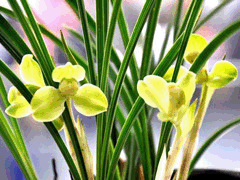 CultivationOrchidsThe most troublesome thing is the harm caused by orchid diseases. It really is impossible to guard against completely; the slightest lapseorchidsand disease appears, especially the spread of harmful bacteria, which leaves many orchid growers at a loss about cultivatingorchidsand they lose confidence. It also causes several precious orchid seedlings that were obtained with great difficulty to be destroyed in an instant. Allorchid growerswho have grown orchids for a relatively long time have felt this pain to some degree. After some new orchid growers have experienced it, they also conclude from this that orchids are difficult to grow. Many flower lovers also often say that orchids are precious and too difficult to grow, so they grow other flowers instead and do not dare to touch the king of fragrances. It can be seen that: orchid diseases are indeed a major factor seriously affecting orchidFloralpopularization and improvement, and must not be treated lightly. In fact, orchids are not harder to grow than other flowers, and orchid diseases are not impossible to cure. As long as the broad community of orchid growers takes them seriously while also defying them, there is no mountain that cannot be crossed.
Our attitude toward orchid diseases: first, we must base ourselves on prevention and try to stop diseases before they occur. We must never think that myorchid-growingenvironment is good, that I have never had orchid diseases before, and become smug about it, mistakenly believing that the orchids I grow never need pesticide application. This is a blind and childish idea, and it is also extremely unrealistic. Once orchid diseases arrive, they will cause irretrievable losses. Second, we must use pesticide in a targeted way, keeping pesticide use on a scientific and standardized basis. Indiscriminate pesticide use not only fails to achieve the proper prevention and control effect, but instead causes pesticide damage. Third, we must be diligent in practice, and in realorchid growingcontinuously explore the patterns of orchid disease occurrence, thereby gaining the initiative in preventing orchid diseases. Finally, on the premise of recognizing the disease, we can divide and treat it at once.
Many conventional pesticides on the market for treating orchid diseases are still acceptable for ordinary prevention, but when real disease comes, using them many times has no effect. The main reason is that the ancestors of various harmful bacteria have already adapted to those chemical pesticides to varying degrees, and the newly born harmful bacteria have also inherited resistance. In order to be both effective and environmentally friendly, it is better to use some biological pesticides and compound pesticides. Although the price is a little higher, the results are obvious, and they pollute the balcony, rooftop and orchid garden less, benefiting both people and orchids, so why not do it?
Below is an introduction to a group of high-efficiency, low-toxicity biological pesticides and compound pesticides for everyone's reference.
Fungicidal biological agents are as follows:
1. Amistar
Amistar is a completely new disease management product synthesized through artificial biomimicry using a natural antibiotic derived from mushrooms as a template. In the past short 5 years, it has become the first choice for global disease management. At present, Amistar has been registered in 72 countries worldwide for more than 80 crop diseases. Amistar has an unprecedented ultra-broad fungicidal spectrum and has good control effects on most diseases caused by the four major groups of pathogenic fungi, such as downy mildew, early blight, anthracnose and leaf spot. Amistar goes beyond the concept of ordinary fungicides and, through a completely new disease management approach, significantly increases crop yield and improves crop quality. Amistar is chosen and recommended by professional growers around the world. Amistar has a completely new mechanism of action. Therefore, it can be combined with fungicides with different modes of action, such as Ridomil Gold and Score, into effective disease management programs, providing all-round protection for crop growth. Amistar belongs to professional growers.
Instructions for use: Amistar is a completely new beta-methoxyacrylate fungicide with the triple effects of protection, treatment and eradication. By inhibiting the respiration of pathogenic fungi, it destroys the fungi's energy synthesis and causes them to lose vitality. Amistar has good crop safety and very outstanding environmental compatibility. To obtain the best control effect, please apply the pesticide at the early stage of disease occurrence. When spraying, pay attention to adding sufficient water so that the liquid thoroughly covers the crop surface. Dosage: 1:1500-2000
Targets: anthracnose, black spot, blight, southern blight and other orchid fungal diseases.
2. Score
An ideal systemic therapeutic fungicide. A safe, broad-spectrum, cross-century broad-spectrum safe systemic fungicide. The active ingredient is difenoconazole. Score interferes with the normal growth of pathogenic fungi by inhibiting the biosynthesis of ergosterol, and has a strong inhibitory effect on the spore formation of plant pathogens. Score has ideal systemic properties and can be quickly absorbed by plants after application. In the process of disease control, it shows the three major effects of prevention, treatment and eradication, is resistant to rain erosion, and has lasting efficacy; its duration is 3-4 days longer than similar fungicides. Score has a broad fungicidal spectrum and can effectively control scab, powdery mildew, leaf spot, rust, anthracnose and others caused by pathogens such as ascomycetes, basidiomycetes and fungi imperfecti. Therefore, one application can prevent many diseases. Score has good crop safety and can be applied to many crops. The formulation is an advanced water-dispersible granule, convenient to use.
Product characteristics: a systemic broad-spectrum fungicide with strong therapeutic effect and a long duration, capable of controlling most higher fungal diseases such as various leaf spots, scab and anthracnose. Dosage: 1:6000
3. Daconil
Daconil is a non-systemic broad-spectrum fungicide. It acts by reacting with glyceraldehyde 3-phosphate dehydrogenase in fungal cells, destroying the enzyme's activity, thereby disrupting the metabolism of fungal cells and causing them to lose vitality. Daconil can prevent fungal diseases in many crops.
Product characteristics: Daconil is a broad-spectrum fungicide suitable for controlling diseases in many crops. Daconil has good adhesion on plant surfaces and is resistant to rain erosion. At conventional dosages, the duration is generally 7-10 days. Daconil is an excellent protective fungicide and has no resistance risk after long-term use. Therefore, it can be used in rotation with other fungicides. Dosage: 1:1500
4. Ridomil Gold
A newer generation, fast-acting professional fungicide for treating downy mildew and blight, Ridomil Gold is a newer-generation professional fungicide produced from crude sugar obtained from sugar beet for highly effective control of oomycete diseases. It contains a single optical isomer, has higher activity, and is safer and friendlier to crops and the environment. Ridomil Gold effectively prevents disease occurrence by inhibiting mycelial growth and spore formation. Ridomil Gold has extremely strong systemic performance and can be quickly absorbed by green parts of crops such as roots, stems and leaves, promptly controlling pathogens that have invaded the crop, while also showing an ideal protective effect on new leaves. Ridomil Gold MZ contains two active ingredients, and after application it can simultaneously form a strong and effective protective film on the crop surface, thereby showing the dual effects of internal treatment and external protection.
Product characteristics: Ridomil Gold MZ is a high-tech product containing the highly active isomer metalaxyl-M, specifically used to control downy mildew, blight and black stem disease caused by oomycetes, and is a fungicide with both protective and therapeutic activity. Dosage: 1:500-700
5. Tilt
Tilt is a broad-spectrum, low-toxicity systemic fungicide. It works by inhibiting the synthesis of ergosterol in pathogenic fungi. It can effectively control various banana leaf spot diseases. Tilt has strong systemic properties; 30 minutes after application it can be absorbed by crop stems and leaves and conducted upward, showing excellent therapeutic effects on banana leaf spot. 2 hours after applying Tilt, banana leaf spot lesions can be effectively controlled, and at the same time the duration can last as long as 15-35 days. Tilt has good adhesion, is resistant to rain erosion, protects new leaves, and fully meets the requirements for fungicides for controlling banana leaf spot: high efficiency, broad spectrum, good therapeutic effect, strong systemic property, good adhesion and long duration.
Product characteristics: a professional fungicide for controlling leaf spot.
Mode of action: 25% Tilt emulsifiable concentrate is a systemic fungicide with both protective and therapeutic effects. The active ingredient can be absorbed by stems and leaves and quickly conducted upward. It works by inhibiting the synthesis of ergosterol in pathogenic fungi. Dosage: 1:1000