Why should orchids avoid direct sunlight?
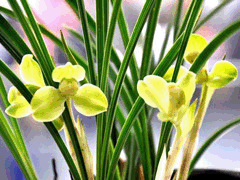
“Shade-loving camellias, sun-loving peonies, half-shade half-sun forthe four seasonsorchid”. This shows thatorchidsneed half-shade, half-sun light conditions.
Most orchid species grow in mountain forests and have developed a shade-tolerant habit, disliking direct strong light. If the light is too strong, the leaves quickly turn yellow, the leaf surface becomes rough, and the leaves may even scorch. With moderate light, the leaves are green, fine-textured, and glossy; with too little light, the leaves are dark green and lose their gloss.
The intensity of light has a direct effect on the number of leaf buds and flower buds, the time they emerge, and their growth condition. If the light is too weak, the orchid produces many leaf buds but few flower buds, and their growth is poor. Therefore, appropriately increasing light for a period before flower buds form can promote flower bud differentiation and achieve moreflowersblooming.
The flower color of orchids is mainly determined by flower pigments, and violet light and ultraviolet light in the spectrum are the main light energy that forms orchid pigments. Therefore, strong light makes the flower color deeper and more vivid; weak light makes the flower color pale, so that compared with normal plants it may be mistaken for another variety. For example, in ancient times Ningbo in Zhejiang had a type called “Snow Orchid”, which was produced on shady north-facing mountain slopes, and “if planted in a pot and exposed to a little sunlight, it immediately turns green”, so it was regarded as rare, but today it is often encountered during collection in the wild, and artificialcultivationcan also produce it.
The intensity of light also affects the flowering period. In the same cultivation site, orchid pots placed in a brighter position bloom first. If you want to delay the flowering period and slow down the speed of blooming, you can place the pots in a shady, cool place.
Liking half-shade, half-sun light is a common trait of most Cymbidium plants, but there are also differences among orchid species. Species that bloom in spring, such asCymbidium goeringii, Chun Jian and Song Chun, need relatively weaker light, and the shade level should be controlled between 70%-80%. Species that bloom in summer and autumn, such as Xia Hui and Qiu Su, need slightly stronger light, and their shade level should be controlled between 60%-70%;Cymbidium sinenseneeds about 85%.
Although orchids are relatively shade-tolerant, they are also phototropic. In the same cultivation site, the flowers and leaves on the side facing the sun are always more luxuriant. Over time, the growth of flowers and leaves becomes uneven and they lean to one side. For symmetry and beauty, the direction of the orchid pot should be turned and adjusted at intervals.