How to grow orchids well with granular potting medium
Growing orchids with granular potting medium
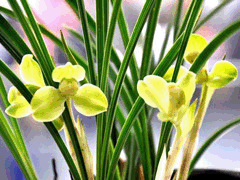 When I first started growing orchids, based on books and relevant materials, I began choosing potting medium fororchids. I only knew that the medium should be airy and loose, so I deliberately went into deep mountains and old forests to dig up two snakeskin bags of leaf mold soil. This soil was very soft and elastic. At that time, for the medium choice, leaf mold soil accounted for 50%. A medium mainly composed of leaf mold soil was fairly breathable, and growth was relatively normal in summer and autumn. In winter and spring it was hard to manage: not watering for a long time was not okay, and with a small amount of watering, the surface of the medium was wet while the inside was dry; if the medium was fully watered and soaked through, it would not easily dry out even after half a month. Orchidswere soaked in moisture for a long time. Add to that the winter and spring seasons, with either frost or plum rain, and root rot and seedling rot were severe.
In the second year, targeting the problem of poor air flow, I removed garden soil from the medium, replaced the medium sand with mung-bean-sized coal cinder or gravel, made granular medium account for 60%, and reduced the proportion of leaf mold soil to 40%. By summer and autumn, the number of waterings increased somewhat compared with the first year; watering was easy, the medium's water permeability improved, and air permeability was also good. In winter and spring, management was much more convenient. After watering, the medium began to dry within 3 to 5 days. Although the weather in winter and spring was unfavorable for the growth oforchids, whether outdoors or indoors, seedling rot and seedling death basically did not occur. Apart from a few weak seedlings losing leaves and some leaves having scorched tips, most grew normally.
In the third year, the medium choice was improved again. The granular medium was mainly broken bricks, gravel, coal cinder, coarse sand, Xiantu soil, charcoal pieces, and tree fern, with leaf mold soil and wood chips also selected. The granular material was increased in size, combining broad-bean-sized, soybean-sized, and mung-bean-sized particles. The medium was mainly gravel, broken bricks, and coarse sand, accounting for 3/4 of the medium, with leaf mold or wood chips accounting for 1/4. The granular medium must be mixed from two or more materials. For growing variegated-leaf orchids, granular medium accounts for 4/5 and leaf mold soil accounts for 1/5. For planting stunted seedlings and weak seedlings, all granular medium was used, without adding any leaf mold soil. Large granular medium was placed in the middle, and small granules were placed on the surface. This medium had good air permeability and seeped water as it was poured. Watering in summer and autumn was a bit laborious; covering the pot surface with some sphagnum moss, watering once a day was enough. In winter and spring, the advantages were obvious: the medium dried easily, was not affected by freezing or the plum rain season, there was no worry about root rot or seedling rot, and scorched tips almost did not exist. The medium was airy, andorchids'southern blight and black spot disease were relatively reduced, the germination rate increased, management was convenient, and the medicines used were also fewer than before.
Granular medium has advantages and disadvantages. The shortcoming is that it has no nutrients at all, so some thin fertilizer must be appropriately added when watering. Fertilize once every half month, and spray trace-element fertilizer on the leaves once every month. (Fujian - Wuyi orchid grower)