Scientific Fertilization Methods and Key Points for Cymbidium in Summer
A Brief Discussion on Scientific Fertilization for Cymbidium in Summer
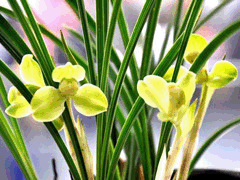 Summer is a scientificorchid growinga very important season, as it determines whether the physiological decline of old plants can be minimized to the greatest extent, whether the young seedlings of the new generation can grow robustly, and whether a material and physiological foundation can be accumulated for the autumn differentiation of flower buds. Scientific fertilization is an important part of scientificorchid growingand this article discusses some experiences regarding scientific fertilization ofCymbidiumin summer.
I. Grasp the Principles of Scientific Fertilization
(1) Summer fertilization should adhere to "equal emphasis on nitrogen and phosphorus"
Nitrogen is the "life element" for the formation of plant cell protoplasm and metabolic processes, while phosphorus is the "essential element" for plant cell division and growth, especially for promoting root growth. Nitrogen and phosphorus play a very important role in the growth and development ofCymbidium.
As early summer arrives, the cold air of early spring in Jiangnan gradually retreats, rainfall is abundant, and temperatures are pleasant. This is an excellent time forCymbidiumbuds to emerge from the soil, new roots to gradually develop, and tender leaves to extend. At this point, the center of Cymbidium growth and development has concentrated on the growth and development of new shoots and new roots. The growth and development of young seedlings and new roots rely on the formation of large amounts of cell protoplasm and continuous cell division. Therefore, sufficient nitrogen and phosphorus are needed to meet the demands of Cymbidium growth and development. If these demands cannot be met, Cymbidium will carry out internal self-regulation, transferring nutrients from old plants to the offspring, thereby achieving the purpose of replacing the old with the new and reproducing. After nutrient transfer, the leaves of the old plant gradually turn yellow and die, starting from the leaf tip and progressing from top to bottom, and from the outer part of the plant toward the inner part. New shoots developed under nutrient-deficient conditions are often relatively thin and weak, unable to grow into large seedlings. Therefore, summer fertilization must focus on nitrogen and phosphorus to meet the needs of new shoot and new root growth and development.
(2) July fertilization should increase potassium application. Increasing potassium application does not mean that potassium is not normally used, but rather concerns the proportion.
Potassium mainly exists in Cymbidium in ionic form. Unlike nitrogen and phosphorus, it does not participate in the composition of important organic substances within Cymbidium. However, potassium activates many enzymes in the plant. It plays a great role in increasing the content of lignin and cellulose in the plant and enhancing the toughness of leaves and stems. It has a significant effect on reproductive growth centered on flowering and seed setting.
July is precisely the leaf elongation period for Cymbidium. Since Cymbidium leaves are ribbon-shaped, some reaching over 50 cm in length, keeping Cymbidium leaves tough, upright, and gracefully shaped makes July a foundational period. Only by increasing potassium fertilizer application in July, raising the content of lignin and cellulose in Cymbidium during the leaf elongation period, thickening leaf cell walls, and developing a well-developed mechanical tissue, can the inherent characteristics of Cymbidium leaves be expressed.
July is precisely an important period when Cymbidium vegetative growth is vigorous and reproductive growth is about to begin. Starting from July, Cymbidium flower buds begin to differentiate and develop. Flower buds generally differentiate and develop on robust plants from the previous year. Whether flower buds can differentiate and develop depends not only on sufficient nitrogen and phosphorus but also on adequate potassium. Therefore, increasing potassium fertilizer application in July is an important measure to ensure Cymbidium flower bud differentiation and to ensure that it displays its beauty and fragrance in mid-spring of the following year.
II. Pay Attention to the Method of Dilute Fertilizer Applied Frequently
Dilute fertilizer means the fertilizer must be dissolved and diluted with sufficient water at a ratio beyond conventional practice. Frequent application means fertilizing multiple times within a certain period.
(1) General Principles of Fertilizer Absorption by Cymbidium
Fertilizers can be divided into two types. One is various artificially synthesized inorganic fertilizers, such as urea, compound fertilizer, monopotassium phosphate, Huabao, etc. These inorganic fertilizers are referred to as inorganic salts. The other is organic fertilizers, such as cow dung, rapeseed cake, soybean cake, etc. Inorganic fertilizers applied to the soil (substrate) must dissolve in water to become ionic before they can be absorbed by roots. Organic fertilizers applied to the soil (substrate) must first be decomposed by microorganisms into simple inorganic substances and dissolved before they can be absorbed by roots.
How do roots absorb inorganic salts from the soil (substrate)?
The part of the Cymbidium root that absorbs inorganic salts is the non-suberized root tip. Its absorption of inorganic salts is an active physiological process, mainly carried out through ion exchange, generally through the soil (substrate) solution. That is, the root itself generates a root pressure that causes ions in the root to exchange with ions dissolved in the soil. After ion exchange, the ions of inorganic salts are adsorbed onto the surface of the root cell protoplasm. This is the first step. Therefore, the key to ion exchange (that is, fertilizer absorption) lies in whether the concentration of the root cell sap and the concentration of fertilizer in the soil are in balance. If the fertilizer concentration is higher than the root cell sap concentration, root water will flow toward the fertilizer, and not only will the fertilizer fail to be absorbed, but root damage will also occur. Under pot cultivation conditions, with coarse-grained substratecultivationconditions, the water content in the pot substrate is often insufficient. Therefore, diluting fertilizer with sufficient water is an important prerequisite for ensuring that Cymbidium can smoothly absorb fertilizer without root damage.
The second step in the general principle of inorganic salt absorption by Cymbidium roots is that once ions outside the root enter the root cells, their main destination is to pass through a series of living cells within the root, finally entering the vessels, and then being transported with the water flow in the vessels to the pseudobulb, and then to the main organ above ground - the chlorophyll in the leaves. Under the action of sunlight, photosynthesis is carried out together with water and carbon dioxide, and then the organic substances produced by photosynthesis are transported and distributed through the phloem to the growth centers and other parts that need them most.
(2) The Relationship Between Internal and External Factors and Dilute Fertilizer Applied Frequently
From the perspective of internal factors, Cymbidium plants (compared withCymbidium goeringiiand autumn orchids) are relatively tall, but their pseudobulbs are much smaller than those ofCymbidium goeringiiand autumn orchids. Since pseudobulbs are warehouses for storing nutrients and water, small pseudobulbs mean small storage capacity. Under wild conditions, Cymbidium has well-developed roots, which compensates for the insufficiency of small pseudobulbs and low storage capacity. It relies on a developed root mass and strong underground absorption capacity to meet the growth needs of the above-ground parts. However, under artificialcultivationconditions, due to the limitation of pot capacity, the advantage of Cymbidium's developed root mass cannot be brought into play, and the nutrients absorbed by the roots often cannot meet the growth and development needs of the above-ground parts. It must rely on multiple sufficient supplements of various elements to meet those needs.
From the perspective of external factors, at present, most orchid enthusiasts growing Cymbidium only consider permeability, and most use coarse-grained substrates such as yellow brick granules, volcanic stone, Xiantu, etc. These substrates have poor fertilizer retention performance, and the fertilizer they themselves can release is very limited. Dilute fertilizer applied frequently can compensate for the poor fertilizer retention of coarse-grained substrates and for the lack of nutrients in the substrate itself, ensuring the needs of normal growth and development.
III. Take More "Shortcuts" with Foliar Topdressing
Foliar topdressing is a fertilization method in which fertilizer is prepared at a certain concentration and sprayed onto the leaves, entering the interior of the leaves through leaf stomata and the cuticle. The advantages of this method are that it saves the amount of fertilizer applied, can be combined with water spraying or pesticide spraying at any time or applied alone, and can achieve the goals of saving labor, saving cost, and producing quick results.
The use of foliar topdressing is a fertilization method different from soil fertilization, similar to intravenous injection in animals. It can greatly shorten the transport distance of nutrients and achieve fertilizer efficacy in a relatively short time. For Cymbidium, as long as the leaf stomata can open, fertilizer and water can directly enter the chlorophyll in the leaves through the leaf stomata, and as long as there is sunlight, it can immediately enter the process of photosynthesis.
Foliar topdressing is generally not limited by fertilizer variety (referring to inorganic fertilizers). It should proceed from each growth center, pay attention to the scientific matching of various elements, strictly control the water dilution ratio, prefer dilute over concentrated, and eat small meals more often. On the day after each foliar topdressing, spray the leaves with water once. In this way, fertilizer efficacy can be improved, the leaf surface can be kept clean, and leaf stomata can open freely.
Author of this article: Wu Zongbin, Director of the Agriculture and Rural Work Office of Wenling City, Zhejiang Province, and Director of the Agriculture and Forestry Bureau of Wenling City