Why is black spot disease so hard to treat
Why is black spot disease so hard to treat
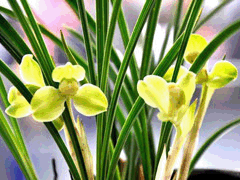 Black spot disease, namely brown spot disease and anthracnose, is caused by infection with a pathogenic fungus. At first, brown spots appear on the leaves, gradually expanding into elliptical or semicircular, slightly sunken, ring-like lesions. Then the lesions dry up and the spores spread the infection to other leaves.
Although black spot disease does little harm and deaths are rare, it leavesorchidsin a terrible mess and stripped of their ornamental value. Why is black spot disease so hard to treat? The reasons are: first, once the black spot pathogen encounters a suitable climate or environment, it can cause disease at any time; even in winter, it keeps spreading and growing in greenhouses; second, the spore is a cell with a reproductive function that can form a new individual once it leaves the parent body; it spreads by being released into the air and needs no growing medium, insects, fertilizer water, tools or other carriers as a vector, and since it is invisible and intangible, nipping it in the bud is extremely difficult; third, at the onset of disease the spots are extremely tiny, mostly on the underside of leaves, fairly hidden and hard to notice, and once they expand into black spots it is too late; fourth, beginners in orchid growing often apply pesticide according to the label instructions, not knowing that methods differ with the target plant, so the treatment rarely works.
There are quite a few chemicals for preventing and treating black spot disease, most of them intended for crops. Crops differ from flowers: part of a crop is for eating, and the state has strict regulations on pesticide residues, which are not allowed to exceed the limit. For example, the Japanese-made thiophanate-methyl carries the warning: "On wheat crops, apply at most 2 times per season, using it 20 days before harvest; on rice crops, apply at most 3 times per season, using it 30 days before harvest." By this routine, wheat is treated at most once every month and a half and rice at most once a month, and with such long intervals it is impossible to avoid black spot disease. But wheat and rice are not grown for ornament, so what does it matter if they get mild black spot disease as long as it does not affect yield? Used onorchidsit is different: even mild black spot disease affects their ornamental value, while pesticide residues exceeding the limit do not matter instead. To use Japanese-made thiophanate-methyl to prevent and treatorchidblack spot disease, the interval should be shortened, preferably spraying once a week.
Huakang No. 2, produced by Chengdu Huayi Technology Development Company, is a dedicated chemical developed specifically for preventing and treating flower diseases; its method of use is very different from that of Japanese-made thiophanate-methyl: "Dilute each small packet in 1 kg of water, and spray evenly in the morning and evening every three or four days (for preventive use, dilute in 2 kg of water)." Used on crops by this routine, its pesticide residues would certainly exceed the limit, but used onorchids, black spot disease can be effectively controlled.
Besides orchids, the scope of use of Huakang No. 2 also covers other flowers and nursery stock. Orchids also have open-air growing grounds, and most of these plants grow in natural environments highly susceptible to black spot disease; the short application interval of Huakang No. 2 is probably related to this factor. If a closed environment is used togrow orchids, outside black spot spores have difficulty entering, so the interval for preventive spraying can be appropriately extended. To get the correct answer, you still have to seek it through practice. (Lao Tie, Zhejiang)