How Northern Households Can Regulate Air Humidity When Growing Orchids
Air Humidity and Growing Orchids in Northern Households
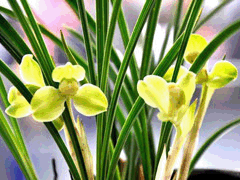 ChinaOrchidsrequire growth under relatively high air humidity; this is a genetic trait formed through long-term natural selection. Many experts, scholars andorchid growerswho areexperts have studiedthe relatively high air humidity needed by orchids, explored it and summarized it. Chen Xinqi's book "The Complete Book of ChineseOrchids" (China Forestry Publishing House, 1998 edition, P260) states that "cultivatedorchids require humidity in summer of no less than 70%; for the special speciesCymbidium sinenseit must reach 90%, but in the winter dormant period it can drop to 50%"; Mr. Wu Yingxiang believes that Chinese orchids "during the growth period should have a relative air humidity of 60%-70%, and in the dormant period it can be lower, around 50%." (Chinese Orchids, China Forestry Publishing House, 1991 edition, P68); Mr. Xu Dongsheng investigated that "orchids originate under forested valleys, with good natural shade, dry but not parched; their relative air humidity in the rainless winter is 50%-55%, in spring 75%-85%, and in summer and autumn 65%-75%. Therefore, artificially cultivated orchid plants should as far as possible satisfy their demand for relative air humidity. Generally speaking, in the dormant period it should not be lower than 50%, and in the growth period it should not be lower than 70%-80%." (Cultivation and Appreciation of ChineseOrchids, Jindun Publishing House, 2002 edition, P26); Li Shaoqiu and Hu Songhua point out in "Chinese Orchids" (Guangdong Science and Technology Press, 1995 edition P87) that "as for humidity and orchid species, during the growth period from April to September it must be maintained above 80%, and in winter it can drop to 50%." Yang Nianci believes (Cultivation and Appreciation of Common FlowersCultivation, Shandong Science and Technology Press, 1982 edition, P254) that "an environment with high air humidity is beneficial to orchid growth, and it is appropriate to maintain the environmental humidity at 60%-70%"; Li Renyun points out in "Orchid Charm" (Anhui Science and Technology Press, 1999 edition, P21) that "the relative humidity needed during the growth period should not be lower than 70%, and in the winter dormant period it is 50%"; the textbook "Floriculture" compiled by the Floriculture Teaching and Research Group of the Department of Landscape Architecture at Beijing Forestry University (China Forestry Publishing House, 1988 edition, P585) holds that "terrestrial orchids require both air and soil to be moist. Summer is the growth period; besides keeping the soil moist, water spraying or misting should be used to maintain air humidity at 45%-65%"; while Ji Junzhao and Huang Lingyan in "Lecture Notes on Flower Cultivation" (China Forestry Publishing House, 1985 edition, P315) hold that "in summer orchids should have misting machines installed to mist at regular times so as to maintain air humidity above 90%."
The above are the requirements for relative air humidity of orchids researched and summarized from different angles by some influential experts, scholars andorchid growerswho are experts in the orchid field. Most believe that during the growth period a relative humidity of 60%-80% is needed, a small number of documents believe 80%-90%, and an individual piece proposes that 45% can also allow good growth. Obviously the data are not completely consistent, which brings a certain degree of difficulty for growers to refer to in cultivation. As northernorchid growerspeople very much hope that the humidity needed for orchid growth is lower, because then it would be easier to solve the humidity problem for northern household orchid growing. Exactly how low the lower limit for its growth is indeed still requires further and deeper research, so as to find a more scientific and reasonable humidity index for growing orchids in the dry-hot climate regions of the north. It is an indisputable fact that orchids grow better under relatively high air humidity, but whether they cannot grow if it is lower is something that northern orchid growing must consider and solve. Although Beijing is not too cold in winter compared with the Northeast, spring and summer are notably dry and hot. The table below shows the average temperature and humidity of Beijing over the past 20 years. It can be seen that the 20-year monthly average humidity in the Beijing area is below 60% for eight months of the year, and relative humidity also has another characteristic, namely that it is very low during the day and rises at night, so the average relative humidity does not look low. The table below shows my records of the daily minimum and nighttime maximum relative humidity in Beijing in May, June and July of 2003. It can be seen that although the average humidity is not necessarily very low, during the daytime, which is exactly when orchids carry out photosynthesis, the humidity is mostly below 50%, which is unfavorable for the normal growth and development of orchids. The dry-hot spring and summer climate of the Beijing area is far from the cool, moist climate conditions that orchids require. This is especially true for household orchid growing, because large-scale cultivation can use facility cultivation, such as building greenhouses or flower cellars and controlling temperature, humidity and light through measures such as misting, ventilation and shading so as to reach or approach the environmental requirements for orchid growth, while households find this hard to do, because the places where ordinary households grow orchids are connected to the living space or are part of the living space, and it is impossible to maintain humidity above 60% for a long time. However, there are indeed a number of successful household orchid growers in the Beijing area. They all attach great importance to satisfying the relatively high air humidity that orchids need, and the methods they adopt to solve the humidity problem differ, with differing results:
1. Spraying water
Spraying water on the leaf surfaces and the pot surface is a routine operation in household orchid growing. Its purposes are first to clean the leaf surfaces, and second to increase humidity. The former effect is obvious; after spraying, the dirt on the leaf surfaces is relatively easy to remove. Humidification can also be immediate, but the duration of the increase in relative air humidity near the orchid pot is limited. Table 3 shows the results I actually measured. Spraying water can immediately increase local relative air humidity and lower the temperature, but it does not last long. From 40 to 60 minutes after spraying, the humidity increase is no longer obvious, and it has basically returned to the level before spraying. In order to maintain relatively high humidity for a longer time, one must spray continuously, which in turn brings other problems, such as new shoots getting water in them carelessly and easily causing "rotten shoot cores" (some materials hold this view). At the same time, too much spraying can cause the inside of the pot to become too wet, and can also cause unfavorable movement of salts in the pot with the spraying water.
2. Increasing the water surface area in the orchid growing place
A generally simpler method is to spread water-absorbing items (such as old carpets, sponges, burlap pieces and fine sand, etc.) on the floor or walls of the orchid growing place, sprinkle water on them, and keep them moist frequently. This method has a significant and lasting effect, but not every household growing orchids can do it, especially when the balcony is small or the orchid growing place is connected to the living space, where it is sometimes not easy to control. Another method is to place a water tray under the orchid pot, put supports (such as red bricks, wooden strips, etc.) in the tray and add water, and place the orchid pot on the supports. In this way the water is relatively easy to control. This year I tested and compared the temperature and humidity at different times in different places (under an outdoor shade awning, on an indoor balcony, on an indoor balcony with a water tray, and in a small greenhouse inside the balcony):
From the table above several points can be seen. First, for orchid pots placed on water trays, the air humidity is clearly increased compared with those without water trays, and throughout the day it is higher than the other two groups. The humidifying effect is lasting, and the temperature is also lower than without a water tray (but the humidity is lower than in the small greenhouse inside the balcony). Second, under the outdoor shade net the ranges of temperature and humidity change are greater than inside the balcony; the temperature differs by 13.5°C between high and low, and the humidity differs by more than 60 percentage points between high and low, while the temperature and humidity changes inside the balcony are relatively stable. Therefore, for household orchid growing before the rainy season arrives, placing orchid pots indoors is somewhat more favorable than outdoors from the standpoint of temperature, but attention must be paid to ventilation, and they can be moved outdoors once the rainy season comes. Although I have not tested the effect of sprinkling water on water-absorbing items on the floor and walls to regulate humidity, it can be estimated that as long as the evaporation area is greatly increased, the humidifying effect will not be worse than that of a water tray under the pot. The water tray area in the above test was about 0.6 sq m. If the water surface area is increased, the effect of improving the microclimate will be even better.
3. Household "facility" orchid growing
The so-called "facility" actually refers to some equipment and measures used by northern households growing orchids in order to create a microclimate suitable for orchid growth. The simplest "facility" is to put a transparent plastic cover over the orchid pot. Apart from opening it for management such as watering, it is generally basically not opened again after being covered, until the orchids bloom and are enjoyed. Besides the introductions in relevant orchid journals ("Chinese Orchids" 2000, 5, P13; "Orchids" 2001, 3, P21), I have tried this method myself, and orchid growers in the Beijing-Tianjin area have also adopted it. Although this runs counter to the traditional practice that ventilation is the first essential in orchid growing, it is the simplest and most effective way to increase air humidity, and also a method used because there is no other way, because northern orchid growers believe that increasing air humidity is more important in northern orchid growing ("Chinese Orchids", 2000, 5, P13). Adopting this kind of "facility" has indeed achieved good results. As for how to unify the traditional "ventilation" and the "humidity" emphasized in the north, this still awaits further exploration.
Another kind of "facility" is to enclose a relatively closed space with plastic or glass, with the area depending on conditions, commonly known as a small greenhouse. In my balcony I enclosed a small greenhouse with aluminum alloy and glass. From the perspective of moisture retention the effect is very good, and the measured data are as in Table 4 above. From the actual situation of orchid growing, in Beijing's driest and hottest period from March to June (when orchids begin to grow), the advantages of using this kind of facility are first that it can retain moisture, and second that it can regulate temperature. When the temperature is low in early spring, the temperature in the small greenhouse is higher than outside, and when the outside temperature is high, the temperature in the small greenhouse is lower than outside, which is beneficial for orchid seedlings to sprout and grow earlier. But there are also shortcomings. After late June attention must be paid to ventilation. I use a fan, and at the same time combine opening and closing the door of the small greenhouse to control temperature and humidity so as not to form a microclimate of high temperature and high humidity that is unfavorable to orchid growth. Mr. Wei Yasheng, a famous household orchid grower in Beijing, grew orchids using a small greenhouse converted from an east-facing window, with great success, and summarized a set of very practical and rich experience in household orchid growing. Recently there have been new improvements to this kind of small greenhouse: a water curtain is set inside the small greenhouse, water is pumped by a water pump to the top of the water curtain and then flows down by gravity; through circulating water it lowers temperature and increases humidity, with quite good results. It is said that it can lower the temperature by 2-3°C, and the humidity can reach above 75%. Larger orchid rooms use automatic temperature and humidity control equipment, with even better results, but not many ordinary household orchid growers have the conditions for this. I also saw that Mr. Huang Zehua introduced a Taiwan, China-made "plant growing box" for growing orchids (New Orchid Manual, Guangdong Science and Technology Press, 1996 edition, PIZ), with a color photo of the "growing box" attached; it is indeed beautiful and elegant. The basic idea is the same, namely to create a microclimate suitable for orchid growth, only it is more advanced and can automatically control temperature and humidity, light and ventilation. Of course the cost is also higher. If the effect is satisfactory, perhaps it is the direction for household orchid growing.
Of course there are still many methods for increasing humidity, such as growing orchids together with other plants; the transpiration of the group is beneficial to improving the humidity of the small environment.
Author: Yu Fengyi
Mailing address: P.O. Box 5109, Beijing (100094)
Tel: 010-62815876(0)
E-mail: [email protected]