What are the general symptoms of nutrient deficiency in plants?
General symptoms of nutrient deficiency in plants
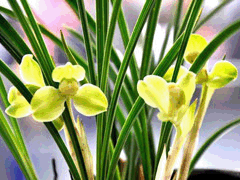 Orchidsare grown in a wide variety of ways, and many people even use less and less soil, so various nutrient deficiency symptoms appear. Studying nutrient deficiencies requires very strict experiments and good instruments and equipment, especially for trace elements, which are very expensive, so research on nutrient deficiencies is mainly in crops and forestry, and less is done on flowers. We can only identify them from the general symptoms of plant nutrient deficiency:
Nitrogen deficiency: leaves narrow and small, green color fading.
Phosphorus deficiency: leaves small, dark green, lacking luster.
Potassium deficiency: old leaves and leaf margins turn yellow, brown spots appear on the leaves. Premature aging.
Calcium deficiency: growing points die, leaf tips hooked, leaves shrunken, margins curled, plant stunted.
Magnesium deficiency: chlorosis between the veins, net-like vein pattern appearing, spots of various colors.
Sulfur deficiency: new leaves yellowing, chlorosis uniform.
Iron deficiency: new leaves chlorotic, veins still green at first.
Boron deficiency: many lateral buds, but growth deformed.
Manganese deficiency: new leaves chlorotic, veins and nearby areas still green, dark brown spots in severe cases.
Zinc deficiency: new leaves chlorotic, starting near the midrib. Leaves small with wrinkled margins.
Copper deficiency: young leaves chlorotic and yellow, white leaf spots appearing. In some plants, exuding a gummy substance is also due to copper deficiency.
Molybdenum deficiency: leaf color between the veins fades and turns yellow, spots easily appear.
Author: Liu Jingqiu