Scorching Summer: Key Points for High-Temperature Protection and Management of Crops
Scorching Summer
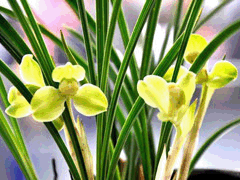 This year's plum rain season brought greatly differing rainfall amounts from region to region. In our Zhoushan, apart from the first plum rain period having more rain, the second plum rain period was basically under half-clear, half-cloudy weather. When the plum rain season first arrived, it truly made people live in constant anxiety. The first thing upon rising each morning was to carefully observe whether there were any changes in the orchids in the orchid garden, and only after everything had settled down did I begin watering and tidying the orchid leaves. Watching the orchids I had raised with my own hands and their new shoots grow taller and unfurl their leaves day by day, a kind of indescribable joy rippled deep in my heart.
On the very first day of the third plum rain period, a torrential rain came down head-on, sweeping away the stuffy weather of many days and making it much fresher. The orchids in the orchid garden also grew madly for a while in the sound of the rain. Orchids have the characteristic of slow recovery. Although spring has continuous wind and rain, the relative temperature is still not high, and the earth is still slowly releasing the cold current it absorbed in winter, so orchids can only adjust their pace of revival neither too fast nor too slow, with little growth. Entering early summer, as long as conditions are managed properly, orchids will enter a rapid growth period. How orchid enthusiasts wish such an environment could last longer, but this year it was a short plum rain season.
Entering July, most regions of our country gradually enter the high-temperature midsummer period, and Zhoushan's temperature also hangs above 30 degrees. Although Jiangnan has not yet emerged from the plum rain season, one can feel the scorching summer drawing near. Orchid enthusiasts will not forget last year's severe heat, which showed no mercy to orchids. Many fine and superb orchids, unable to withstand the ruthlessness of the severe heat, passed away with regret.
Besides the characteristic of slow recovery, orchids also have the characteristic of stagnant growth under high temperatures.Cymbidium goeringiiThe optimal growth temperature is around 20 to 28 degrees; higher or lower than this temperature is unfavorable forCymbidium goeringiigrowth. Once the temperature exceeds 32 degrees,Cymbidium goeringiiwill show stagnant growth. Under the pressure of high temperatures, in order to achieve physiological balance, orchids adopt a complex process of slowing down metabolism, but the orchid's physical dynamics are at their peak period. The consequence produced by high temperatures is increased transpiration. The increased transpiration will consume large amounts of water and part of the nutrients just accumulated, so the orchid is in a rather unfavorable growth cycle. If the high-temperature weather belongs to normal atmospheric circulation and its duration is also normal, then the orchid can safely pass through midsummer, enter the crisp autumn, and welcome its second growth period.
Yaoyuan's orchids are kept in the anti-theft window grilles on the balcony, directly facing the threat of high temperatures. In order to lower the natural temperature, Yaoyuan completely sealed the aluminum alloy cover plates on the top of the anti-theft window grilles with foam plastic boards 2 cm thick, in order to block the heat from sunlight baking the aluminum alloy plates. On each anti-theft window grille, a small ceiling fan 30 cm in diameter is installed. Whether there is wind or not, it is always made to turn slowly and steadily without stopping. Anyway, the power consumption of the small ceiling fan is only 9 watts per hour, which Yaoyuan can still afford, in exchange for the elegant charm of orchid leaves swaying in the breeze.
High temperatures intensify the transpiration of orchids. In summer, if watering is not timely, it is easy to cause dehydration of orchid leaves, while watering too much easily causes the orchid roots to be steamed and thus to rot and die. For getting through summer, besides the external environment, ventilation inside the orchid pot also becomes the most important factor for success or failure in the whole year. At this time, if the orchid's pseudobulb is buried too deep, one can use a bamboo stick to slowly pick away some of the medium. It is best to expose about one-half of the pseudobulb above the surface of the growing medium. Reducing the burial depth is conducive to cooling and ventilation.
In midsummer, if black spots appear on the upper part of orchid leaves, it is mostly harm caused by excessive ventilation and insufficient water supply while transpiration of orchid leaves intensifies, whereas black spots appearing on the lower part of the leaves are often related to excessive moisture causing invasion by pathogens. In summer, the humidity of the orchid room is a double-edged sword. If handled properly, orchid leaves have luster and vigor; otherwise, one becomes afflicted by disease, and it may even cause the collapse of seedlings and plants. During the high temperatures of daytime, humidity should be appropriately lowered, and when the temperature is slightly lower at night, humidity can be appropriately increased. The reasoning behind the ancients watering at midnight or early morning may perhaps be related to this.
Summer is a colorful summer, and many tearful stories are related to summer. Summer is a very hard summer to endure. People have to expend a great deal of energy. Not to mention anything else, just watering the orchids is enough to make orchid enthusiasts sweat profusely for quite a while. Summer is even more a worrisome summer. Many unexpected difficulties and frustrations will occur in summer. Scorching summer, with orchids accompanying and keeping one company; orchids understand human nature, naturally auspicious and at ease. (Author: Gao Haiyong)