Methods and Tips for Growing Orchids in Willow Bark
Growing Orchids in Willow Bark
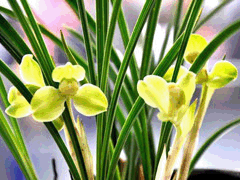 Used forcultivatingorchidsThere are many kinds of growing media, which often differ according to region, natural conditions andcultivationhabits. Relatively speaking, the environment for growing orchids in the north is more difficult, and coupled with a lack of management and care experience, plant collapse (death of plants) often occurs, which is a deeply regretted misfortune fororchid growers. If one can find a satisfactory growing medium, that is a great piece of good fortune. Which growing medium is better to choose depends on one's personalorchid-growinghabits, environmental conditions and skills. The author has used several growing media for growing orchids and adopted different watering and fertilizing methods for comparison. After two years, willow bark was found to be the most suitable.
Willow trees are found everywhere in the north. When garden workers cut down willow trees, one can seize the opportunity to collect the bark. If the newly collected willow bark is not to be used right away, it should be fully sun-dried and stored for later use. After drying, willow bark can be stored for a long time without becoming moldy or rotting.
The method of use is described below. Soak the collected willow bark in clean water until thoroughly wet, in order to save effort when cutting it up, then use a sharp tool to cut it into 1cm small pieces, wash them clean with clean water, and then sterilize them in a pressure cooker to destroy insect eggs, cut off sources of disease, and prevent futurepests and diseases. This step must absolutely be done and must not be neglected. After doing this, the willow bark can be put directly into pots for use.
Willow bark is loose in texture, relatively light in weight, and evaporates slowly after absorbing water, with good water-retaining and fertilizer-retaining functions. Even if one forgets to water once or twice, the water stored inside it will be slowly released for orchid roots to absorb and use, so that orchid roots are protected from drought damage.
Willow bark is granular, and there are certain gaps between the granules, so no matter how much water is poured, it does not matter. After watering, the water in the gaps quickly flows away; that is, air and water exchange very quickly, the gaps remain gaps, and there is no water accumulation. This ensures the breathability of the potting medium in the pot. Even a beginner withoutorchid-growingexperience will not cause plant death from watering too frequently.
The advantage of growing orchids with willow bark is that during theorchidgrowing season, a wet-cultivation method can be used for growing them. So-called wet cultivation means keeping orchid leaves, pseudobulbs and roots constantly moist; whenever the pseudobulbs and roots are observed, they always appear damp. Orchids grown this way have a high germination rate, orchid roots with high water content, white in color, thick and vigorous, with many roots and very crisp, somewhat like bean sprouts, very close to the roots of orchids grown in a water wall, but thicker and more pleasing than hydroponic roots, and the orchids grow vigorously. The author believes this may be because the oxygen supply rate to the roots is higher than in hydroponics.OrchidThe germination rate is high, the orchid roots have a high water content, are white, thick and vigorous, with many roots that are very brittle, somewhat like bean sprouts, very close to the roots of hydroponic orchids, but thicker and more robust than hydroponic roots, which is pleasing, and the orchids grow vigorously. The author believes this may be because the oxygen supply rate to the roots is higher than in hydroponics.In Cymbidium ensifoliumsome plants can produce 3-4 shoots per year, and all are strong shoots. It is worth noting that the mixed cultivation method is limited to the vegetative growth stage during the orchid seedling growing season; when it reaches the reproductive growth stage and dormancy period, the amount of watering should be reduced, otherwise it is unfavorable for flowering and dormancy.
It is generally believed that "orchids prefer dry, chrysanthemums prefer wet." But through my orchid-growing practice, I have learned that during the orchid growing season the water requirement is very large, and only by keeping leaves wet, pseudobulbs wet and roots wet can they grow vigorously. As long as the potting soil is not muddy and drainage and aeration are good, orchids are not afraid of water.
The advantages of growing orchids with willow bark. Willow bark is resistant to moisture and decay and will not rot in a pot for two years. Willow bark contains natural salicylic acid (salicylic acid) and aspirin (acetylsalicylic acid, salicylacetic acid). Whether salicylic acid or aspirin, they both promote rooting, germination and leaf photosynthesis in plants. Therefore, when willow bark is used to grow orchids, orchids root quickly, produce many roots, produce many shoots, are rich in chlorophyll, and the orchid plants grow vigorously. At the same time, aspirin also has anti-inflammatory, sterilizing and preservative effects, and can prevent the reproduction of other microorganisms (bacteria), which reduces the chance of orchid root infection and also reduces the occurrence of diseases, effectively preventing root rot.
When we transplant and divide plants, it is unavoidable that orchid roots are broken, and broken orchid roots rot extremely easily. If willow bark is used as the growing medium for orchids, broken-root rot can be avoided. After an orchid root breaks, its sensory cells can transmit [a signal] to the orchid plant body and prompt the orchid plant body to produce an enzyme, and this enzyme can cause the orchid plant body to produce a chemical substance called "jasmonic acid," which can make the orchid root rot very quickly, while aspirin can inhibit the production of this enzyme, playing a role in protecting orchid roots and orchid plants. Growing orchids with willow bark can increase the survival rate of divided, transplanted and newly plantedwild-collected orchids, and reduces the trouble of soaking roots, soaking seedlings and spraying leaves with aspirin.
When using willow bark as a growing medium for orchids, it is best not to use organic fertilizer. Organic fertilizer is unsanitary, easily causespests and diseases, extremely easily damages roots and seedlings, and has incomplete nutrient elements, so deficiency symptoms will appear after a long time. Therefore, chemical fertilizers containing all elements should be used year-round, so that deficiency symptoms do not appear, and the amount used is small and easy to control. At the same time, the amount used should be increased or decreased at any time according to the growth of the orchid seedlings, so as to maximize the effect of fertilization.
In summary, the author believes that growing orchids with willow bark is feasible and the effect is quite good, and it also provides beginners in orchid growing with a relatively ideal orchid growing medium. (Jin Weng)