How to Water Orchids When Growing Them in the North? A Full Guide to Care Techniques
Growing Orchids in the North and Watering
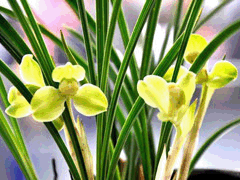 OrchidsWhether you can grow them successfully depends first on the growing medium you choose; once that is settled, whether they survive and thrive depends on watering. The author once visited severalorchidgrowing experts from the BeijingOrchidResearch Society. The media they used were not entirely the same - some used Satsuma soil, peat soil, Ishiguro stone, or leaf mold with river sand added. Thanks to their rich experience, they judged the timing of watering just right, and theorchidsgrew very well. Many classic orchid books and papers emphasize that orchids "love moisture but fear wetness," "prefer evenness but fear dryness," and that it is "better dry than wet." For northernorchid growers, especially beginners who are not yet very experienced, judging whether to water or not is no easy task, because "moist" and "dry" are hard to quantify. Exactly how "moist" and "dry" manifest in the growing medium depends entirely on years of experience, which brings great confusion to those just starting out inorchid growingand means failure comes with the slightest carelessness. For beginners, the easiest thing to grasp is how many days apart to water, since that is a relatively quantifiable operation, which is why one often hears the question "how many days apart should I water?" However, many orchid experts or articles on orchidcultivationgenerally refuse to answer directly, because orchid watering is related to many factors, such as the growing medium, the pot, the weather, the season, the orchid variety, and the plant's growth condition - and this is indeed true. When to water an orchid pot and when not to is a very clear standard: water when "dry," and simply keep the medium in the pot "moist." But how do you judge this? This question is extremely important when growing orchids in the north, because the northern air is dry, and after watering, once a hot dry wind blows, the medium at the pot surface quickly dries, while the medium in the middle and at the bottom of the pot is not dry. Whether to water specifically must be judged. The author once picked up pots to weigh them by hand and observe the water loss; when truly unable to decide, simply pulled back the pot surface to look at the moisture in the medium. But if you have several dozen pots, this is far too inconvenient, and sometimes it is not accurate. Later, the author inserted toothpicks or wooden chopsticks into the pots and pulled them out to check; if the chopstick was still damp, no watering; otherwise, water. Although this method is relatively accurate and reliable, it is also not very convenient. Seen this way, whether to water is ultimately a matter of judgment. Judge accurately, and you water correctly; judge inaccurately, and even though you know to water when "dry" and not to water when "moist," it is all in vain. Orchids "love moisture but fear wetness" and "love dryness but fear aridness"; how to understand "moist" and "arid" is the key. For this reason, the author once did an experiment: using identical plastic pots to simulate orchid growing, filling them respectively with different air-dried media and weighing them together with the pots - peat soil, Ishiguro stone, leaf mold with 30% cinder added, leaf mold with 20% river sand added, and pure leaf mold. Then they were soaked in water for 1 hour, in order to bring the air-dried media to maximum water-holding capacity. Then the bottom holes were plugged, the pots were quickly taken out, and after draining for half an hour they were weighed and all the water that flowed out was measured, to calculate the porosity of the media. After that, they were weighed once every 1 day for half a month continuously. After the experiment ended, the daily change in medium moisture content was calculated, with the results as shown in the table below.
From these results it can be seen that in the Beijing area, after watering, the moisture content in different media changes differently over time: Ishiguro stone evaporates fastest, while pure leaf mold decreases slowest. The speed at which medium moisture decreases is related to the maximum water-holding capacity of the medium; those with high maximum water-holding capacity lose moisture in the pot more slowly. In addition, it can be seen that in the Beijing area, the rate at which medium moisture decreases in orchid pots also differs by season; in August the room temperature is higher than in April and evaporation is also faster. The table also shows that the porosity of different media is not the same: peat soil and Ishiguro stone are the highest, while leaf mold with 20% river sand added is the lowest. Media with more pores are more conducive to regulating water and air in the pot; if you water too much or too often, there will be no problem in the short term, whereas if there are few pores there will be adverse reactions. This shows that growers using the latter medium must have a higher level of skill, otherwise improper watering will cause root rot.
When the author encountered setbacks in growing orchids, the author eagerly read more than a dozen books onorchidcultivation, yet regarding the measurement of "moist," "dry," and "arid," always remained half-understanding. Some books point out that "moist" has somewhat less water than wet, "dry" has even less than "moist," and "arid" is more water-deficient than "dry." This is absolutely true, but exactly how to grasp it was elusive. The author also saw some books pointing out that when soil moisture content is 15%-20%, one should water. This is relatively quantifiable; for those lacking experience, as long as the moisture content of the orchid pot is determined, the optimal timing for watering can be grasped. Later, in the introduction of the orchid-growing experience of Mr. Wei Yasheng, a successful orchid grower in Beijing, the author saw that he had used the "weighing method" to judge how much water an orchid pot had lost, believing that when the medium moisture reaches 40%-50% of maximum moisture content, it is time to water. Combining this with the author's actual measurement results, it can be seen that if the moisture content of the medium decreases to 50% of maximum water-holding capacity as "arid," that is the moment to water. In this way, can the specific watering interval be determined? Specifically, in the Beijing area in April, the watering intervals for the above five media indoors are best controlled within 15 days, 9 days, 15 days, 15 days, and 15 days, while in August they should be controlled within 9 days, 3 days, 9 days, 9 days, and 9 days. Of course, because the experiment was done in pots without orchidsFloralplanted, the evaporation from the medium is less than with plants present, so specifically it still must be revised according to pot size, orchidFloralgrowth vigor, climatic conditions, and placement environment - that is, the watering intervals should be appropriately adjusted from the number of days in the table. If a household grows only a few orchids and uses the same medium, then spending a little time doing the above measurement can identify the watering interval. Of course, for those already fairly experienced in orchid growing, this method is superfluous. But for beginners, it is undoubtedly still helpful. When the author first grew orchids, the author once followed a book's instructions on watering: whenever the substrate surface showed slight whitish signs of dryness, one should water. As a result, the author failed many times. In the more humid environment of the south this is certainly correct, but for the climatic characteristics of the north it is not comprehensive. Later, through continuous study and exploration, the author began to get a feel for watering orchids in the Beijing area. (Yu Fengyi)
Address: P.O. Box 5109, Beijing Postal code: 100094
Tel: 010-8285876(O), 62815805(H)
E-Mail: [email protected]