What temperature do orchids need to grow?
The temperature orchids need to grow
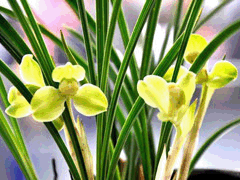 GeneralOrchidsall like warm winters and cool summers. Most regions of our country are in the temperate and subtropical zones, all suitable fororchidgrowth. Except for the Northeast and Northwest, orchids are grown fairly widely across the country; the main limiting factor is temperature. In the Northeast, Northwest and most of North China, winters are too cold, and outdoororchidcultivationis not suitable. In winter, orchids must be moved indoors, and in summer, shade structures must be set up to protect against the scorching sun.
The northernmost-distributed Cymbidium species in our country areCymbidium goeringiiand Cymbidium faberi; along their distribution line, there is frost or short-lived snow cover in winter, and summer temperatures are relatively high. However, orchids mostly grow where there are trees, mostly in mixed broadleaf-conifer forests or bamboo forests, which both block the summer sun and high temperatures and block the winter cold wind. In places covered by snow, the snow cover plays a protective role; the ground temperature under the snow generally does not fall below 0°C. In general, the suitable temperatures orchids need for sprouting, growth and so on are as follows:
1. Temperature for orchid seed germination: 21-25°C during the day, 15-18°C at night. Except for special exceptions, this applies to almost all orchids.
2. Temperature needed for tropical orchid seedlings: 23-30°C during the day, 18-21°C at night.
3. Temperature needed for mature epiphytic orchids: 23-27°C during the day, 18-21°C at night.
4. Temperature needed for mature terrestrial orchids: 20-25°C during the day, 3-5°C lower at night.
The above temperatures are the most suitable temperatures for orchid growth. During the winter dormancy period of orchids, the temperature can be lowered. For example, forCymbidium goeringiiandCymbidium faberi, the lowest winter night temperature is 5-6°C; dropping to 0°C or minus 2-3°C is also harmless (but it should be drier). (Wu Yingxiang)