Detailed Explanation of Fertilizer Basics: Correctly Understanding the Role of Fertilizer
Understanding Fertilizers
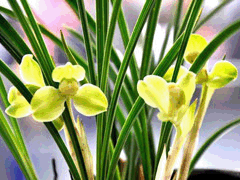 In order to promoteorchidsto grow better, besides having appropriate sunlight, moisture and ventilation, it is also necessary to supply an appropriate amount of fertilizer, which can be more conducive to robust growth and easier flower bud formation. It is best to apply complete fertilizers. Only with a full understanding of fertilizer elements can they suitorchids' needs. They are listed separately as follows:
1. Nitrogen can promote luxuriant growth of stems and leaves. Generally speaking, applying nitrogen fertilizer in the early growth stage can promote growth, and in the later stage it can increase the protein content in the plant body. If too much nitrogen is applied, stems and leaves grow excessively, the tissues become weak, and instead it is not easy to produce flowers. If fertilizer is applied excessively, it can easily cause root rot. It is found in relatively large amounts in oil crops such as soybean cake and in ammonium sulfate.
2. Phosphorus is one of the essential nutrient elements in plant growth. It has a major relationship with the metabolism of carbohydrates, proteins and fats, and can promote the development of the root system and the development and formation of reproductive organs, so it has the function of promoting development. It is found in the greatest amounts in bone meal, fish fertilizer and superphosphate among inorganic fertilizers.
3. Potassium is an important element that makes plants stand upright and regulates regular activity, and it can also increase the plant's resistance to various diseases. If potassium is lacking, the plant becomes shorter. When potassium deficiency is severe, the leaves can easily develop scorched symptoms and may even die.
4. Calcium is an indispensable element for forming cell walls and enabling cells to carry out regular activities. If calcium is lacking, flower development is hindered, and the stems and leaves become abnormally twisted. It is found in the greatest amounts in animal bones, eggshells and in calcium nitrate and calcium phosphate among chemical fertilizers.
5. Magnesium is part of the composition of chlorophyll, and it is indispensable for producing nutrients. If magnesium is lacking, old leaves easily turn yellow and the plant does not grow vigorously.
6. Sulfur is one of the components of protein. If sulfur is lacking, root development is hindered, and because of poor root development, normal growth is affected.
7. Iron is also part of the composition of chlorophyll. If iron is lacking, young leaves can turn yellow.
8. Trace elements mainly refer to manganese, copper, boron, zinc, etc. Their content in plants is extremely small. They are a kind of stimulating element and directly affect flowering and color. After lacking these trace elements, the plant's flowering can be less beautiful and growth can become abnormal.