A Comprehensive Analysis of Water Quality Issues and Water Use Concepts
Water Quality Issues and Water Use Concepts
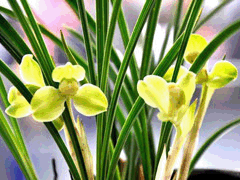 In academic terminology, water quality is classified as neutral, acidic, alkaline, hard water, or soft water, while what wegrow orchidsactually use for watering includes tap water, river water, spring water, rainwater, and groundwater. The author has often heard: this kind of water can be used, that kind cannot be used for watering, this or that water must undergo such-and-such treatment before it can be used for watering. Opinions about water have always been extremely varied. Such theories, resembling those of water quality testing experts, are really not something the average generalist can easily understand.
Cultivating Chinese orchids with careful research, using scientific methods to analyze and test out a most ideal water -- such a research spirit is truly admirable! But aside from scientific experts engaged in academic research on orchid plants, ordinary hobby growers whogrow orchidsfor fun seem to have no need for such an unnecessary exercise. Why? If everyone had to use scientific methods to test what water quality they have, and had to treat it through special methods, would that not force every felloworchid-growingenthusiast to become a water quality testing expert? Moreover, when outsiders force themselves to carry out scientific testing and treatment work, there is inevitably the risk of clumsily imitating others and making things worse! And to describe water quality issues as both profound and ingenious, leaving people guessing at depths they cannot fathom, only makes the many enthusiastic newcomers shrink back in fear of difficulty, forever lingering outside the door of the orchid world, never able to gain the benefits of orchids.
But which kind of water should we use? The author can tell everyone quite definitively a standard for water use: water that we humans ourselves can drink, water suitable for raising poultry and livestock at home, or water used tocultivatecrops and other flowers, plants, and trees that can all grow normally -- there is no doubt that all of these can be used for growing orchids. Regardless of which category it falls into in scientific terminology, and regardless of where its water source comes from, everyone can use it with confidence.
The author has always adhered to the aforementioned standard for water use. During more than two years living in a rural area of Changhua, I always used groundwater pumped from underground up to a rooftop water tank. After moving to Taipei, over a period of more than two years, I watered exclusively with Taipei City tap water that had not undergone any treatment whatsoever. Over more than ten years across both locations, the strong new shoots that multiplied year after year were one to two times more numerous than the original plants, and I consider myself quite satisfied with the cultivation results. These cultivation results have been seen by quite a few orchid friends who visited my home, and the facts can serve as proof of everything stated. Therefore, the author believes that fellow enthusiasts who grow orchids for fun need not rack their brains over water quality issues at all! (Wu Anlu)