The correct method of mixing granules with humus soil
Mixing granules with humus soil
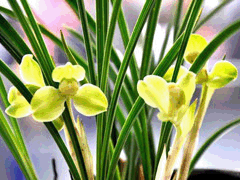 In the past,orchidswere grown in mud (humus soil)orchidsbecause of poor drainage and aeration, root rot was often caused. In recent years, granular potting media such as "Xiantu" have been promotedfor growing orchids. Although root rot can be overcome, the ability to retain fertilizer and hold water is rather poor; orchid seedlings always grow weakly, with many plants having 2-3 leaves, and this becomes even more obvious after continued growing into the second year and beyond. Early last spring, I took one pot of "Fuhe Su", used a three-in-one granular potting medium such as Xiantu for the lower half, and mixed humus soil and a little plant ash into the upper half for planting. When I repotted in October, I found that all the orchid roots had extended toward the surface layer. Practice has proven that mixing granular potting medium with humus soil is a fairly ideal choice. It can increase organic matter and fertility, raise the moisture retention level in the pot, and also eliminate the worry of root rot. According to the size of the pot, the texture of the pot, and the dryness or wetness of the placement site, determine the proportion of humus soil to mix in.
In short,cultivatingorchidsthe soil used must be loose and airy, with good drainage, good water retention, rich in organic matter, good in physical properties, and have a certain ability to retain water and fertilizer. As long as it meets the above requirements, potting media with their own characteristics can all be mixed together, and local materials can be used. When using it, cover the drainage hole at the bottom of the pot with a piece of palm fiber to prevent earthworms and ants from entering, then place a porous ceramic bowl over it; pile on charcoal or large pieces of Xiantu, put the coarse part of the mixed soil in the lower part, and then spread a layer of humus soil on the pot surface and plant Selaginella uncinata on it, so that the potting soil will not be washed away when watering, and it will retain moisture and look attractive. Although this is an old method, it can still be retained and used.
It is worth mentioning that the ideal humus soil available on the market today is mostly fake orchid mud unless people from the mountains do the work. The fine soil I specially brought back from mountain rock crevices, after years of weathering, has low humus content and poor aeration, and is also not ideal. However, you can go into a pine needle forest and take deep-layer larch humus soil; do not use undecomposed raw pine needles. Pass it through a coarse sieve to remove stones and branches, winnow out the overly fine soil. This kind of soil, charcoal, and plant ash are potassium fertilizers, which help promote strong roots, and adjust it to a pH between 52-6, slightly on the acidic side, which is most suitable for orchid growth. At the same time, it must also be disinfected. A simple method is to expose it to sunlight for a few days, strive for cleanliness, kill harmful microorganisms and insects, and preserve beneficial microorganisms in the soil as much as possible.
Zhejiang Jiangcheng