Can orchids be grown in plant fiber materials?
Can plant fiber materials be used to grow orchids?
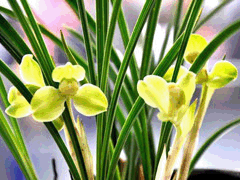 Plant fiber materials, such as sphagnum moss, mountain moss, miscanthus stems, silvergrass flower stalks, reed stems and roots, waste from ramie and jute, palm fiber, the fibrous roots and outer layers of cyathea and fern roots, and tree bark.
Sphagnum moss, mountain moss andorchidsgrow in harmony with each other and are very suitable for orchids; they can be used alone forcultivation, or used to wrap the pseudobulbs and orchid roots when planting in other media, and can also be used to wrap the pseudobulbs and roots of commercial orchids for long-term transport and sale. Other plant fiber materials, except dry tree bark and palm fiber, all need to be boiled in water to remove sugars and gums, then chopped and sun-dried, and mixed with other media besides mud materials. Raw fiber easily heats up and damages orchid roots; cooked fiber generates less heat and has better water retention, but attention should still be paid to timely watering to prevent the cellulose from decomposing, heating up and damaging the orchids. Sphagnum moss easily acidifies and is suitable for short-term planting; after 3 months to half a year it acidifies and must be replaced.
Plant fiber materials have good water permeability, air permeability and water retention, and can be mixed with other media forcultivatingvarious orchids.