Analysis of the Impact of the Soil Environment in Chinese Cymbidium Cultivation
The Impact of the Soil Environment on Chinese Cymbidium Cultivation
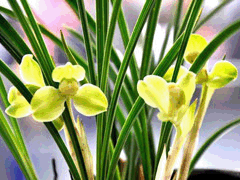 In deciding thecultivationsuccess or failure of Chinese cymbidiums, the growing medium is the primary factor. Only by fully understanding the different properties of growing media can one improve and make good use of them and groworchidswell.
The materials traditionally used forcultivatingChinese cymbidiums are mainly various types of soil, such as field soil, cow dung soil, roasted soil, soaked mud, humus soil, pond mud and culture soil. They all share certain common drawbacks: their overall composition is complex, it is not easy to control the composition of nutrient elements, it is not easy to sterilise them, and it is not easy to control the balance of water and air in the soil... We know that when the growing medium is well aerated, microbial activity in the medium is strong, and it can convert the organic matter in the medium into substances in an available form for the plant to absorb; at the same time, when there is sufficient air in the medium, it can promote root respiration and absorb more nutrients from the medium. Moreover, the fleshy roots of Chinese cymbidiums and their orchid mycorrhizal fungi have high requirements for both air and water. Only by properly controlling the balance of water and air in the growing medium can the simultaneous needs of Chinese cymbidiums for air and water be met, and only then canorchidsbe grown well. In recent years, through the continuous efforts of numerous Chinese cymbidium enthusiasts, many soillesscultivationmethods have been widely applied in the orchid world, and new types of growing media have emerged one after another. From snakewood shavings, sphagnum moss, broken tiles, crushed red brick, pumice, weathered rock material, volcanic rock granules to kiln-fired clay granules, fired pond mud, Puli stone, Japanese orchid stone and so on. There is every variety, with both Chinese and foreign products available in abundance, and all of them take as their starting point being lightweight, simple in composition, convenient for pest and bacteria sterilisation, convenient for controlling nutrient element content, hygienic and clean, with good drainage and aeration, and convenient for controlling the balance of water and air. According to observation: using fine granular growing medium (such as pieces the size of a soybean) at about 2cm around the pseudobulb is of great benefit to root development in Chinese cymbidiums. (Wu Pinglang)