What are the feng shui considerations for growing orchids?
The "Feng Shui" of Growing Orchids
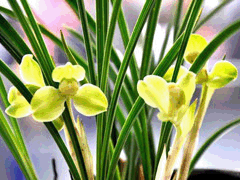 Wind has two meanings: one refers togrowing orchidsthe site needing good ventilation, and the other refers to the orchid pot needing to breathe. Water also has two meanings: one refers to daily watering management, and the other refers togrowing orchidsthe relative humidity of the air at the site. Feng shui is the foundation of growingorchidswell, and it is also the issue that orchid enthusiasts should pay the most attention to. For theorchid-growingenvironment, wind has a direct effect on water: the stronger the ventilation, the lower the humidity; when ventilation weakens, humidity increases. Clearly, this is a fundamental contradiction. To solve this problem, orchid enthusiasts everywhere should adjust the amount of ventilation according to the local climate and the environment of their own orchid-growing sites, striving to achieve good ventilation and moist air. Water is the source of life; without water, no living plant or animal can survive, and orchid plants are no exception. Orchid plants not only need their roots watered, but the leaves exposed to the air also prefer relatively moist air. Watering has been valued by orchid growers through the ages, and each has their own watering experience. For example, if regional temperatures, humidity and orchid-growing environments differ greatly, their watering techniques will vary considerably. On the question of watering, one should start from the objective environment and, combining factors such as potting medium, humidity, temperature, the location of the orchid room, as well as sunny days, cloudy days, rainy days and seasonal changes, choose and formulate a watering amount suited to oneself. Generally speaking, the watering interval for cymbidium orchids is 2-4 days: water once every 2 days in spring and autumn, and every 3-4 days in winter. This applies to mixed potting media and does not apply to coarse potting media (for reference only).
Song Mingyuan