Is non-third-party organic product certification feasible? Analyzing the prospects for organic agriculture development
In our country there has never been organic agriculture without non-third-party organic verification, yet South Korea has it. So is organic agriculture with non-third-party organic verification feasible? Deconstructing the success story of South Korea's Hansalim cooperative. Let's take a look together.
In South Korea, the ways of encouraging farmers to engage in organic agriculture include PGS (Participatory Guarantee System) and the Hansalim cooperative (hereinafter referred to as Hansalim). Among them, I have known Hansalim's partner farmers for many years; they are extremely honest, their farming methods are very organic, and sometimes even more organic than third-party verified organic. Some of Hansalim's agricultural products are not organically verified, but South Korean consumers equate Hansalim with organically verified agricultural products. In fact, looking into Hansalim's food standards, they are the strictest in South Korea; the cooperative only buys products from farmers who are moral and honest, and every farmer who joins the cooperative must be assessed by the cooperative.
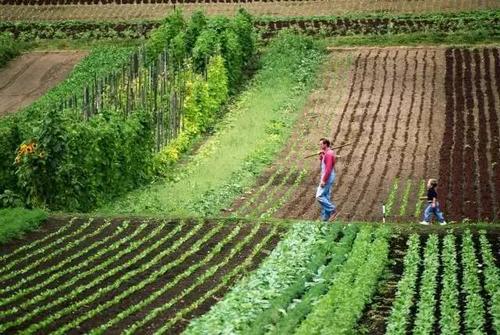
Some female members are very clever, for example housewives. Farmers often say that housewives are the most fearsome humans; when these housewives discover that something is not right, they will proactively inform the farmers. For example, when farmers focus only on production, the housewives will instead tell them that they must also consider aspects such as the ecological environment. Because the relationship between farmers and housewives does not involve third-party verification, they call this "self-verification" to ensure that the food is safe, though this is not listed by the South Korean authorities as verified organic agricultural products.
In the past we only focused on verification, wanting to establish a verification method that is friendly to farmers, and this is the problem with organic agriculture 2.0: too many restrictions were found, which exclude small farmers, causing the agricultural products of many farmers to be unable to become organic agricultural products due to verification restrictions. But looking at the whole world, small farmers account for as much as 70%. Small farmers are very important, and we want to include them.
Whether it is organic verification or PGS, both are a kind of verification tool; the key lies in the mindset of each country's government and civil society, and how these tools are used to develop organic agriculture. At the same time, compared with organic verification, PGS can not only verify but also support the growth of organic farmers. Therefore, if a PGS system is to be established, not only consumers but also farmers should participate, so that the development of organic agriculture can be broader.