Watering with Care: The Rules of Watering Under Natural Conditions
The Rules of Watering Under Natural Conditions
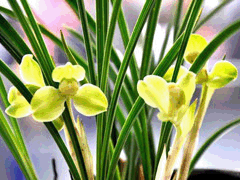 "Dry orchids, wet chrysanthemums," which showsorchidsprefer to be on the dry side; in fact,orchidsare best grown in a moist environment that is dry but not parched. As the orchid growers of older generations in our country said: "They like moisture in spring, slight dampness in summer and autumn, and in winter they need moisture with a touch of dryness," which fully explainsorchids' requirements for dryness and humidity in different periods.
Orchids generally need a relative humidity of about 40%-65%. During the growing season, terrestrial orchids need a relative humidity of 70%-80% during the day, and at night the relative humidity can reach 80%-90%. According to these scientific measurements, master the humidity requirements of orchids at each stage of the growing period, adapt to local conditions, and manage them flexibly.
The specific frequency of watering orchids must be decided according to the potting soil, the orchid species, the weather and the texture of the pot. In general, water once a day or once every few days in spring; once a day in summer; and once every few days or once every 10 days in autumn and winter.
In spring and autumn, the best time to water is in the morning; during the hot days of midsummer, it is best before sunrise and at sunset; in early winter and early spring, you can water after the sun is overhead and the temperature has warmed slightly. During the period when they are brought indoors for the winter, you must water around noon on clear days. But take care to avoid wetting the leaf surface or pouring water into the leaf sheaths.
Water for irrigation is best if neutral. For watering orchids, stored rainwater is best, followed by river water, pond water and well water. When the above water sources are hard to obtain, tap water can also be used; before use it should be put in a water vat and left open to stand for several days.
It is best to water with a watering can that has a long spout with fine holes (commonly called a showerhead). You can also use the soaking-pot method, that is, immerse the orchid pot in water and let the water seep slowly through the hole in the bottom of the pot into the soil layer. Although this method allows the pot soil to absorb enough water, if the orchid has just been repotted and newly planted, it should not be immersed too deeply; just up to the waist of the pot is enough. For old pots that are too dry, using the soaking-pot method to replenish moisture is an ideal approach.
Orchids can be left out in the rain. Clean rainwater is most beneficial to theorchid'sgrowth. Rain can also clean the leaf surface. Light rain and drizzle are best. Heavy rain and rainstorms wash down too violently; they can cause the pot soil to become compacted, splash up muddy water that contaminates the leaves, and even break the orchid leaves, so orchids should be covered during heavy rain and rainstorms. In hot summer, avoid rain from the east. If the pot soil is already too wet, then do not let it get rained on for the time being. (Lin Qingde, Mu Wei)