National egg prices rise in latest quotes, 5% supply-demand gap expected to be filled by February at the earliest
Have you bought eggs recently? Have you noticed that egg prices have gone up? And what I'm about to tell you is that not only have prices risen, but export volumes are also insufficient. Let's take a look together.
Currently, the price of eggs at the place of production has risen from 33.5 yuan per Taiwan catty to 36.5 yuan, while the wholesale price has risen from 42 yuan per Taiwan catty to 45 yuan. The main reasons are that the 823 floods caused the loss of about 600,000 laying hens, temperature fluctuations affected laying hen production, and increased consumer demand during winter and the Lunar New Year, creating a 5% supply-demand gap and driving egg prices up. Wang Chien-pei, Secretary-General of the Republic of China Poultry Association (a juridical association), said that laying hen farmers have already begun restocking laying hens after the floods, and egg production capacity could fill the market gap as early as February this year.
Egg price rises 3 yuan per catty, affected by the 823 floods, climate and management
Wang Chien-pei pointed out that there are about 1,400 households raising laying hens domestically, with about 38 million to 39 million laying hens being raised, and the actual number of laying hens in production is about 28 million to 30 million.
Wang Chien-pei said that last year's 823 floods affected the Tainan and Chiayi areas, which are the second- and third-largest laying hen production areas in the country, respectively, causing the loss of 500,000 to 600,000 laying hens and creating a supply gap. Daily egg production fell from 105,000 boxes to 100,000 boxes, and combined with increased demand during the Lunar New Year period, this drove egg prices up by 3 yuan per Taiwan catty.
He mentioned that among the laying hens actually in production domestically, 80% are raised in open spaces, where the laying rate is affected by factors such as the rearing environment, weather and equipment. If producers have poor rearing management, or if there is a large temperature difference between morning and evening, the laying rate will decline. Producers have been asked to strengthen rearing management to stabilise production capacity.
Restocking of laying hens has begun after the floods; egg supply could recover as early as February
To address the laying hen production gap, laying hen farmers have already begun restocking after the 823 floods. The Council of Agriculture has also coordinated with industry groups to guide laying hen farms in adjusting production periods, gradually adding hens that had stopped laying back into production, and delaying the culling of hens. It has also coordinated with egg merchant associations to strengthen egg distribution and stabilise production and marketing supply.
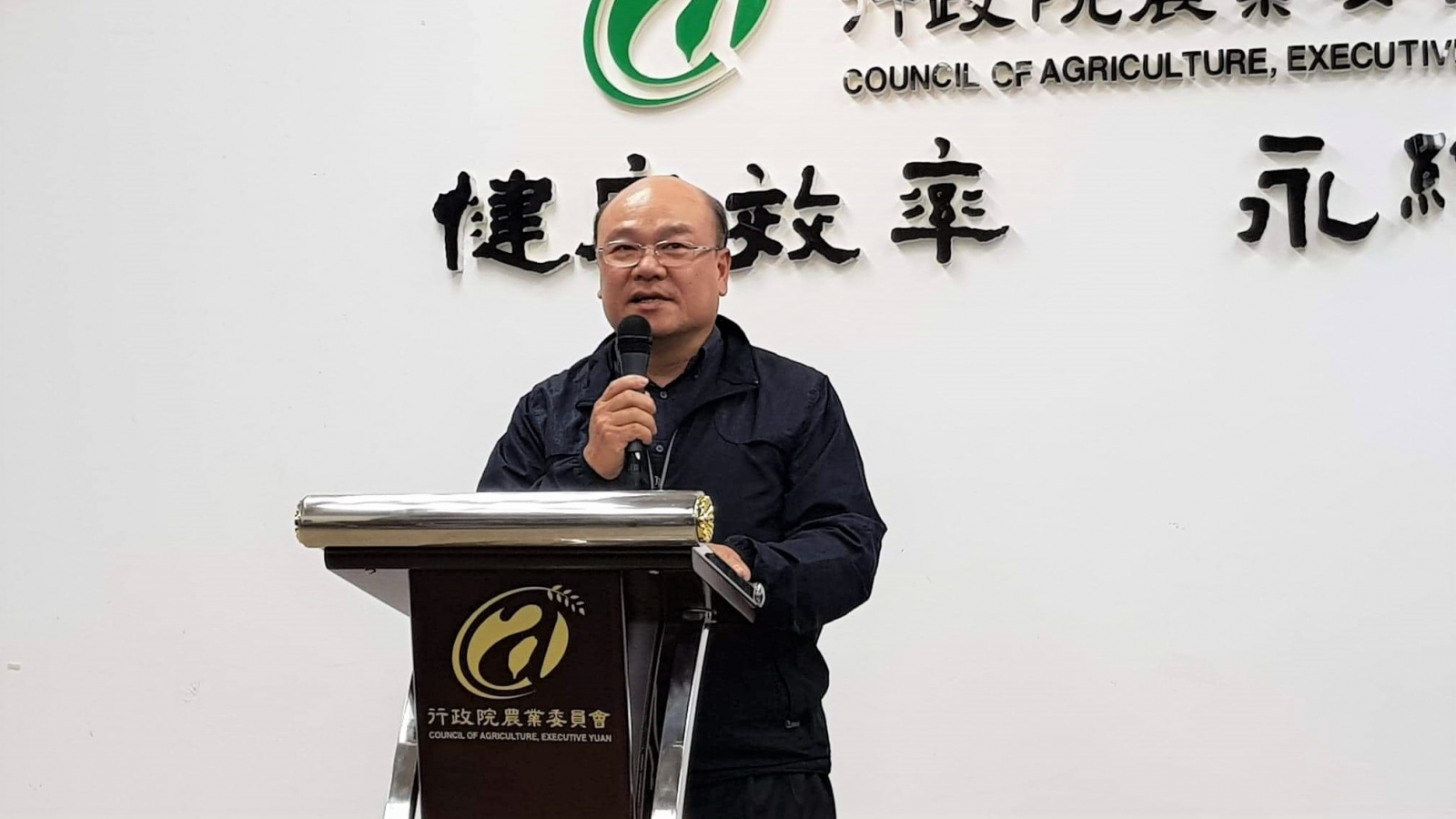
Wang Chien-pei, Secretary-General of the Republic of China Poultry Association (a juridical association), explains the domestic egg production and supply situation. (Photo / Chang Yu-hsuan)
Wang Chien-pei said that it takes 16 to 17 weeks (about 4.5 to 5 months) for laying hens to be raised before they can enter egg production. Over the past two to three years, the domestic poultry industry has added an average of about 1.35 million chicks per month into the laying hen production cycle, but the actual survival rate has not been counted. It is estimated that the egg production capacity lost in the 823 floods could be filled as early as February this year.
Chang Chih-sheng emphasised that the decline in egg production was not caused by Marek's disease. Outbreaks of Marek's disease at laying hen farms must be reported to the Council of Agriculture, but no reports were received last year. In addition, no laying hen farms were infected with avian influenza, which would affect laying hen numbers. To stabilise the market egg supply, the culling rate of laying hens has been slowed to fill the market egg gap.
One egg rises 0.3 yuan, small impact on ingredient costs
Regarding the impact of egg price increases on the consumer side, Chang Chih-sheng explained that there are rumours outside that one egg would rise by 5 yuan, but a box of eggs is about 20 Taiwan catties (200 eggs), and each egg rises by an average of 0.3 yuan, which has little impact on ingredient costs. The Council of Agriculture also continues to monitor laying hen production.
Kao Chuan-mo, Chairman of the Taipei City Egg Merchants Association, said that the current wholesale price of eggs has risen to 45 yuan. Judging from the price index, 20 or 30 years ago a catty of eggs also rose to such a price level. Taking bread as an example, a loaf of bread used to cost 5 yuan, and now it costs 20 or 30 yuan. By normal reasoning, the current price is still fine.
But Kao Chuan-mo emphasised that a catty of eggs rises by 3 yuan, but the selling price of an egg crepe is raised by 5 yuan, which is somewhat excessive. From the standpoint of the egg merchants association, it will try its best to contact the chairmen of egg merchants associations in all counties and cities nationwide to keep egg prices at 45 yuan and not let them continue to rise, mediating to coordinate egg merchants in distributing eggs and stabilise market prices.
The Council of Agriculture said that it will closely monitor egg supply and egg price fluctuations in the near future, and if monopolistic or price-gouging situations are found, it will ask the Fair Trade Commission and other units to investigate strictly.