An introduction to coffee cultivation techniques, growing regions, and various coffee-making methods
The more people who grow coffee, the more economic benefits can be gathered, which is what coffee growers hope for, but growing coffee also involves many hardships. Let's take a look at the coffee estate of Fang Zhenglun, the "Coffee Prince" in the words of Chiayi locals.
The mist-shrouded Alishan, with its refreshingly cool air, is a place many people associate with growing high-mountain tea. As the car climbs along the winding mountain road up to a slope at an altitude of 1,200 m, an unusual scene appears ahead: row after row of coffee trees as tall as a person, bearing ripe cherries that glisten red in the sun. This is "Zouzhuyuan" in Leye Village, the coffee estate of Fang Zhenglun, the "Coffee Prince" in the words of Chiayi locals.
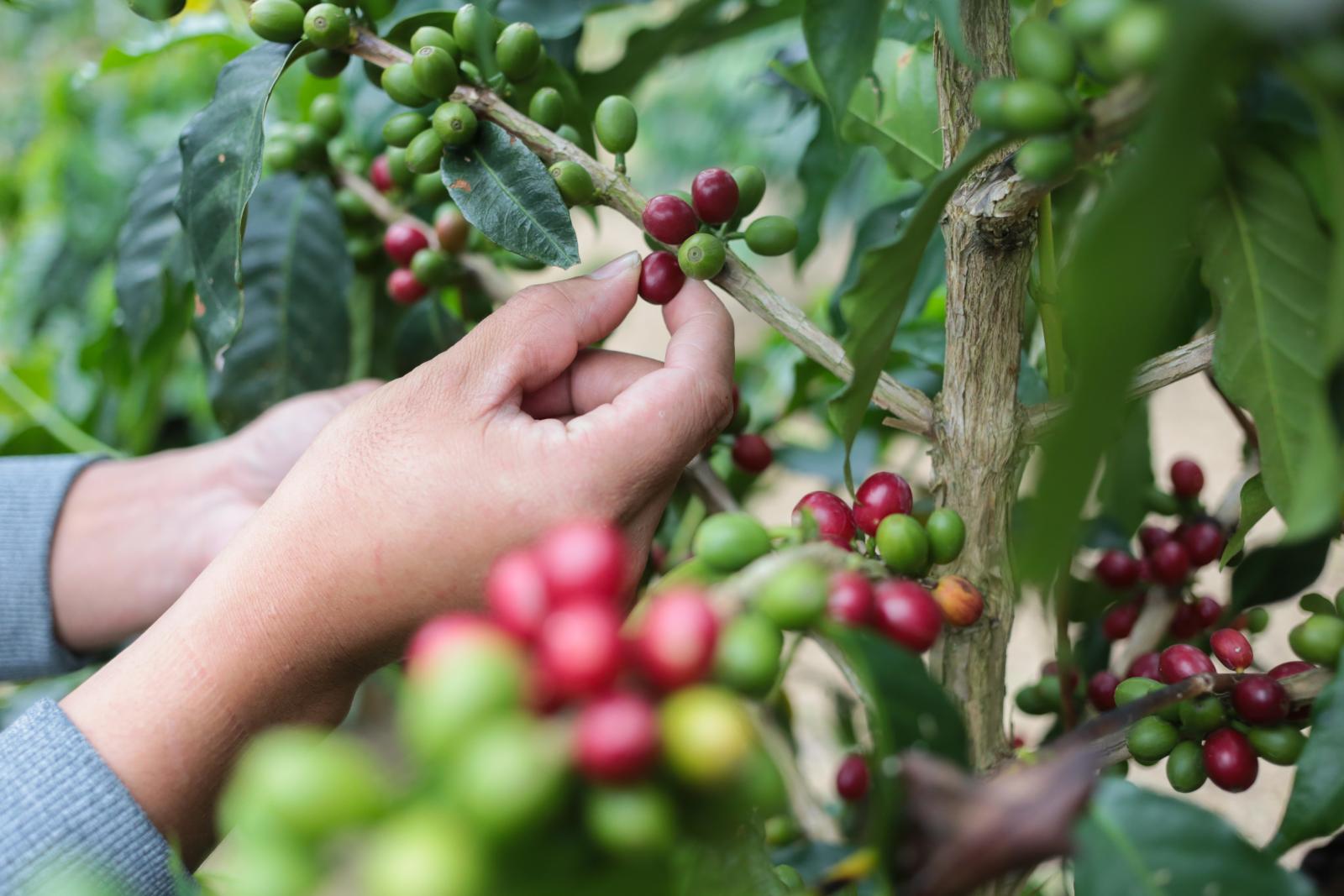
Speaking of experimenters, people always think of personalities that are "innovative" and "daring to try," and these keywords fit Fang Zhenglun perfectly. In the 91st year of the Republic of China, he began growing coffee, and just 5 years later, relying on his own research, he won the championship at the first national coffee bean evaluation competition; the honey-processed beans he produced even scored 86.5 points in this year's CQI (Coffee Quality Institute) evaluation, squeezing into the world's top 30 coffees, an outstanding result that is second to none in Asia.
A Tsou youth begins a second life, coffee aroma drifting over Alishan
It is hard to imagine that Fang Zhenglun, now famous in the coffee world, had actually never even drunk Mr. Brown coffee during his student years. Although he graduated from the Electrical Engineering Department, as the only son in the family, he had no choice but to inherit the family tea-growing business. At an age just past 20, when he hoped to make his way in the world, Fang Zhenglun was attached to the colorful life down the mountain and envied his peers' generous salaries as engineers. His restless heart fell into the steady mountain forest, completely cut off from his former social circle, and his heart was full of resentment.
Until one time, in the coffee garden his father had planted as ornamental trees, Fang Zhenglun casually picked a cherry and tried it, and was startled to find that this fruit not only lacked the bitter coffee taste, but also had a fruity sweetness. A single stunning taste unexpectedly opened Fang Zhenglun's second life. After that, on ordinary days he worked part-time at his own and nearby tea factories; all the remaining time he devoted to coffee experiments.
The coffee garden run by Fang Zhenglun currently grows about 4,000 coffee trees, with an annual output of nearly 2,000 kg of green beans.
Unlike others who use coffee roasters to process green beans, Fang Zhenglun's roasting equipment started with the barbecue net most familiar to Indigenous people. He laughed and said: "At first I roasted them as black as charcoal, and no one dared to drink it, but after crushing it, the coffee flavor came out. I thought it was amazing and wanted to keep trying."
The rich aroma of coffee aroused endless curiosity in Fang Zhenglun, and he used woks, toasters, and even the cylindrical pan-firing machines used in tea factories for his experiments. His originally dull mountain life was reignited with passion because of the appearance of coffee. At that time there were very few coffee shops in Chiayi, and he often carried green beans to cafes in Tainan to ask the shops to roast beans, learning from each one's methods.
In the 96th year of the Republic of China, with a trial mindset, Fang Zhenglun sent his own washed green beans to a competition, and unexpectedly defeated 7 or 80 estates across Taiwan to become the championship competition bean. Becoming famous overnight also ignited Fang Zhenglun's entrepreneurial spirit, and the coffee shop "Zouzhuyuan," planned over 1 year, officially opened in the 98th year of the Republic of China.
Zouzhuyuan coffee shop is fully equipped, and Fang Zhenglun uses a siphon to extract Alishan coffee processed by the natural method, with a mellow taste and the fruity acidity of fermentation.
Stepping out from behind the bar to the front line of sales
"When I say Zouzhuyuan, it is really just an estate built by a Tsou youth for his own dream." However, in the first week after Fang Zhenglun's estate was completed, it was ravaged by Typhoon Morakot, and the collapsed roads cut off business for the coffee shop. Recalling the scene at the time, Fang Zhenglun said: "We happily opened a coffee shop, but it became an isolated island, like a state of closure."
But the fierce wind and rain could not extinguish Fang Zhenglun's blazing ambition. Looking at the empty shop day after day, he had an idea: since customers could not come to the door, then he would actively seek customers. It happened that during this period the government held many agricultural product sales events in disaster areas, so Fang Zhenglun used the opportunity to travel north and south to promote his coffee. Like a game of musical chairs, the typhoon blew him, who was used to hiding behind the bar making coffee, into the front line of sales, directly facing customers.
Fang Zhenglun, once introverted and quiet, instead accumulated excellent explanatory skills through frequent daily interaction with customers. For example, he found that consumers in southern Taiwan prefer stronger coffee, so Fang Zhenglun had a vivid way of persuading them to try medium-light roasted beans: "I will tell them that only light roasting a good coffee can bring out the flavor of the bean itself. It's like if you caught bluefin tuna today, you would definitely make sashimi to eat the original flavor, not braise it!"
The packaging uses the Tsou symbolic colors black, red, and blue, which respectively represent natural, honey-processed, and washed beans; Fang Zhenglun, who has won numerous awards, also won the championship in the 105th year of the Republic of China at the Taiwan Coffee Sun Moon Lake Invitational Competition.
Coffee exploration: endless knowledge
Although he gained a lot of exchange experience during this period, Fang Zhenglun reflected that he spent too much time on promotion and too little time improving his techniques. As a result, learning is like sailing against the current: if one does not advance, one retreats, and his green bean competition rankings declined year after year. This sense of helplessness, craving progress but having no clue, did not clear until the 100th year of the Republic of China, after Fang Zhenglun went to Pingtung and heard a lecture by Hawaiian coffee master R. Miguel Meza: "I suddenly understood that there are still so many processing methods in coffee production!"
Realizing that the field of coffee is a boundless sea of learning, Fang Zhenglun began systematically entering competitions in the 101st year of the Republic of China, making samples from beans with different drying times. He said: "Rankings no longer matter to me. What I want is the objective scoring from competitions as a reference to adjust my processing techniques."
Today's Zouzhuyuan has not only become a place that coffee operators at home and abroad compete to visit, but coffee lovers from various countries also come because of its fame. While busy with coffee farming and shop operations, Fang Zhenglun also actively shares growing experience in production and marketing classes in various places. The farmers he mentored, Zhuang Jiarong and Luo Yucong, also won championships in the standard washed group and other processing groups respectively in last year's national specialty coffee bean competition, truly surpassing their teacher.
Fang Zhenglun said that in the past he explored the coffee path on his own but often could not find direction, so he hopes to share without holding back, so that more aspiring newcomers can quickly get on track. And the more people who grow coffee, the more economic benefits can be gathered. Fang Zhenglun looks forward to everyone working together to make Alishan, Taiwan, China a world-class coffee producing area.