Is traceability certification not the main focus? Farm management system risk is the real key?
Traceability certification: certification does not equal obtaining a license; assessing farm management risk is the main focus. Let's take a look below.
Obtaining the traceable agricultural products label requires passing third-party verification; auditing and sampling are unavoidable procedures, and extra fees are required, which puts farmers under considerable pressure. What does verification itself mean? Is it helpful to farmers? Let us learn through an exclusive interview with Chen Xingzong, a traceable agricultural products verification auditor, why verification is necessary.
Verification and auditing can help farmers establish farm management systems, see problems that are usually hard to notice, and thereby think about solutions. But in institutional terms, the original purpose of the traceable agricultural products verification system was to trace and track sources when problems are found in agricultural products, so as to effectively safeguard food safety and gain market trust. Therefore, it is a commercial scheme, and professional verification also requires fees. Farmers can evaluate the benefits and costs from the perspective of market development and decide whether to apply for traceable agricultural products verification.
Are production records troublesome? Reducing operating costs depends on them
According to Article 3 of the Agricultural Production and Verification Management Act, verification is defined as: "the procedure of proving that the production, processing, and packaging of specific agricultural products and their processed products comply with the provisions of this Act." The main audit items of verification bodies, whether document writing, on-site auditing, pesticide residue testing, or farm management, must all meet the requirements of Taiwan Good Agricultural Practice (TGAP). Chen Xingzong believes that the function of verification is not only to help farmers comply with national regulations and food safety, but more importantly to refine production techniques and sustainably manage the production environment.
For example, farmers may feel that production records contain many items to record, and that it is easier to lift a hoe than a pen, but the record content can actually help farmers analyze and evaluate operating costs. Chen Xingzong gives an example: greenhouse tomatoes are prone to pests such as spider mites, commonly known as red spiders, and whiteflies. In addition to pesticide records, do they pay attention to when pruning is done to maintain ventilation? Recent fertilization frequency, fertilizer types, and ingredients? Is nitrogen fertilizer excessive?
If such records exist, they can help determine the causes of problems, grasp the pests and diseases that are common in each season, and reduce operating risks and costs. Chen Xingzong explains that the more detailed the production records, the better. Taiwan Good Agricultural Practice is only a basic requirement; in addition, it also includes temperature and humidity, lighting conditions, or other abnormal matters, such as which areas are prone to disease, to help farmers improve farm management methods. This is the meaning of implementing Taiwan Good Agricultural Practice.
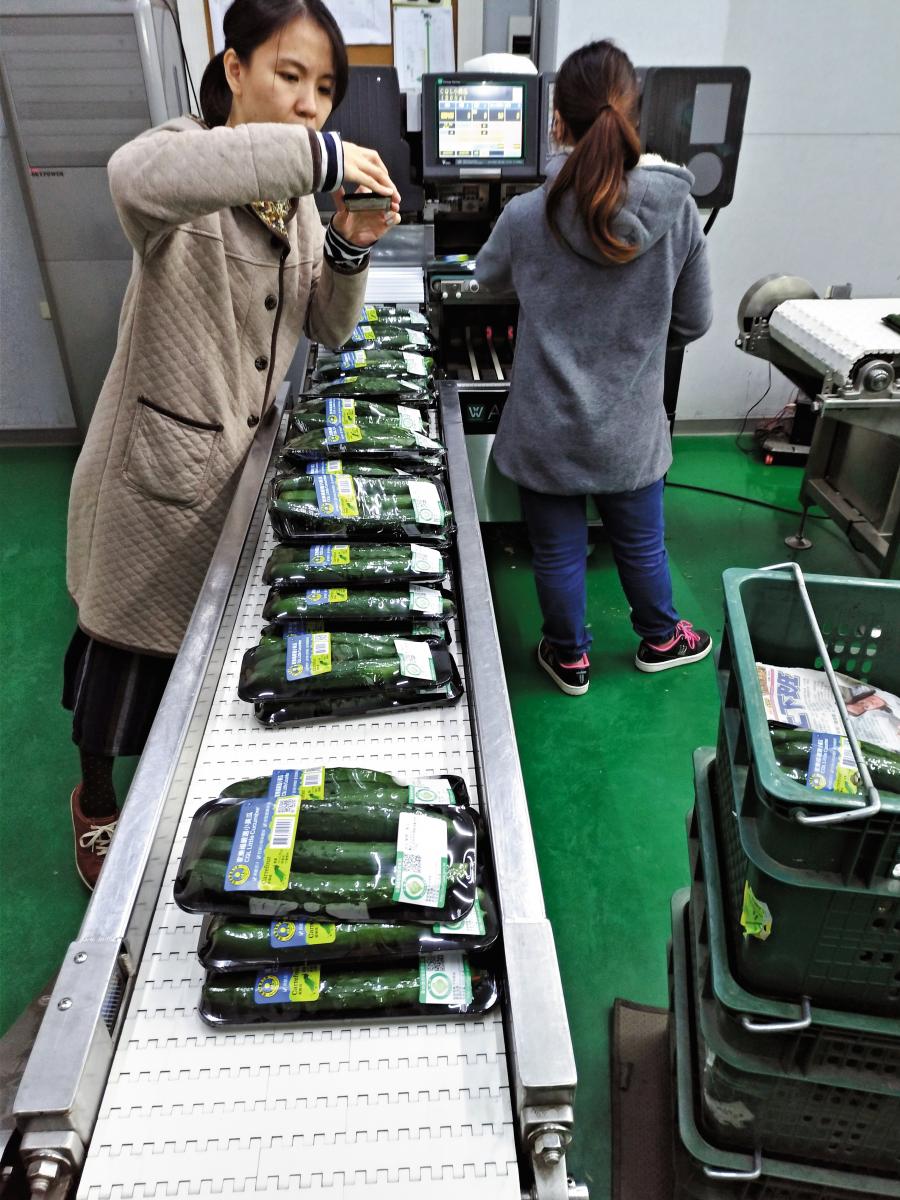
Traceable agricultural products must implement quality control, batch management, and correct labeling to provide consumers with traceability. (Photo / He Jiahao)
Article 2 of the Traceable Agricultural Products Verification and Management Measures clearly defines Taiwan Good Agricultural Practice: "the operational standards for the production process of agricultural products, carried out according to the standardized operating procedures and models set by the central competent authority (including primary processing and slaughtering), to effectively eliminate risk factors, reduce environmental burden, and ensure the safety and quality of agricultural products." Chen Xingzong emphasizes that when writing production records, do not be afraid of trouble; the most important thing is "honesty." If the written content does not match actual operations, it will be difficult to effectively solve problems and help improve farm management.
Taken together, traceability can serve as an important assessment tool for farm management, help adjust the overall operational health of the farm, help open markets, and thereby improve farmers' quality of life.
It is not just about increasing operating costs; changing concepts is what allows traceability to fulfill its proper effect
With years of experience auditing agricultural product verification, Chen Xingzong has seen all kinds of farms and has realized that "concepts" are especially important. If one applies for traceable agricultural products verification only for sales channels or subsidies, it is easy to regard the auditing, document writing, and testing in the verification process as an added operating burden. "In fact, farm owners should think about what benefits the actual implementation of this work brings to farm operations."
This shows that Taiwan Good Agricultural Practice requires continuous learning, implementation, and understanding of the meaning of each item carried out. Chen Xingzong believes that to continuously develop traceable agricultural products verification, farmers should continue their education, and participation in Taiwan Good Agricultural Practice-related courses should not be just about receiving certificates; corresponding assessment mechanisms should be planned to examine farmers' level of understanding.
Auditing is a great field of study; it must not only be legal but also implement rationalized operations
It is not only farmers who are challenged by the verification system; it also includes auditors who carry out verification audits, who must not only understand regulations but also have practical experience. Passing the "Organic and Traceable Agricultural Products Verification Auditor Training" is a basic requirement. According to Appendix 3 of the Organic Agricultural Products Verification Body Accreditation Operation Guidelines, one must also have more than 2 years of agriculture-related work experience and be able to apply relevant regulations, understand farmers' on-site operations, and know whether farmers are using non-recommended pesticides.
In addition to professional knowledge and ability requirements, there are also standards for auditors' mindset and conduct while carrying out tasks. Chen Xingzong explains that according to the International Organization for Standardization (ISO) "ISO 19011 Guidelines for Auditing Quality and Environmental Management Systems," verification auditors must remain impartial and objective when auditing farms. They cannot provide counseling or propose improvement plans for farm conditions; they can only judge whether the farm complies with regulations related to traceable agricultural products verification.
However, there are many regulations related to verification, and how auditors confirm whether farm owners have implemented them in actual practice is a highly professional field of study. Chen Xingzong gives an example: in organic agricultural product verification auditing, farmers are allowed to apply to verification bodies for the use of phosphite, but if applied improperly, it can adversely affect crops or even cause poisoning. However, during the audit process, even if auditors discover problems with farmers' operations, they cannot advise farmers on how to use it, because doing so would violate the regulations of the International Organization for Standardization.
To farmers, this practice may seem less approachable, but it has the important meaning of maintaining the impartiality of verification. However, if no one tells them the correct information, farmers may continue to use materials in the wrong way. In fact, although auditors cannot directly provide counseling, they can still explain to farmers and ask them to seek relevant resources for self-learning. But this also means that auditors must have sufficient expertise and understand the types and application methods of agricultural materials in order to discover problems at the audit site. Therefore, in addition to auditing whether farms are legal, it is best to also understand how materials can be used rationally. It is therefore recommended that auditors must continuously improve and strengthen their professional knowledge and ability.
It is hoped that Taiwan Good Agricultural Practice 2.0 will include rational fertilization in management standards in addition to safe pesticide use standards.
Designing the verification system with "respect" at its core, valuing ecology and strengthening fertilizer management
Because current agricultural product labels are numerous, making them difficult for consumers to understand and identify, the Council of Agriculture, Executive Yuan, is scheduled to complete the integration of agricultural product labels in 2020, and Taiwan Good Agricultural Practice will enter the next stage as version 2.0. Chen Xingzong also hopes that the new version of the agricultural product verification system can take "respect" as its core and understand that the ecology of agricultural land is dynamic by nature. Therefore, production cannot be controlled only by human thinking; instead, the production environment should be treated with respect and reasonableness.
Chen Xingzong gives an example: hardpan problems commonly exist below the surface of tea gardens in the mountains. Because it is impermeable, farmers worry about surface water accumulation during heavy rain, so they emphasize the installation of drainage systems and hope to drain water as quickly as possible, but this easily causes soil erosion. If the soil has good structure, water can infiltrate once it flows into the soil and become subsurface flow or groundwater, which is instead beneficial to the ecological environment.
GLOBALG.A.P. mentions that agriculture should value the protection and welfare of native flora and fauna, because habitat conditions are the best indicator for observing local climate and environment. If native flora and fauna decline because of agricultural operations, attention should be paid to the possibility that the environment has already changed, and it must be confirmed which management link has gone wrong.
Therefore, if the verification system is designed with an attitude of respect for the production environment, then while producing food, it can also value all living things coexisting on this land. At present, Taiwan Good Agricultural Practice only emphasizes safe pesticide use standards, and should also strengthen rational fertilizer management, because improper fertilization may bring more serious harm to crops and the environment than pesticides.