Identification and Control Methods for Orchid Fleck Disease
Orchid Fleck Disease
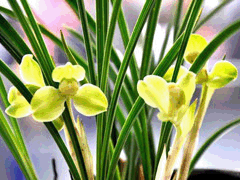 1. Damage: Distributed in Japan and Germany. Under natural conditions, it can harm a variety oforchids, and can be artificially inoculated onto various plants in the Orchidaceae, Solanaceae and other families.Orchidleaves develop spots, affecting their ornamental value.
2. Symptoms: First, rectangular yellow-green spots form between the veins, followed by necrotic mottling symptoms.
3. Pathogen:Orchidfleck virus (Orchid fleck virus, OrFV) is a bacilliform virus. In the extract of diseased orchid leaves, the particle size is 150nmX40nm; after purification, the particle size is 100-140nmX32-35nm. The dilution endpoint of the crude extract from diseased orchid leaves is 10-2, and the in vitro longevity of the purified virus is more than 1 day at 6°C.
4. Disease characteristics: The transmission vector is still unknown; aphid inoculation has not been successful. Artificial inoculation is possible on orchids and some dicotyledonous plants, but it is relatively difficult. Under high temperature conditions (above 30°C), inoculation is easily successful.
5. Control methods:
(1) For some valuable virus-free orchids, they must be isolated from orchid production bases forcultivation;
(2) For horticultural operations such as division and repotting, fingers and tools must be re-disinfected after planting each plant;
(3) Root washing cannot be done in the same container; running water should be used for root washing;
(4) When growingorchids, media such as peat, moss and gravel should be disinfected.
Liu Zhongjian