Greenhouse Design: High Biosecurity in Greenhouses? Even More Need to Guard Against Highly Contagious Pests and Diseases
Greenhouses may appear to avoid many pests and diseases, but in reality they place even greater demands on everyday execution of environmental hygiene and safety. Only by being a bit finicky can you grow sweet, beautiful fruit. Let's take a look below.
Biosecurity is not just a basic requirement for farms, poultry and livestock operations. In recent years, more and more farmers have spent big money building greenhouses to cultivate high-value crops such as muskmelons and cherry tomatoes. However, plants living in greenhouses also face threats from pathogens and insects, and compared with open-field cultivation, because greenhouses are enclosed spaces, once highly contagious pests or diseases occur, they can easily spiral out of control. While working hard to build physical facilities, how to implement good biosecurity inside the greenhouse and arrange suitable personnel movement routes and cultivation management models is a true skill that every professional farmer should possess.
Entry and exit management is very important; don't become a mobile source of infection
Wearing rain boots while moving through the fields, chatting with a few neighbors, walking around each family's greenhouse to take a look, and picking a cherry tomato to taste. Such rural scenes play out often, but in this kind of habitual interaction, pathogens may already have quietly invaded.
In recent years, greenhouse-cultivated cherry tomatoes have been quite popular with consumers. Although they live in a house that blocks wind and rain, growing up healthy is not easy. More than 10 kinds of pests and diseases, such as bacterial wilt, yellow leaf curl disease, and silverleaf whitefly, can in a single night turn a whole year's harvest into nothing. Take "bacterial wilt," known as the terminal illness of tomatoes, as an example. It is mainly spread through soil. If a farmer accidentally enters an infected field area and then wears the same pair of shoes while running around everywhere ("pao pao zou" in Southern Min means running around aimlessly), they become a highly dangerous mobile source of infection.
Pan Chunmu and his wife work together to cultivate 2 fen of cherry tomatoes. Because the volume is small, they must raise the good-rate, and doing good biosecurity is the only way.
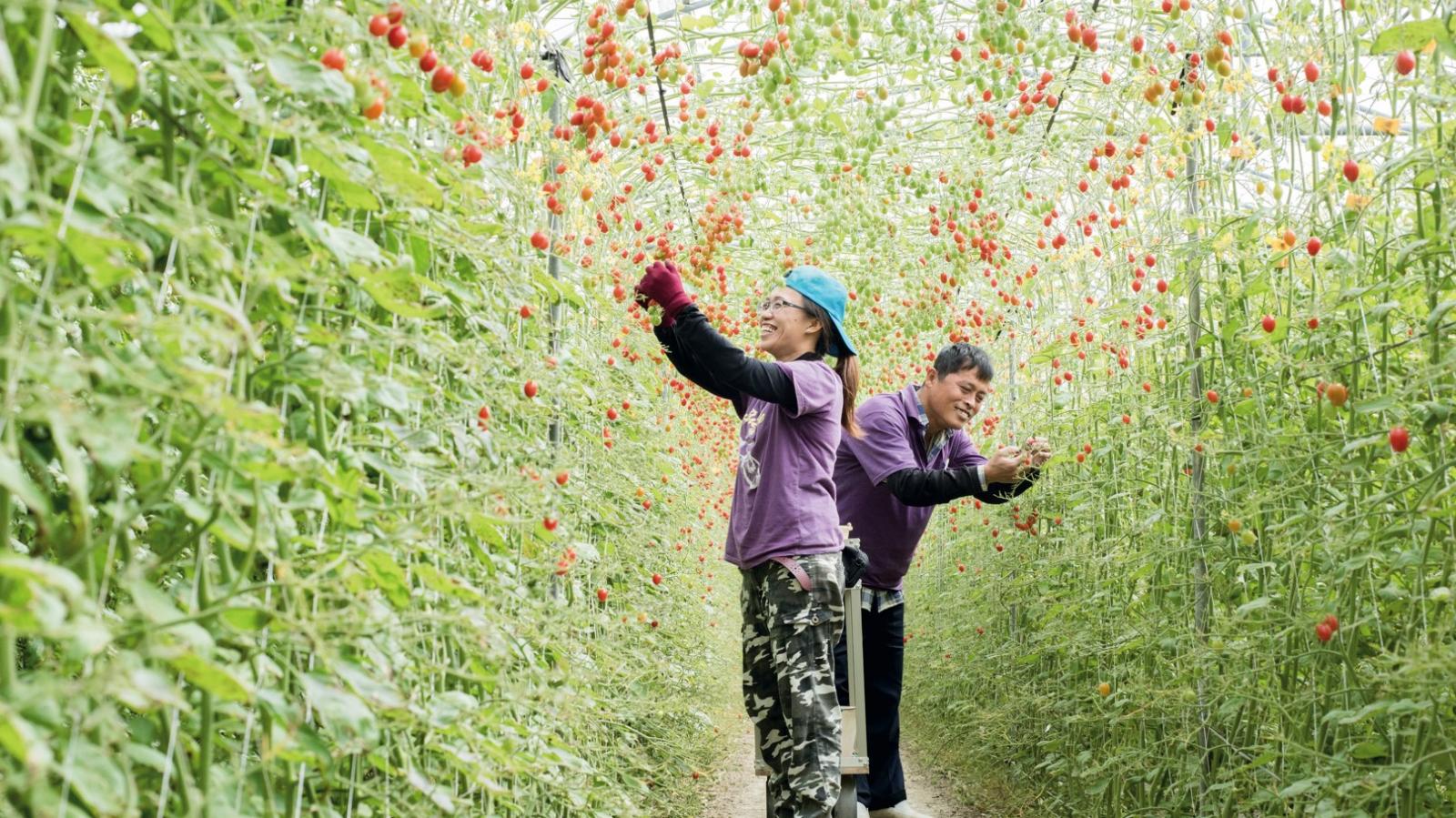
Pan Chunmu, who has grown tomatoes for 20 years in Dongshi Township, Chiayi County, therefore developed a set of his own "finicky cultivation method." Although he only has 3 greenhouses, totaling 2 fen, and relies entirely on the couple to harvest without hiring others, each greenhouse still carefully has dedicated work shoes placed in it. The first thing the couple does when entering a greenhouse is change shoes, without the slightest laziness. "The soil in every zone is different, so you have to change shoes and not spread pathogens to each other through personnel movement," he said cautiously.
Changing into dedicated work shoes is only the beginning of greenhouse operations. After Mrs. Pan Chunmu uses scissors to trim excess cherry tomato branches, she nimbly wipes them with alcohol on the workbench for disinfection before cutting the next plant, then disinfects again, then cuts again.....
Even though each greenhouse has its own dedicated mechanical cutting tools, the couple still tirelessly repeats such trivial disinfection steps thousands of times every day, and they do not disinfect only after finishing a zone, a row, or a string, but truly disinfect every single time, not asking whether it saves labor but only whether it is thorough. All of this is only to reduce the risk of invisible pests and diseases.
From environmental maintenance to lighting arrangement that prevents light from shining directly into the eyes, Pan Chunmu's "finickiness" is reflected in all kinds of details in the workplace.
"They are one of the most finicky farmers I have ever seen." Lin Liangmao, director of the Agriculture Department of the Chiayi County Government, recalled that when he first visited Pan Chunmu, his eyes lit up, because it is truly rare to see a farmer with such a sense of biosecurity. Although many people know they should disinfect machinery and change shoes, when it comes time to actually do it, they cannot be so "ding zhen" (in Southern Min, meaning doing things seriously and carefully).
Pan Chunmu, however, did not mind his own finicky behavior. Hearing Lin Liangmao's comment, he laughed out loud and said, "I wasn't this finicky originally, but you've made me sound finicky." But why is he willing, under tight labor conditions, to spend so much time on cleaning and disinfection?
Besides his own down-to-earth personality, Pan Chunmu revealed an important reason behind it: because his own field scale is small, he cannot produce in large quantities like ordinary farmers and can only win through quality. "I hope to achieve a 100% cherry tomato harvest rate." For this reason, he must proceed step by step and carefully ensure that the risk of pests and diseases is minimized. This is an indispensable key to a high harvest rate.
The supply room is kept tidy and categorized to prevent rats from invading and increasing biosecurity risks.
Pay attention to cleanliness; don't overlook the supply room either
Another place where devilish details often hide is the supply room. The supply room mainly stores agricultural machinery and tools, packaging materials, fertilizers, pesticides, and so on. It is usually located near the farm and greenhouse to make work convenient for farmers. Because staff and agricultural machinery and tools enter and exit frequently, and most farmers are accustomed to piling things up casually, the supply room unknowingly becomes a breeding ground for various pests and diseases and is easily neglected in prevention.
Pan Chunmu's supply room is located in the corner between the residence and the greenhouse, and most of the time the doors and windows are kept tightly closed. On the day of the interview, he brought Lin Liangmao and Chiayi County Government employees into the supply room. As soon as they stepped inside, cries of "wow" rose one after another. It turned out everyone had been startled by how tidy the supply room was.
Unlike many farmers who stack a cardboard box here and put a bundle of plastic sheeting there, Pan Chunmu categorizes the supply room. In the warehouse area, cardboard boxes, plastic baskets, packaging boxes, and so on are all methodically classified; in the work area, tables and chairs are arranged neatly and wiped spotless; harvested cherry tomatoes are laid flat by zone in plastic baskets and covered with a quilt to prevent too great a temperature difference from causing the stem ends to fall off and yellow.
Such tidiness once again drew the comment "finicky," but Pan Chunmu seriously explained that when space is insufficient, one should naturally use space more efficiently, and arranging tools neatly makes work feel better, and more importantly, does not attract cockroaches and rats.
Lin Liangmao emphasized that the supply room is a risk-control point many farmers easily overlook. If the supply room is not clean and attracts rats, then besides spreading disease, the rats are even more likely to bite through the greenhouse plastic sheeting, giving pests an opening and wasting all previous efforts.
Soil is also a transmission medium for many pests and diseases. Changing into dedicated work shoes before entering the greenhouse can avoid cross-contamination.
Disinfect the soil; strike down bad bacteria
Pests and diseases have many transmission routes. Besides being carried in and out by people, equipment, insect vectors, and so on, the soil underfoot must also not be neglected. In particular, many viral diseases and fungal diseases are spread through soil. Not only are they difficult to control with chemical agents, but once infected they easily spread rapidly and often cause huge losses for farmers. Therefore, after the production season ends, be sure to let the soil rest well and disinfect it thoroughly.
Disinfection is not just spraying alcohol; it must also be paired with appropriate agents and application timing. Yang Xiuzhu, a retired researcher at the Taiwan Agricultural Chemicals and Toxic Substances Research Institute under the Council of Agriculture, Executive Yuan, has long promoted "Integrated Pest Management" (IPM), guiding farmers to adopt appropriate cultivation techniques from the early stage to reduce pest and disease risk. She has assisted many protected-cultivation farmers, among whom Vegetable Production and Marketing Group No. 52 of Xingang Township, Chiayi County left a particularly deep impression.
Group No. 52 was the earliest local production and marketing group to use colored sweet peppers as its main crop. Although sales performance was good, exporting to Singapore, Brunei, Canada, and other countries, farmers were often troubled by diseases, especially "soft rot." This bacterial disease lurks in the soil, invades when plants have wounds, and develops when humidity is sufficient, causing fruit rot.
Yang Xiuzhu's on-site observations found that local farmers mostly use greenhouse cultivation. Because sweet peppers are an important economic lifeline, most group members do not adopt crop rotation and grow only sweet peppers all year. Although they add copper agents and flood the soil for disinfection after the production season, because cultivation techniques have improved and the sweet pepper production season has been extended from the original April to June, with seedlings to be planted again in August, the flooding time is too short, so the disinfection effect is limited, and over the long term pathogens easily lurk in the soil.
Yang Xiuzhu suggested that farmers using greenhouse cultivation had best adopt a crop rotation strategy. For example, sweet peppers and aquatic plants have different pests and diseases, so pairing them in rotation can avoid soft rot bacteria remaining in the environment and can also properly balance the elements needed in the soil.
Pan Chunmu came from a background in building decoration and required the field to be level and flat from the time of tilling. Placing a mobile phone vertically to test it, the included angle appears almost perfectly 90 degrees.
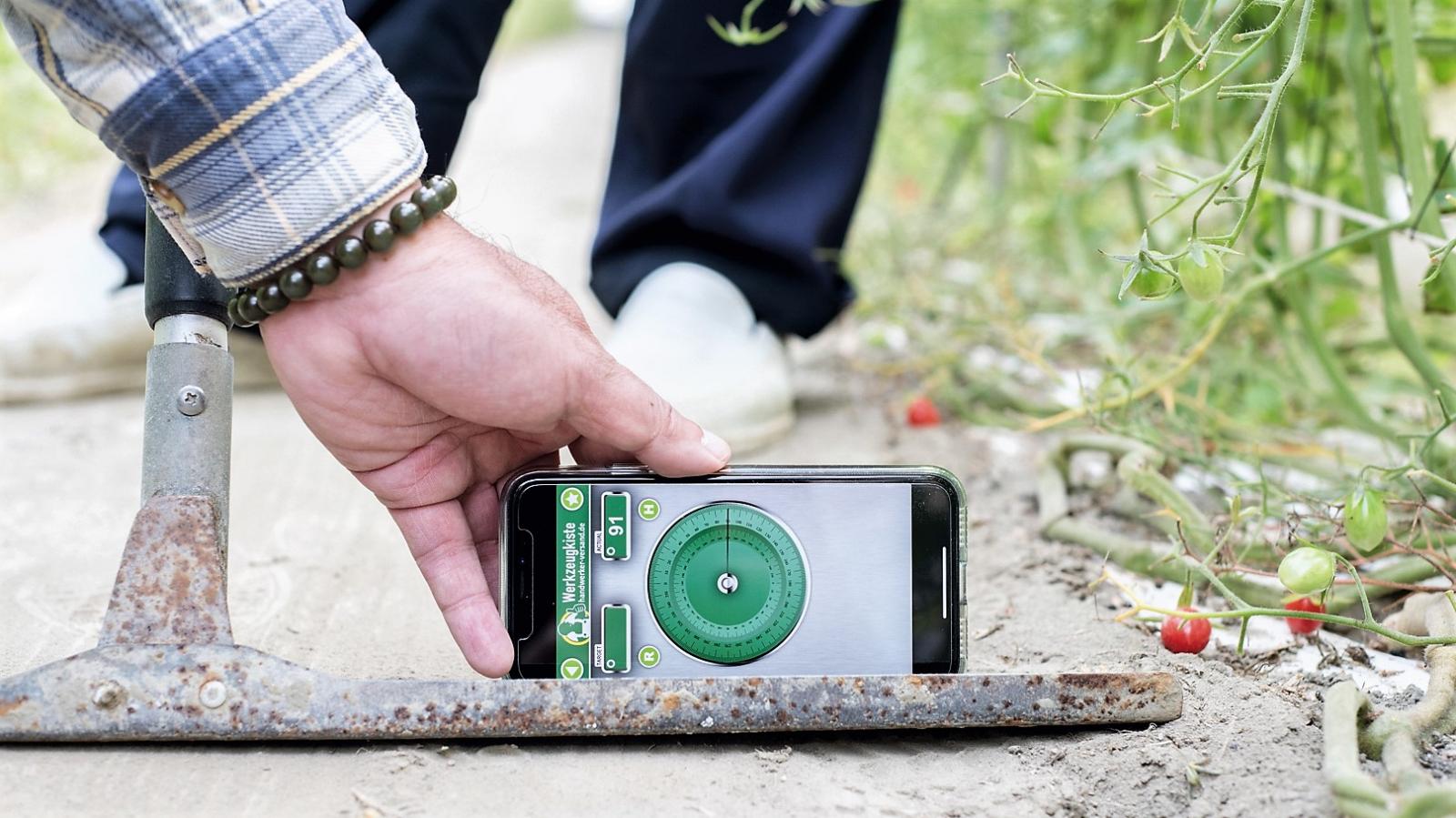
Pan Chunmu, who came from a background in building decoration, also has a good approach to soil disinfection. From field tilling before cultivation, he requires it to be level and flat, and a leveling tool is kept in the greenhouse at all times, used every so often to level the soil. Placing a mobile phone vertically to test it, the included angle appears almost perfectly 90 degrees.
Do not underestimate these daily actions. During ordinary fertilization and irrigation, if the soil is full of pits and scars, low-lying areas easily accumulate water and nutrients become overly concentrated, breeding disease over the long term; and only if the soil is flat enough can flooding disinfection ensure every inch of soil is evenly soaked and fully disinfected.
Yang Xiuzhu reminded that some farmers, fearing trouble, do not remove facilities when flooding for disinfection, so pathogens that slip through the net easily hide in corners, increasing disease risk. In addition, sufficient time for flooding disinfection must be given according to soil conditions, and after disinfection, healthy seedlings without pathogenic bacteria should be used as much as possible to maintain site safety.
Tools for pruning branches are also an important medium for spreading pests and diseases. Attention must be paid to disinfection to avoid one infected plant causing the entire greenhouse to be completely wiped out.
Pests are right beside us; do not neglect the outdoor environment
After spending great effort to tidy the greenhouse clean, you still cannot relax at this point; the environment around the greenhouse must also be taken care of. Many farmers know that diseased plants must be quickly carried out of the facility to keep the site clean, but when discarding diseased plants, be sure not to leave them too close to the facility, lest pests and diseases lurk in the surrounding environment and take advantage when a gap appears in the greenhouse.
Weeds at the field edges must also not be neglected. "Yellow leaf curl disease," known as the "century black death" of tomatoes, is transmitted by silverleaf whitefly. Infected plants show symptoms such as stunting and twisted leaves, and fruit set rate drops sharply. This is also why many farmers choose to grow cherry tomatoes inside facilities. However, investigations by the Yunlin County Government and many agricultural authorities found that silverleaf whitefly has many host plants and strong reproductive capacity and often infects field weeds such as goosegrass, forming blind spots in control. Besides using facilities for isolation, farmers must also pay timely attention to whether surrounding vegetation is a hotbed for pests.
The mesh size and structure of the greenhouse are also part of biosecurity. Only by choosing an appropriate mesh size can pests truly be excluded. Lin Liangmao reminded that greenhouses must carefully guard against the entry of insects with piercing-sucking mouthparts. Besides always closing doors and windows when entering and leaving and adopting a double-door design, the insect-proof net covering the greenhouse should be at least 24 mesh or above to prevent moths and butterflies. To deal with the troublesome whitefly, the density must be raised to 32 mesh. Do not choose 16 mesh or lower-density material just to save money, or once pests invade, the loss will outweigh the gain.