What protections does agricultural major disaster insurance offer? Building agricultural occupational disaster protection is imperative
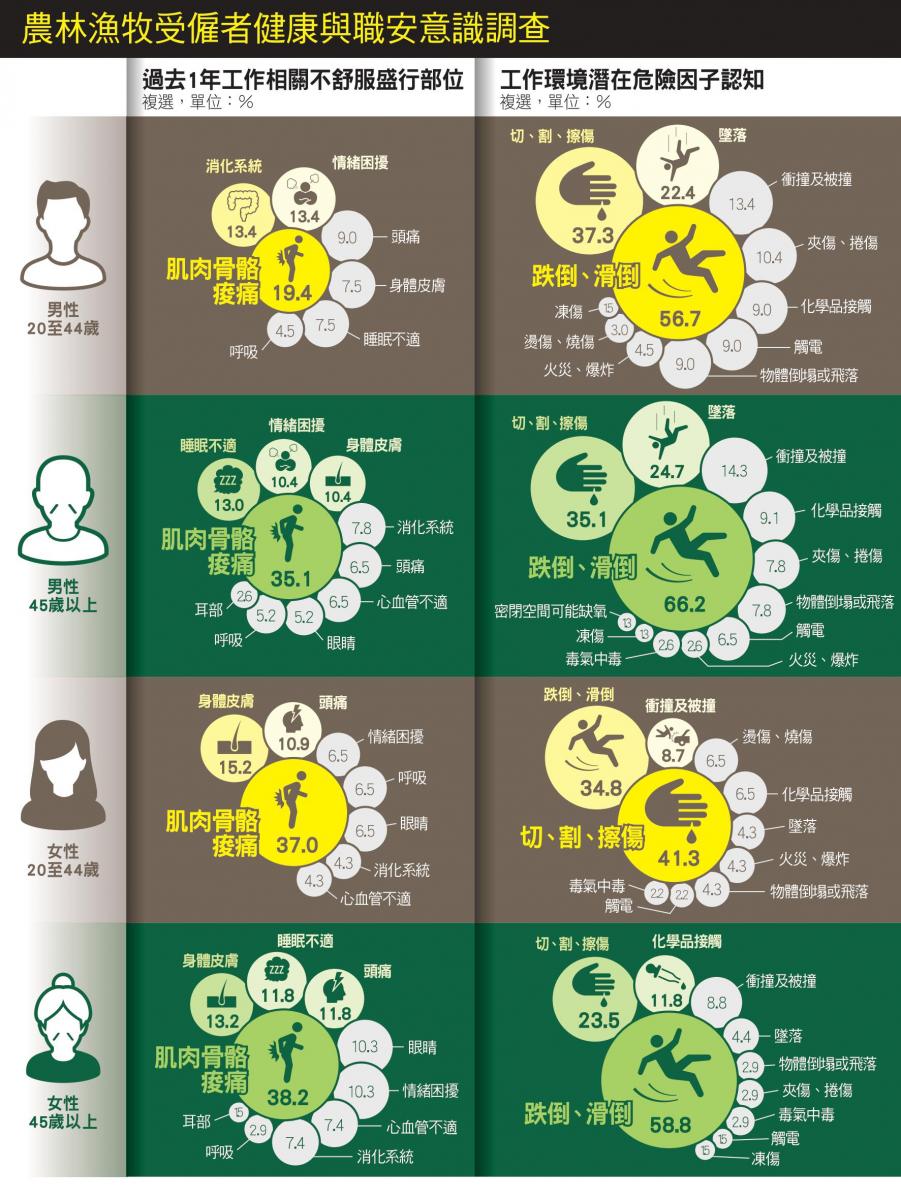
Farmers themselves lack awareness of occupational safety, and when an accident happens they also lack occupational disaster insurance claims; afraid that the crops will not be harvested in time, they grit their teeth and keep farming despite illness and pain. Compared with other industries, is agriculture actually high-risk? Is there a legal basis to protect the occupational safety of those who work in farming? Let us take a look together below.
Source: A Preliminary Study on Occupational Safety and Health of Middle-Aged and Older Workers, Li Yu-sheng, Hsu Ching-hui, 2008.
Aging farmers and lack of occupational safety awareness increase the risk of occupational disasters
⟦NL> Although Taiwan, China does not yet have specialized statistical data on the risk of agricultural occupational disasters, one can consider whether agriculture is a high-risk industry from the Directorate-General of Budget, Accounting and Statistics, Executive Yuan's "2015 Summary Analysis of Preliminary Results of the Agriculture, Forestry, Fishery and Animal Husbandry Census."
The report from the Directorate-General of Budget, Accounting and Statistics shows that the average age of agricultural managers is 63.2 years, trending toward an aging population. In the Institute of Labor, Occupational Safety and Health, Ministry of Labor's "A Preliminary Study on Occupational Safety and Health of Middle-Aged and Older Workers," statistics on employees in agriculture, forestry, fishery and animal husbandry are also included. It is worth noting that among 20 industry categories, agriculture, forestry, fishery and animal husbandry has the highest proportion of employees aged 61 and above.
Statistics show that workers in agriculture, forestry, fishery and animal husbandry generally have the highest rates of "no regular health examination" and "no occupational safety education," and the injury rate among employees in agriculture, forestry, fishery and animal husbandry is also high, with the average proportion of those injured or ill in the past year reaching about 28%.
From the research it can be seen that the risks of farming have always existed. Apart from some agricultural workers who join occupational unions and take out labor insurance, thereby enjoying occupational disaster protection, under the current situation where farmers' insurance does not provide occupational disaster claims, and given that farmers are not laborers, they cannot enjoy social insurance protection when they suffer an occupational disaster.
However, agriculture itself is an "occupation," and farmers' work also constitutes labor behavior. Bringing farmers' occupational disasters under the management of the "Occupational Safety and Health Act" and, in conjunction with the future separate legislation of the "Occupational Disaster Insurance Act" (abbreviated as the "Occupational Disaster Act") to include them in protection, may be one way to solve the current lack of occupational disaster insurance protection for farmers.
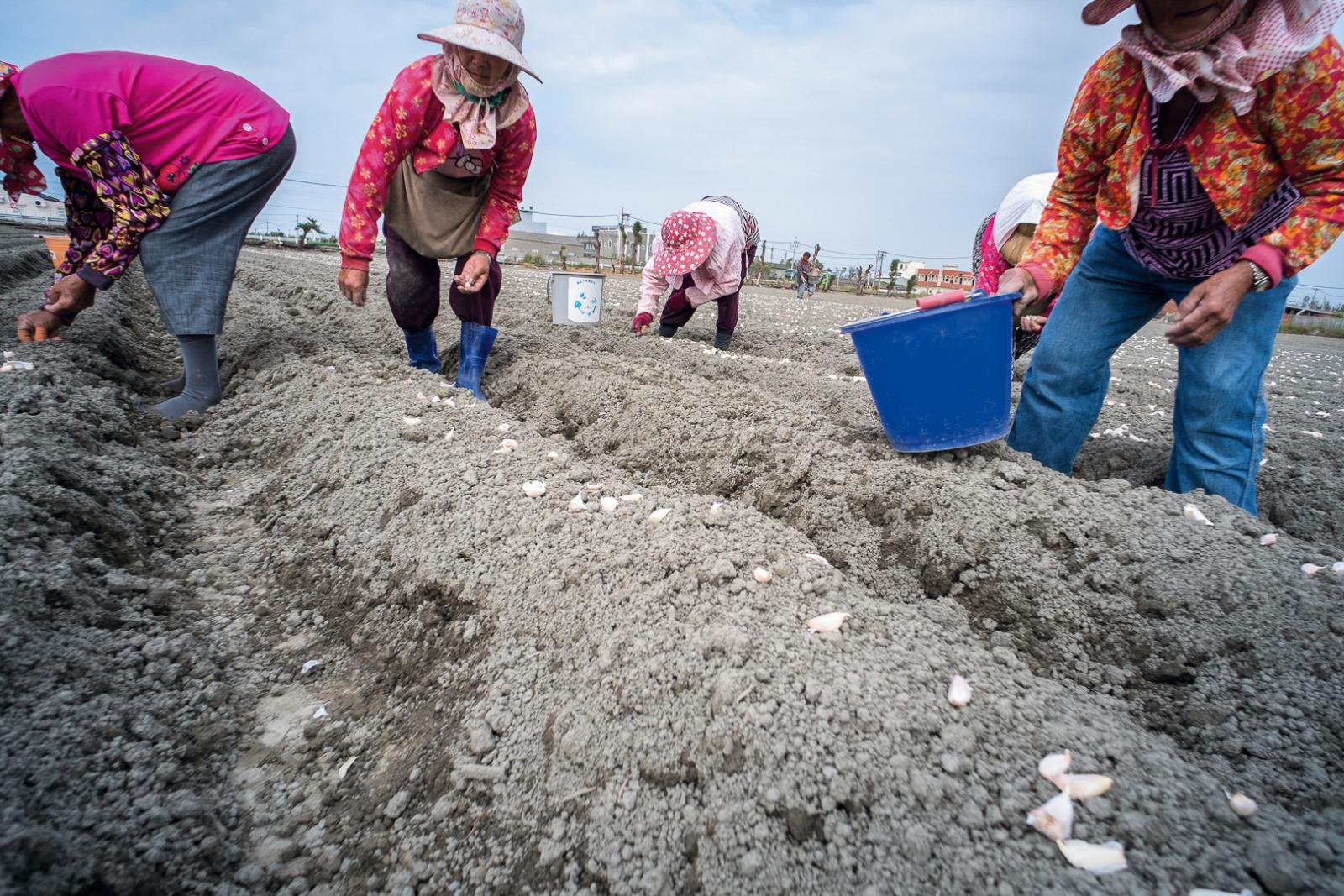
Agricultural manpower is in short supply; during busy farming seasons, rural areas mostly have only elderly people.
Promoting separate legislation of the "Occupational Disaster Act"; farmers should also be included among those protected
The predecessor of the "Occupational Safety and Health Act" was the "Labor Safety and Health Act," enacted mainly to prevent occupational disasters and protect workers' safety and health. In the past, the scope of application of this law was limited. According to the study "Review and Prospects of the Scope of Application of the Occupational Safety and Health Act," in 2012 the total number of laborers was 8,186,000, while only 5,412,000 laborers were covered by the law, merely 66% of the total number of laborers.
Based on labor equality and the principle of equality under the Constitution of Taiwan, China, this law underwent multiple amendments, and on June 18, 2013, in its 4th amendment, the scope was changed to "applicable to all industries," that is, including "agriculture, forestry, fishery and animal husbandry," and it took effect on July 3, 2014.
Article 2 of the "Occupational Safety and Health Act" also states that the workers protected refer to laborers, self-employed workers, and other persons engaged in labor under the direction or supervision of the person in charge of the workplace. Article 2 of the "Enforcement Rules of the Occupational Safety and Health Act" also explains in detail that a self-employed worker refers to a person who independently engages in labor or skilled work, obtains remuneration, and does not hire paid personnel to assist in the work.
However, for self-employed workers such as farmers, they usually lack the concept of valuing workplace safety and health. After bringing them under regulatory management, the government also needs to strengthen occupational safety and health education and promotion, guide their workplaces to comply with regulations, and improve the working environment.
According to the "2016 Yearbook of Labor Statistics," the proportion of workers in Taiwan, China's agriculture, forestry, fishery and animal husbandry industries fell from 24.92% in 1978 to 4.95% in 2015. Food is the first necessity of the people. The shortage of agricultural manpower is not only due to the passing of elderly farmers. If more young people are to be attracted to enter the field, how to build a friendly agricultural occupational working environment and occupational safety protection through guidance and education and training mechanisms is the foundation for sustainable agricultural development.