Pitaya (Dragon Fruit) Cultivation Techniques and Pest and Disease Control Methods
A growing number of farmers continue to join the ranks of red dragon fruit cultivation, so it is all the more necessary to pay close attention to red dragon fruit cultivation management and to observe the growth conditions of plants in the field, so as to reduce problems such as pests and diseases. In recent years, red dragon fruit, under factors such as variety improvement, advances in cultivation techniques and the development of production-period regulation technology, has created a wave of cultivation enthusiasm, and this cultivation wave is still spreading today without any sign of stalling, which clearly shows that red dragon fruit remains a fruit industry with development potential in the minds of people.
Key points of orchard planning: drainage system and trellis construction
At present, most new red dragon fruit orchards are converted from paddy rice fields, and paddy fields are usually located in low-lying areas, which easily leads to water accumulation or poor drainage in the field. Therefore, establishing a drainage system is the first requirement for successfully planting red dragon fruit. Before the orchard is established, the field drainage system should be improved and a high-ridge planting method should be adopted; however, because red dragon fruit is a shallow-rooted crop that prefers a soil environment with good aeration, its root system is mainly distributed in the soil layer about 30 cm below the surface. If a typhoon or heavy rain causes flooding, and the water in the field cannot be drained away in time, it is very easy to cause soil oxygen deficiency and death of the root system, so that the plant cannot absorb water and mineral nutrients, causing the aboveground branches to shrink and turn yellow, which affects yield.
Red dragon fruit orchards converted from paddy rice fields should have the drainage system completed in the field and should use a high-ridge planting model, which can avoid plant death caused by flooding.
In recent years, red dragon fruit cultivation has commonly adopted the A-trellis cultivation model, using galvanized ammonium pipes as the supporting material, but some farmers, in order to save on material costs, often use small-diameter ammonium pipes, or because the number of ammonium pipes is insufficient, the supporting strength of the trellis structure is inadequate. In the early stage of orchard establishment, when the number of red dragon fruit branches is small, the trellis can still bear the load. After 4 years, when the tree structure configuration is complete and the number of fruiting branches is sufficient, the weight of the branches easily causes the support frame to bend and tilt, and if strong winds strike, there is a risk of collapse. Therefore, trellis construction should be completed first in the early stage of orchard establishment, and if the structural supporting strength is insufficient, reinforcement work should be completed early to avoid collapse of the trellis.
Field cleanliness management in the orchard
The climate pattern during the main production season of red dragon fruit is mostly high temperature and rainy, and at this time its main diseases also begin to occur actively one after another, so pest and disease prevention and control should be carried out in the field. At present, red dragon fruit commonly adopts a sod culture model, and sod culture easily leads to high humidity at the base of the main stem of red dragon fruit because of the orchard grass cover. Once a wound appears on the main stem, it easily causes bacterial soft rot, causing the main stem near the soil surface to rot.
The improvement method is to clear the weeds around the main stem, increase ventilation, reduce the humidity around the main stem, reduce the chance of disease, and spray fungicides or 8-8 Bordeaux mixture for protection, which can also reduce the occurrence of soft rot at the base. Second, stem canker and flower bud wet rot, which give red dragon fruit growers a great headache, also occur in large numbers at this time. In addition to the timely use of fungicides for control, the improvement method also requires attention to field cleanliness and thorough orchard cleaning work.
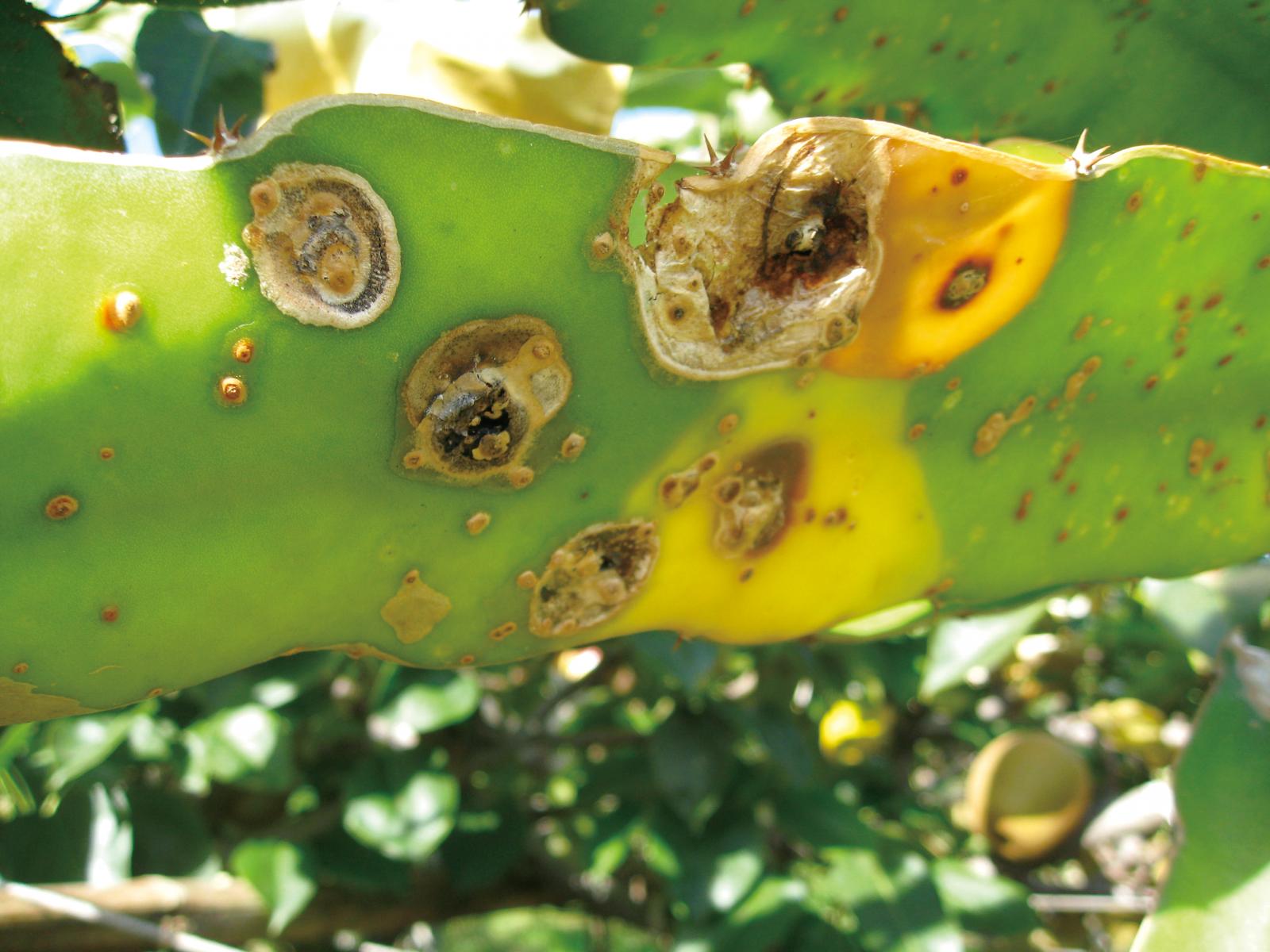
As for stem canker, as long as branches and fruits with symptoms of stem canker are observed, do not be soft-hearted: cut them all off, bag them, and remove them from the field. As for flower bud wet rot, when large-scale rotting of flower buds is observed, they should be removed as soon as possible, bagged, removed from the field, and disinfected with materials such as fungicides to reduce the amount of pathogens. At the same time, during the fruit harvest period, try to avoid harvesting fruit on rainy days. If the harvest period cannot be adjusted, also pay attention to the disinfection of harvesting tools, and after harvesting, treat the fruit with disinfection products made from non-pesticide materials before storage or shipment. In this way, the incidence of fruit rot can be reduced.
Stem canker is an important disease of red dragon fruit and has variable symptoms. Once diseased branches are found, they should be cut off as soon as possible to avoid continued spread of the disease.
Key points for fruit retention: planning production batches throughout the year
Based on the distribution of red dragon fruit yield and prices by month over the years, it can be observed that late June to July is the peak production period for red dragon fruit, and market prices tend to be low. Tracing this back to the growth state of plants in the field, the fruit at this stage is mostly the first 3 batches of fruit before the natural flowering period in the central region. Because the flower buds that emerge during this period symbolize a source of income, and the plants are in a robust state, the fruit develops relatively large, and even if the plants carry an excessive amount of fruit, they can still grow smoothly. Therefore, farmers are accustomed to retaining a large amount of fruit at this stage, which in turn causes a large increase in market arrivals and a corresponding drop in prices.
In fact, the reproductive growth period of red dragon fruit lasts as long as half a year, and with the application of nighttime lighting regulation technology, the production period can already exceed 9 months. After the red dragon fruit production season begins, a batch of flower buds can form in about 15 days, and generally at least 12 batches of flower buds are produced. In addition, the formation time of each batch of red dragon fruit flower buds is synchronized across production regions nationwide, and the number of flower buds in large and small batches is similar. Therefore, during the production season, production batch planning and fruit retention control should be carried out in advance.
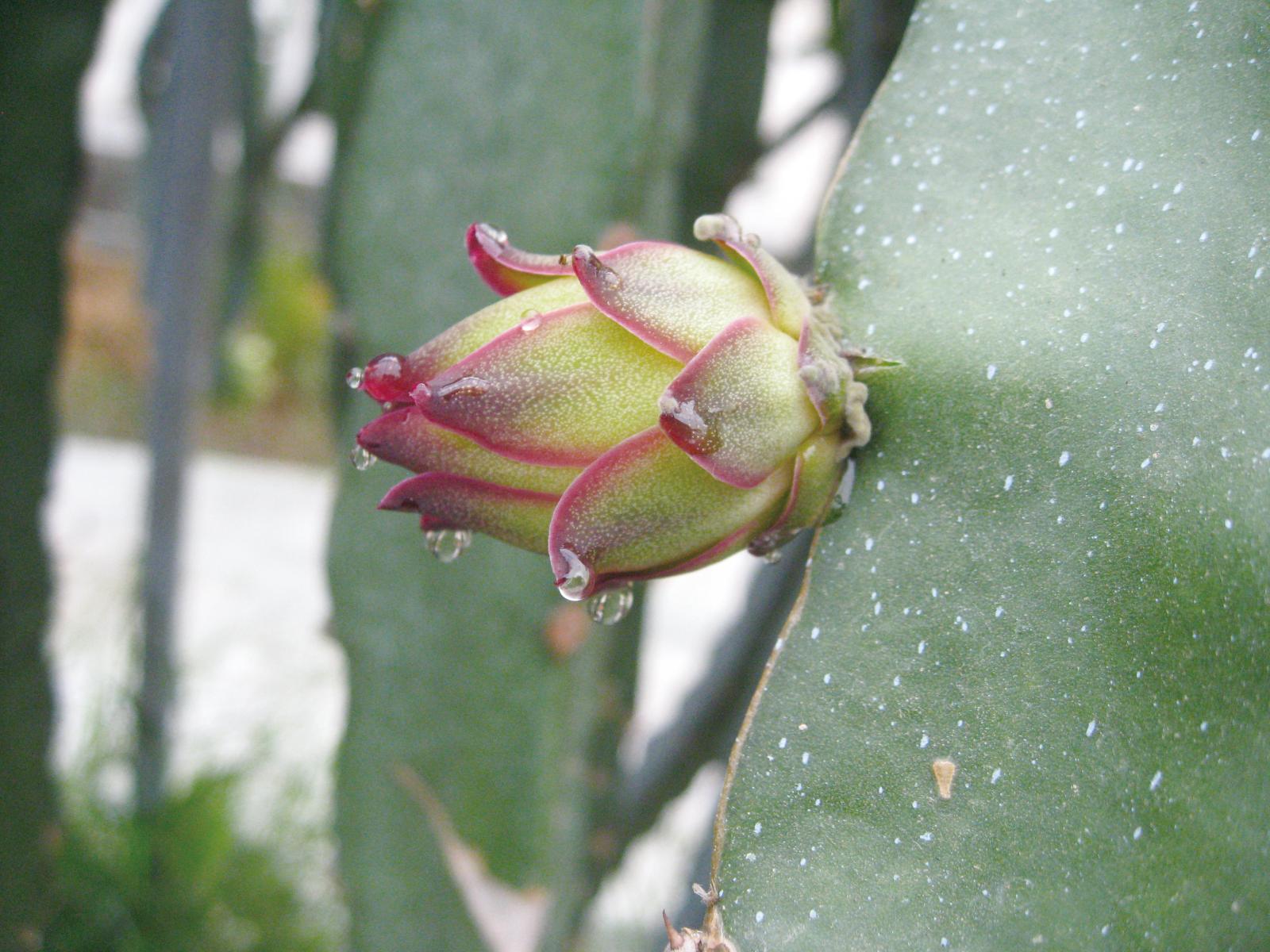
In practice, after each batch of flower buds forms, it is best to carry out flower bud thinning when the flower buds grow to 1-2 cm, leaving those whose appearance is plump and full and without deformity, and using the management model of leaving 1 flower bud per fruiting branch. The size of each flower bud should be similar, not too different, so as to avoid inconsistent fruit ripening periods later. At the same time, the alternate-batch fruit retention model can be adopted together with fertilizer management techniques (use high nitrogen and low potassium during green fruit growth, and use low nitrogen and high potassium during color-changing fruit) to ensure that each batch of fruit has the best fruit quality and yield.
Pay attention to protection during the flower bud and young fruit stages
In the early stage of flower bud formation, the number of field pests such as thrips, stink bugs and scarab beetles should be controlled to avoid damage to the flower bud surface, which would leave large areas of scars on the mature fruit. In addition, if prolonged rainfall occurs in the early stage of flower bud formation, the buds are easily infected by fungal diseases, causing the tips of the flower bud sepals to dry out and turn brown, seriously affecting fruit appearance. Therefore, if rainfall occurs in the early stage of flower bud growth, pesticide protection should be carried out early.
The honeydew secreted from the tips of the scale leaves of red dragon fruit flower buds or fruit is the main cause of sooty mold, and among these, the red-fleshed large red variety secretes noticeably more honeydew than the white-fleshed variety.
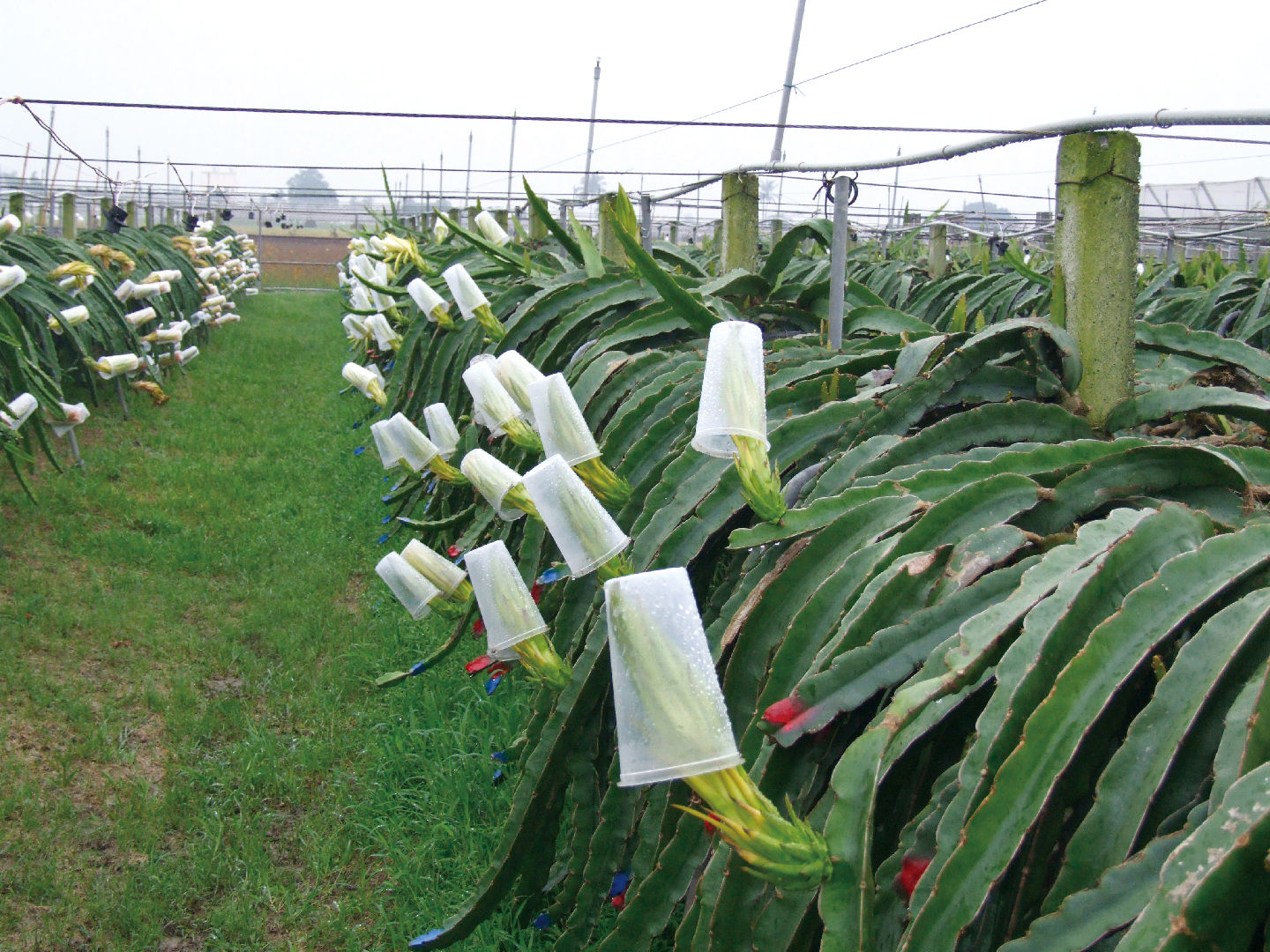
On the day red dragon fruit blooms, if the weather forecast indicates that rain will occur in the evening, then during the day the flower buds preparing to bloom that day can first be covered with plastic cups or plastic bags, and in the evening or at night the flowers can be lightly tapped to help release pollen, increasing the chance of pollination and improving fruit set. The plastic cups or plastic bags can be removed the next morning after flowering. In recent years, the frequency of flower bud wet rot in red dragon fruit has been high. Therefore, 3-4 days after flowering, the withered petals (corolla tube) should be removed, which can reduce the occurrence of disease.
Other key points to note: improving fruit sooty mold
Sooty mold on red dragon fruit causes tremendous trouble in red dragon fruit cultivation. After sooty mold occurs, it causes a large patch of dark brown mold-like material to adhere to the fruit surface, requiring a great deal of labor to clean off. The main cause of sooty mold is the large amount of honeydew secreted from the tips of the scale leaves of flower buds and fruit. When the honeydew cannot be cleaned off smoothly, it is attached to by fungi, which then causes sooty mold.
At present, the reasons for the massive occurrence of honeydew in red dragon fruit and ways to improve it have not yet been effectively established, but farmers have adopted a biological control method with very obvious effects, although side effects sometimes also occur. This improvement method is to raise small ants in the field to feed on the honeydew produced by flower buds. Once the honeydew is completely consumed by the ants, sooty mold naturally will not occur. Most of these small ants do not harm fruit; however, there are also risks in using ants to control sooty mold in orchards. Some large ants have the habit of biting branches, flower buds and fruit, causing fruit damage. Therefore, such large ants should be removed, and small ants that do not harm fruit should be kept instead.
In addition, when the number of ants is too large, the honeydew is not enough for the ants to eat, and the ants will also bite the fruit, and even build nests inside the fruit bags. Therefore, reasonably controlling the ant population is the key to using ants to control sooty mold.
Some farmers raise small ants in the field to feed on the honeydew secreted by red dragon fruit flower buds, in order to reduce the occurrence of sooty mold on red dragon fruit.
Avoid accumulation of field heat in fruit
Harvesting red dragon fruit is the last important step in field management. Every farmer is always careful when harvesting fruit, deeply afraid of damaging the fruit, but after the fruit is placed in the basket, some farmers forget that there is a more important step to carry out: avoid exposing the fruit to the sun. After picking the fruit, it should be placed in a cool place as soon as possible to reduce the generation of field heat in the fruit. Although this step is simple, it is an important key affecting subsequent fruit quality. Reducing field heat in fruit can maintain fruit quality, slow the wilting of scale leaves, and increase the shelf life of the fruit.
Field management of red dragon fruit covers a wide range of tasks, including weed control in the orchard, maintenance of water supply pipelines, pest and disease control, flower thinning, petal removal, bagging and harvesting, and these operational steps are all closely linked. Although a small negligence will not cause immediate harm, once it accumulates to a certain degree it will cause serious losses. For example, in the early stage, the symptom of stem canker is only a small yellow spot on a branch, but if no attention is paid and it is allowed to slowly spread, it will cause fruit damage, and in severe cases not only can the disease not be controlled, but the orchard may even need to be abandoned and replanted. Therefore, implementing field management and orchard cleaning work is the only way to maintain the health of red dragon fruit plants.