How do vegetables get nitrogen fertilizer applied? Signs and dangers of excessive nitrogen fertilizer
It is worth noting that nitrate ions, upon contact with digestive enzymes in saliva, are converted into nitrosamines, a chemical compound that the medical community has confirmed to be a carcinogen. Therefore, Professor Zheng Zhengyong reminds the public that just as the Department of Health encourages children to eat more fruits and vegetables, they should also pay attention to the hidden problem of excessive nitrate content in vegetables.
In recent years, many farmers have commonly applied nitrogen fertilizer to speed up vegetable growth; but experts remind that once nitrogen fertilizer is excessive and sunlight is insufficient, the nitrogen fertilizer absorbed by vegetables will form nitrate, and long-term consumption may pose a risk to health. Therefore, nutrition scholars call on the Executive Yuan's Council of Agriculture to guide farmers in the correct use of nitrogen fertilizer, so that consumers do not suffer harm.
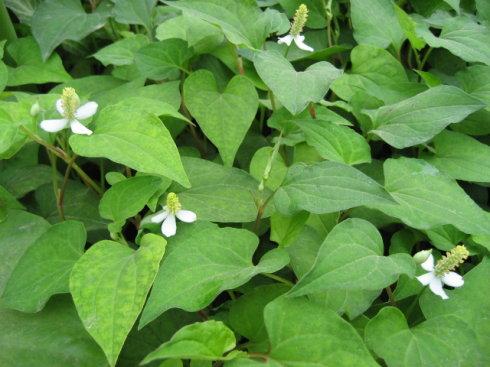
Professor Zheng Zhengyong of the Department of Horticulture at National Taiwan University points out that many consumers worry about pesticide residues in fruits and vegetables, but there is actually another long-hidden problem, namely whether fertilizer is applied in excess. He stresses that nitrogen fertilizer is currently one of the most commonly used fertilizers by farmers, but after the roots of plants absorb nitrogen fertilizer, it is converted into free-form nitrate ions, and through assimilation and photosynthesis forms amino acids. However, if nitrogen fertilizer is applied in excess or vegetables are harvested too early, the roots, stems and leaves of the vegetables will all be full of nitrate ions.
Professor Zheng Zhengyong has repeatedly conducted tests with commercially sold bok choy, taking a 1 cm section of the stem, grinding it up, and then dripping the juice onto test paper for measuring nitrate ion concentration. Before long, it showed a purple color higher than 500 ppm (parts per million). He states that although all living organisms contain nitrogen, and the vast majority of foods may also contain nitrate ions, if too much accumulates in the body, it will harm health.
Professor Zheng Zhengyong gives an example: Europe and the United States once found that some infants developed "blue baby syndrome," and the problem lay in the spinach used as a source of baby food containing excessive nitrate. He says that in addition to nitrate possibly being converted into nitrosamines by digestive enzymes, the medical community has confirmed that it also hinders the oxygen-carrying function of red blood cells, so when the human body absorbs too much, it will feel tired and its physical strength will decline.
Professor Zheng Zhengyong stresses that currently advanced countries in Europe and the United States such as Germany and the Netherlands have also begun to pay attention to the problem of relatively high nitrate content in fruits and vegetables caused by excessive nitrogen fertilizer application, and have set regulations that the detected nitrate concentration in fruits and vegetables must not exceed 1500 to 3000 ppm, but no such standard has yet been set domestically. He believes that because the nitrate ion concentration in vegetables varies with whether the soil is over-fertilized, the differing amounts of sunlight in each place, and the different harvest periods of various vegetables, the most important way to prevent this is still for the Council of Agriculture to guide farmers not to apply excessive nitrogen fertilizer, which can both save costs and protect consumer health.
The Executive Yuan's Council of Agriculture points out that the government's guidance measures for farmers' use of fertilizer are mostly carried out through the farmers' association system and local promotion classes for special crops, instructing farmers in fertilizer application; as for concerns about nitrate caused by excessive nitrogen fertilizer, according to research done in Japan, there is still no conclusion to date, but the public had best choose vegetables mainly by diversity of types.
A dietitian who declined to be named says that hydroponic vegetables marketed as clean and pollution-free grow entirely in water, using a culture solution that simulates soil nutrients as the main nutrient for vegetable growth, and the fertilizer contained in the greatest amount is liquid nitrogen fertilizer, so the stems and leaves of the vegetables are full of nitrate. Therefore, from a nutritional standpoint, consumers eating hydroponic vegetables can in fact only do so once in a while, and must not make them a staple food.
An official from the Agriculture and Food Agency of the Council of Agriculture points out that it is theoretically grounded that nitrogen fertilizer forms nitrate after being absorbed by plants, but the human body's absorption of various nutrient sources and the transformation process in the body are very complex, and the organic components in soil also differ from place to place, so whether farmers' nitrogen fertilizer use should be limited may arouse controversy. As for hydroponic vegetables, since to date no academic report has confirmed that hydroponic vegetables are harmful to human health, the Council of Agriculture's attitude toward hydroponic vegetables remains a laissez-faire policy.