How to grow orchids? Adapting to local conditions is key
Growing orchids requires adapting to local conditions
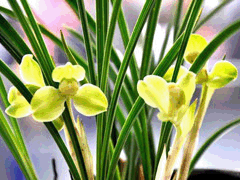 Growing orchidsrequires adapting to local conditions, and when it comes to potting media, one must never keep changing one's mind. If you do not pay attention to the differences in eachorchid-growingenvironment and casually switchorchid-growingpotting media, it will inevitably bring serious consequences. I myself had a profound lesson because of this. I am writing out the process for everyone's reference, so that old and new friends alike can gain something from it.
One rest day in the autumn of 1999, I went to a local orchid friend's home to admire his orchids. The orchid friend was a construction cost engineer in his thirties who, in his spare time, was devoted to collecting and cultivating Lu'anorchids. His orchid luck was especially good, and at present he already owned several rare varieties of Lu'an Huilan orchids, with great prospects. As soon as I entered his door, I found that in the courtyard, hundreds of pots ofCymbidium goeringiiand summer Huilan had strong seedlings and white roots, fresh green and tender, with every leaf reaching the tip without a trace of scorched tips or black spots, truly delightful. Aside from envy, I could not help asking the owner for his secret. The orchid friend hurriedly peddled his "words of experience" to me and, pointing to a pile under the tree in front of the door, said: "I used this kind of potting medium to pot them up." Looking carefully, I found that this pile of potting medium was made by mixing and composting soil, cinder slag, sawdust and metasequoia leaves, with fine particles and ample fertility. Because we were good friends, a few days later I brought a vehicle and hauled back several woven bags, changed the pots, and used all of this potting medium. After the weather warmed in spring 2000 and the flowers faded, new shoots broke through the soil one after another. By the plum rain season, some of the new plants had already grown into mature clumps, and I was overjoyed. Who would have thought the winds and clouds would suddenly change: as the plum rain season ended and the severe heat arrived,Cymbidium goeringiinew leaves began to show mottled black spots, which later spread to some old leaves, and even some Huilanflowerleaves also developed black spots. Facing this situation, although I exhausted every idea and every method, it was to no avail. I could only bring the scissors into play. In order to prevent the condition from worsening further, I strengthened water control again in autumn, which in turn caused root tips to shrivel and leaf tips to dry up,Cymbidium goeringiiflower buds all withered and died, and of dozens of pots of Cymbidium goeringii, only one ordinary one bloomed this spring.
I carefully analyzed this matter and believed the main reason was that I had failed to consider the differences in each orchid-growing environment and used potting medium indiscriminately. The orchid friend lived in a single-story house at the junction of the city and suburbs,with orchidsgrown in a large courtyard of more than 50 sq m. Along the south and west sides of the courtyard were planted large cherry trees and persimmon trees, whose branches and leaves could cover more than half the courtyard. Under the trees was bare earth ground; in the middle of the courtyard were built a relatively deep underground water pool and wide water channels, partly covered with cement precast slabs; the north and east parts of the courtyard were cement flooring. This orchid friend placedmost of the orchidsunder the trees and beside the water, with tree leaves shading above and pool water cooling below; by day there was no smoke or dust pollution, and by night there was dew to moisten them. The orchid friend often filled the pool and channels until they overflowed, letting the orchid pots absorb water naturally, so in spring and summer he hardly needed to water at all. I said to the orchid friend: "Your orchid-growing environment is even better than nature." Therefore, the potting medium he used matched this environment perfectly, and of course no problems arose. On the contrary, my orchid-growing environment was far harsher in comparison. My home was on the east second floor within the urban district, and the orchids were grown on the platform connected to my south balcony, on the self-built house of the family on the first floor, with an area of less than 20 sq m. In the plum rain season there was little wind and it was humid; in summer it was hot and stuffy; in autumn the wind was strong and dry. Also, because it was located in an old residential area with poor community management, the ground floors all around were full of open-air food stalls, and air pollution was serious. Around the platform there was only a 5 m high decorative lattice wall, with shade netting for sun protection in summer and no wind-blocking facilities in autumn. Previously I used homemade potting medium to grow orchids, made mainly from vegetable garden soil (humus soil) plus cinder slag and a little river sand. Although the environment was poorer, I made up for it with careful maintenance, and it could still send up new plants every year and bloom continuously, with fairly good results. This time, after using the orchid friend's potting medium, the high humidity and high temperature of the plum rain and summer seasons, the overly fine and overly fertile potting medium, plus open-air placement, frequent rain soaking, and constant ground heat steaming, made the roots uncomfortable, which inevitably showed on the leaves. This was the first mistake. In autumn, with frequent continuous autumn rain, I feared a recurrence of the old disease and therefore strengthened water control. As a result, the water control was excessive, and when dry wind blew, it caused root tips to shrivel, inevitably leading to blackened and withered leaf tips and damage to flower buds. This was another mistake, called adding mistake to mistake. Looking at so many pots of orchids with half their leaves cut off, and enduring the worry of having no orchids to exhibit, truly the past is too painful to look back on, and the lesson is profound. Fortunately, I found the crux of the problem, promptly changed the potting medium, and renovated the orchid-growing platform, adding sun-shading and wind-blocking facilities. I believe my Cymbidium goeringii and summer Huilan will surely grow luxuriantly in the future and bloom with fragrance continuously! (Zhu Nanfang)